

What's The Average Lifespan Of A Plastic Shower Curtain Liner?
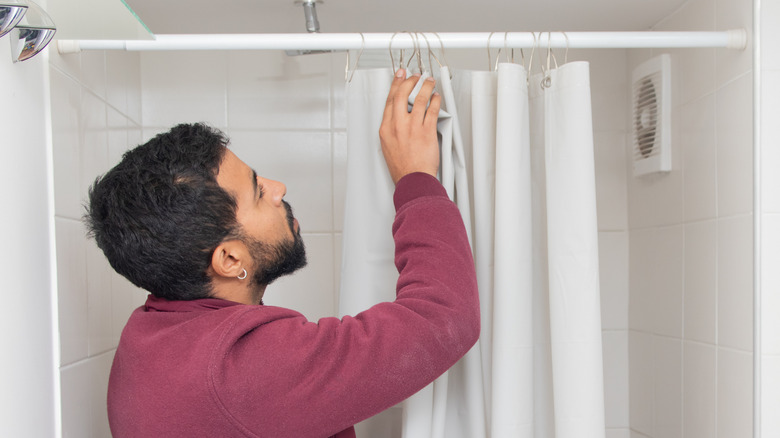
If you can't remember the last time you changed your shower curtain liner, it may be time to clean up your act. While your exterior shower curtain is largely decorative and available in materials that can easily be cleaned, the plastic liner that goes into the tub to keep the water contained is constantly coming in contact with soap, shampoo, conditioner, body wash, and, yes, plenty of humidity. As such, it has a much shorter lifespan than the outside curtain.
In fact, experts recommend swapping out that plastic liner as frequently as you change the oil in your car — roughly every six to 12 months. Otherwise, as it's exposed to all that moisture, it can also begin to grow mold and bacteria. Not only can that look, and potentially even smell, unpleasant, all that ickiness can present a health hazard. For starters, showering next to a bacterial breeding ground means coming in close contact with germs in the very spot you go to get clean. But even worse, as you work up a steamy lather, you could be breathing in mold spores, which could cause everything from a runny nose to a serious lung infection.
When to change out your plastic shower liner
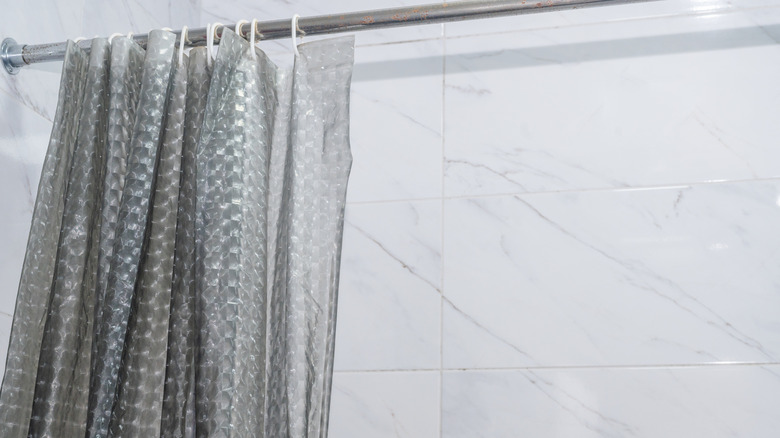
The shower curtain liner requires regular cleaning, but other factors also play a role in its shelf life. The key to preventing bacteria, mold, and mildew is to reduce moisture, a task that can feel impossible in some spaces. In bathrooms that don't have a ton of ventilation and those that get used by a lot of people, you may need to change the liner out more frequently. Another concern is spaces where the sink, toilet, and tub are positioned closer together, allowing germs to circulate.
To best determine when it's time to toss your liner and start fresh, pay particular attention to its appearance. Keep an eye out for shifts in color, i.e. a clear liner that's no longer quite as translucent, musty smells, the appearance of mold and mildew, or other signs of buildup. A liner that starts to feel sticky, slimy, or rough needs to be scrubbed from your space.
However, if your liner appears in decent shape, other than a touch of soap scum, it should respond to regular cleaning. Double-check the care tag, as certain cleaning products may not be safe for all materials. But the best way to clean your shower curtain liner is to throw it in the wash with a blend of baking soda and water. (Investing in double-sided curtain rings will save you time when unhooking it.) You can also extend the life of your liner by rinsing after each shower and spreading it out to dry fully. And if you're in the market for a new one, consider a version with antimicrobial properties, meant to prevent mold growth.