

What Does A Dark Blue Flame Mean On A Gas Stove?
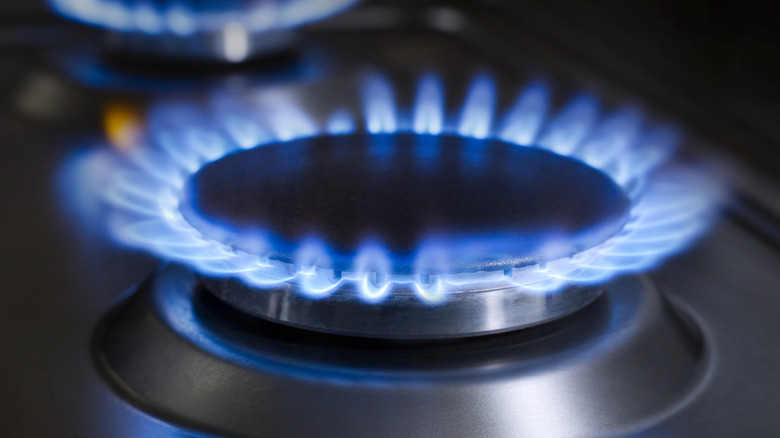
If you are new to gas stoves, one thing you'll have to get used to is seeing different colored flames. Sometimes the blue flame might get a little darker than usual. You might wonder if darker blue flames are hotter, or if they mean something is wrong. Thankfully, it usually isn't a cause for concern. In fact, if the flame is predominantly blue and burning steadily, it's a good sign your stove is working perfectly.
Gas stove flames are the result of a combustion reaction between oxygen and natural gas or propane. The color of the flame actually signifies the completeness of the reaction between these substances. When you see a blue flame, that means the gas is burning with the right ratio of fuel to oxygen. Here's what you want to see from a healthy flame: a darker blue inner cone combined with a lighter blue exterior flame. If the stove's flames are consistent, with minimal flickering, then it's a good sign your stove is operating properly and burning efficiently.
While a dark blue flame isn't a sign your gas stove is going bad, you may still wonder why the shades of blue vary. Well, it depends on the type of gas or propane, the burner, and the air or lighting in your kitchen. Darker variations don't mean the flames are hotter or more dangerous, so don't start adjusting the burner intensity based on a blue flame.
What to notice about your gas flame color
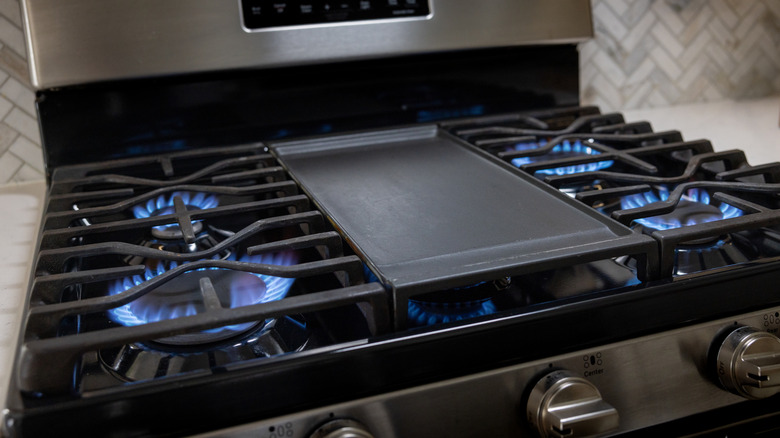
Once you know that a blue flame is normal, what you should focus on is how the flames themselves look. A healthy flame burns uniformly around the burner. Although it's normal to see some yellow or orange flames, you should notice if it's consistently yellow or orange. That's a sign of incomplete combustion, a source of carbon monoxide. When you see a yellow flame on a gas stove, that suggests the gas isn't getting enough oxygen to burn properly. This can also be caused by dirt on the burners, low gas pressure, or impurities in the gas. If this happens, turn the gas off and give your stove's burners a good cleaning. If that doesn't resolve the problem, then it's always good to call a professional as soon as possible to safely check your stove.
You should always monitor your gas stove for other changes in the flames, like suddenly tall or noisy flames. If the stove suddenly starts behaving differently, then it may need servicing. If the flames are lower than usual, it may not be a big deal, as long as you know how to fix low flames on a gas stove. If your gas stove has a dark blue flame, it's not an emergency, so don't get rid of your stove just yet, especially since this controversial kitchen appliance can actually boost home value.