

How Long Can Gas Sit In Your Lawn Mower Before It Goes Bad?
We may receive a commission on purchases made from links.
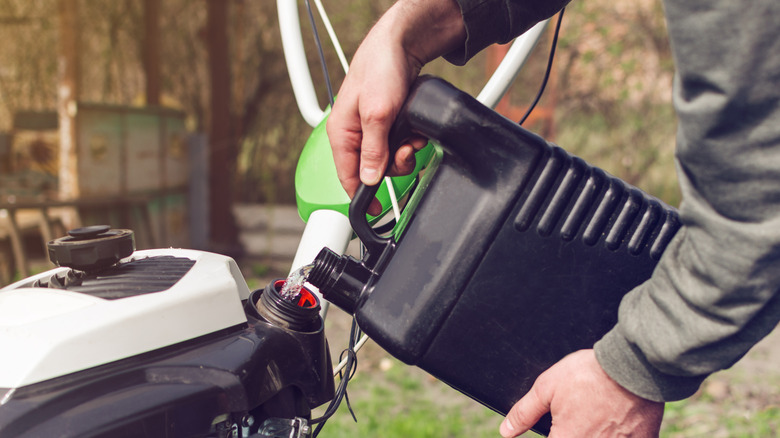
If you've worked through the pros and cons of a gas vs. electric lawn mower and have decided on a gas-powered model, you probably know that there are some maintenance tasks you need to complete before packing it away for the winter. One of the most important involves the fuel tank. Gasoline can go bad in anywhere from a month to a year, depending on the type, so empty the tank or add a fuel stabilizer if you won't be using the mower for a while.
Most lawn mowers use standard gasoline with an octane rating of 87. Within a few weeks of filling up your mower tank, standard gas will begin to oxidize, and certain compounds will evaporate away, leaving a gummy, sticky mess that becomes fully unusable in three to six months. Plus, most standard gas comes mixed with ethanol, which attracts water from the air, speeds up oxidation, and can make the gas go bad in a fraction of the time — as little as 30 days. In a process called phase separation, the water separates from the gas in the tank, causing rust and potential engine damage. That's why it's best to use ethanol-free gas in your mower if you can find it, and never use gas with more than 10% ethanol (E10).
Some riding lawn mowers use diesel rather than standard gas, and you can expect this fuel to last much longer. Diesel lasts up to one year before going bad (even longer in ideal storage conditions). Less commonly, lawn mowers may use mid-grade or premium gas, which have shelf lives somewhere in the middle — around nine months for premium, for example.
Don't let untreated gas sit in your lawn mower for more than 30 days
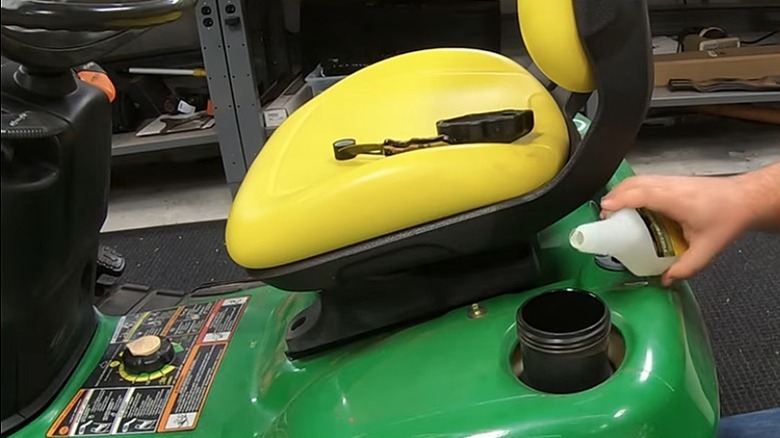
To prepare your lawn mower for winter storage, or if you won't be using it for at least the next 30 days, empty the gas tank or add a fuel stabilizer to prevent the carburetor from clogging. Check the owner's manual before deciding which route to take. Leaving deteriorating gasoline in the system can contribute to deposits, hard starting, poor performance, and fuel system problems. If you want to empty the tank, make sure that you let the engine run until it's totally dry after you siphon the gas out. This ensures there's no gasoline left to cause problems for your engine. You also don't want to forget to drain the oil before storage, which is one overlooked lawn mower maintenance task that many people forget.
A fuel stabilizer helps stop fuel from degrading for up to two years, depending on the brand. For example, the STA-BIL fuel stabilizer is designed to keep fuel fresh for up to 24 months and protect your lawn mower engine from corrosion by dispersing moisture that may have found its way into the tank or motor. It also prevents sticky gum from building up in your carburetor due to gasoline degradation. Always follow the directions on the product, and note that you generally won't need much stabilizer. Afterward, start the mower and let it run for about five minutes. This moves the stabilizer through your fuel system, protecting it from damage or corrosion while your mower sits idle. A full tank may also help reduce condensation in some storage conditions, but follow your mower's manual rather than automatically filling it completely after adding the product. These steps should help ensure your gas mower runs smoothly throughout its average lifespan of about six to 10 years.