

Not Vinegar: The Cleaning Solution For Removing Moss From Concrete
We may receive a commission on purchases made from links.
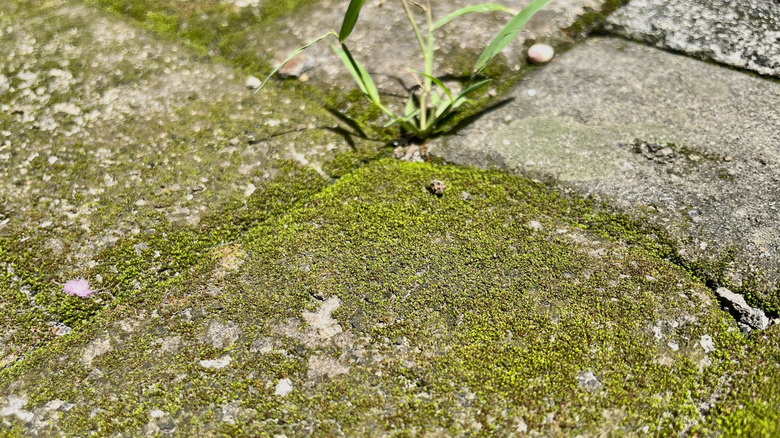
Context is everything when it comes to moss. You may enjoy its presence in your Zen garden or on a forest trail, where it coaxes you into taking a pause and soaking in the tranquility and whimsy it invokes. But on your concrete flooring, it's nothing short of a nuisance and has the best of us internally screaming "not again," depending on our previous ordeals with it.
This time, before breaking out the bottle of vinegar (yet again), consider an alternative cleaning solution to get rid of moss on concrete pavers and driveways: household bleach. Yes, your trusted Clorox Disinfecting Bleach, that has other uses around your home beyond everyday cleaning, is also a tool capable of eliminating the mossy carpet overtaking your concrete surfaces — faster at that.
While yes, you can kill patio moss with vinegar, the process is slower and must be repeated throughout the week to regain full control of your flooring. Bleach, in contrast, begins wielding magic within the first five minutes, with results often lasting for a year, or longer if you manage to eliminate the factors enabling moss growth.
Remove moss from concrete with diluted bleach
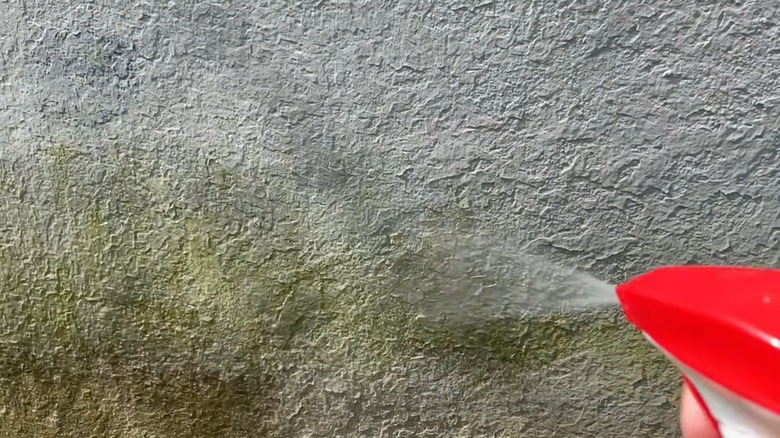
Before preparing your cleaning solution, take the necessary precautions listed on the bottle's label. Primarily, it's important to wear eye goggles, gloves, a face mask, closed shoes, and full-sleeved clothing to avoid breathing in vapors or taking damage from splashes. It's equally essential to keep pets off the floor, as bleach can irritate their skin.
Bleach functions as a nuclear or "kills everything in its way" option. So, if you've got plants in the vicinity, water them beforehand and drape them in plastic wrap to minimize impact. Also, take the time to sweep away any dust, debris, twigs, or litter from your concrete surfaces before starting the treatment. Then, take a big bucket, fill it with about 1 gallon of water, and mix in about 1 cup of regular bleach. You can also add 1 cup of liquid soap to improve its stickiness. After stirring the solution, pour it uniformly on mossy concrete.
If you're covering a large expanse, consider transferring the cleaning solution to an air-pump sprayer instead. It's easier to spray than hauling around a large bucket, and you can cover ground in several batches, making the process all the more convenient. Remember, bleach can leave concrete streaked, faded, patchy, or spalled if it's left alone for a long time. So, to play safe, about five minutes after the application, when the moss turns brown (or white), run your hose generously to wash away bleached moss. If you fear that it may have contacted your plants, give them a nice rinse afterward, too.
Why removing moss from concrete is important
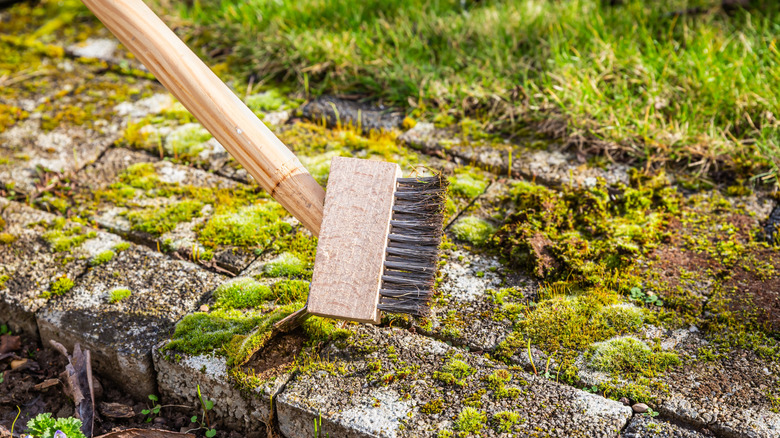
Concrete pavements, walkways, driveways, or patios look visually unappealing when they're coated in a carpet of green moss. But more importantly, they become unsafe for pedestrian traffic. Moss can soak in lots of moisture, which makes it slick and difficult for people to find a firm footing. For this reason, even though moss plays a significant ecological role, helping recycle nutrients and holding off stormwater overflow, it becomes necessary to remove it from concrete flooring. Contrastingly, if it dries out from summery heat, like most plant materials, moss can become a fuel for fire. Any errant spark or flame can light it, causing huge damage.
So, be sure to keep up with regular maintenance and treat moss as it forms. Although bleach solution can make the environment inhospitable for moss, it won't stay put permanently. To ensure long-term deterrence, you must switch up the current conditions. Moss thrives in damp and shade. If tall trees or shrubs are overlooking your concrete pavements, pruning away limbs that allow more sunlight to stream in can be helpful. You may similarly want to improve drainage (if water pools in certain areas) and ensure your sprinklers or hoses don't flood the area while you're caring for your turf or garden beds.