

No Struggling With A Hammer: There's A Quicker Tool For Removing Nails From Wood
We may receive a commission on purchases made from links.
You've used all the nail-pulling hacks, from sticking a wood block under the hammer claw to levering the nail sideways. There are a lot of ways to pull stuck nails out of timber using just a hammer, but all of these workarounds are attempts to compensate for the fact that hammer claws aren't always the best tool for the job. There's actually a tool that's designed specifically for this purpose and, unsurprisingly, it's called a nail puller — nail pulling pliers and end nippers are other names for it. Whatever you want to call this tool, it looks like the ugly cousin of fencing pliers — DeWalt's budget-friendly tool that's a must-have if you own a fence. Thanks to a rounded, humped jaw, end nippers will pull nails out more quickly than any hammer trick.
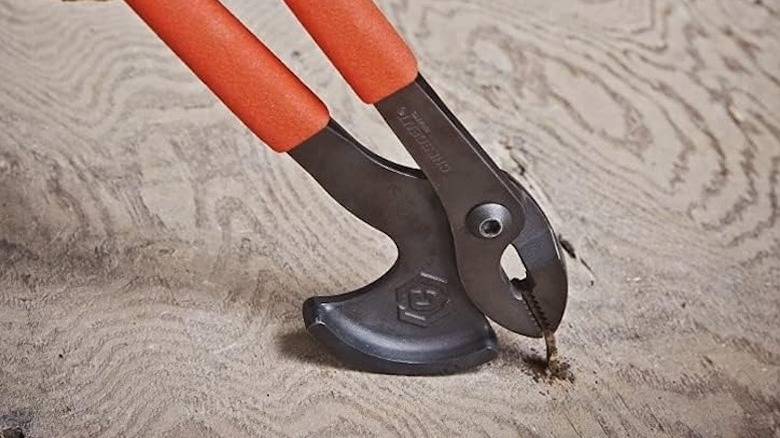
It works because the rounded jaw creates a fulcrum. You clamp the nail and rest the jaw on the piece of wood, then roll the tool back. The nail usually pops right out. It's the ideal solution for smaller nails, brads, or staples, especially since you can rarely use a claw hammer to remove these fasteners. Of course, like any tool, nail pullers have their limitations. They only work on nails — and screws, by the way — shorter than two inches. If you're tired of struggling with a hammer when pulling nails, it's time to head to the hardware store. You pick up a pair of nail pullers in most tool aisles. These Crescent 11-Inch Nail Pulling Pliers cost about $20 at Home Depot. These Bates Nail Puller Pliers cost around $16. Not a bad price for a tool that you'll get a lifetime of use out of.
How to use nail pullers in your woodworking projects
Worried about how much it costs to pull up carpeting in your home? This $15 to $20 tool will make light work of the job, potentially saving you money on professional labor costs. However, owning a pair of nail pullers won't do you any good if you don't know how to use them. Learn how to operate them properly so they don't become that weird set of pliers in your toolbox you never touch. Start with the woodworking safety precaution you should be taking for your next home project: putting on a pair of safety goggles and gloves.
You can only use nail pullers to remove nails with exposed heads. You need to be able to grip the head firmly between the jaws of the pliers. You may have to use another tool, such as a cat's paw, to dig out embedded nails. This 8-inch Spec Ops Tools Nail Puller Cats Paw Pry Bar costs a bit under $13. Once you can get a solid grip on the nail, position your nail pullers with the rounded head resting on the wood for leverage. Press down on the handle of the pliers to pull the nail out. Readjust the pliers if they slip off the nail before you can pull it out.
To minimize damage to softwood, slide something flat and metal between the pliers and the timber, such as a putty knife or drywall trowel. If you're trying to remove a long nail, you may need more leverage than standard nail pullers can provide. Some people try to extend the handles of the pliers by slipping a piece of pipe over them, but that's not advisable. Instead, switch to a crowbar for more leverage.