

Forget Hydrangeas: The Beautiful Shrub That's Filled With Fragrant White Flowers

Hydrangeas have long been beloved stars of a garden. Delicate petals cover the plant's tight globes or flat lacecaps, drawing attention on the shrub or in a bouquet of cut flowers. But because they can be extremely thirsty plants (and will wither if you don't deliver), gardeners might not want the hassle. If that's you, then consider a hardy viburnum, sometimes mistaken as a doppelgänger of the hydrangea. If you choose the Anne Russell viburnum (Viburnum x burkwoodii 'Anne Russell'), you'll enjoy beautiful blooms that fill your garden with a spicy clove-like fragrance.
This viburnum, also known as the Korean Spice Bush, will be the centerpiece of your garden when it blooms in the spring. Mounds of flowers first appear as tight pink buds in the late winter, opening up to white star-shaped blooms. It also produces red berries that turn black in the fall. While some viburnums are evergreen, making them an ornamental shrub that can house and feed birds in your yard all winter long, the Anne Russell has glossy green leaves that turn reddish-orange, gold, or purple in the fall before they drop.
The shrub thrives in USDA Hardiness Zones 4 to 8, with a preference for part shade to full sun. Although the plant is drought tolerant, water it regularly for adequately moist conditions, and make sure the soil is well-drained. If you adopt a lighter, but consistent, watering habit during the summer, you'll likely be rewarded with faster growth and abundant blooms in the spring.
Caring for Anne Russell viburnum
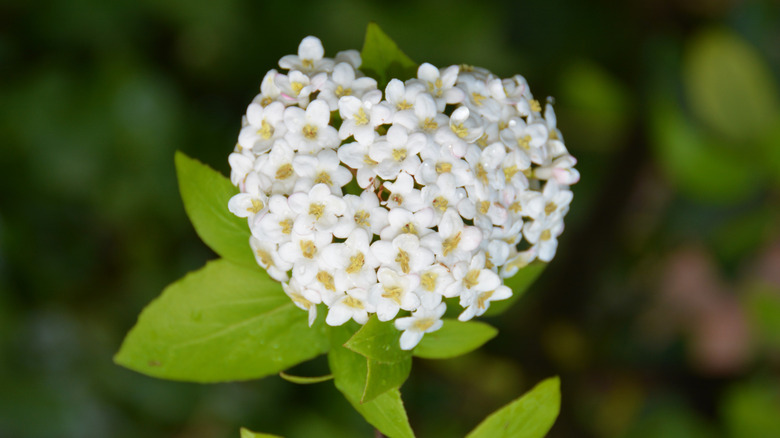
If you've heard that these flowers can be invasive, which is a downside to planting viburnums in your garden, you don't need to worry about the Anne Russell. It's known to be compact, maxing out at a height of about 6 feet high and a width of 8 feet. These dimensions give it versatility in your yard as a screen, large container plant, or border shrub. Plant it near a window and enjoy bees, butterflies, and hummingbirds that are drawn to the flowers.
Viburnums aren't needy when it comes to pruning. However, it's best to avoid pruning in the fall if you want big, beautiful blooms in the spring. The rule of thumb is to prune the viburnum after it flowers, for the purpose of shaping the shrub. This ensures that you don't risk removing flower buds that will bloom next year. However, pruning to remove damaged or dead branches can be done anytime and is necessary for the health of any plant. If the viburnum is struggling, consider trimming about one-third of the branches each year for a robust revival.