

Couple Uses Concrete Blocks To Build A Simple And Durable Swimming Pool
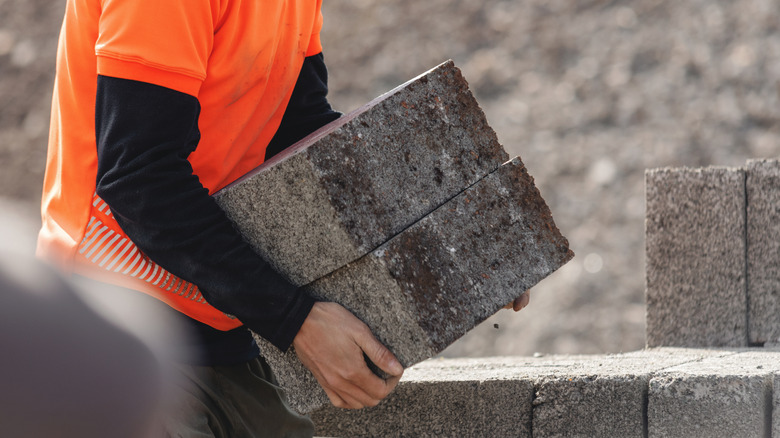
There's nothing more refreshing than taking a dip in the pool on a hot summer day, but pool installation and maintenance is an investment of both time and money that few can afford. The average cost to build an in-ground pool is around $66,000, according to Angi, but depending on your pool's size, materials, and design, it can end up costing much more. Not to mention the long-term maintenance that adds to the bill. Because of this, many may decide that an above-ground pool is better for their yard. Above-ground pools are often less expensive to install, easier to maintain, and less disruptive to the permanent design of the outdoor space. However, their frames and walls are typically constructed with metal, resin, or vinyl, which can make them prone to damage as they contend with harsh sunlight, wind, and winter conditions over time. One alternative is to build a solid, above-ground structure with concrete blocks, as demonstrated by clever DIY couple Max and Maria on their YouTube channel, Confused But Excited.
This design provides the perfect compromise between a sturdy but expensive in-ground pool and a more affordable but fragile above-ground install, and by DIYing the build, you can reduce your necessary investment even further. Taking things above ground means that you won't have to do any digging — a major consideration for the original creators of this DIY, who live in Kenya, where underground termite colonies are a concern. A petite plunge pool is certainly a doable project for the determined DIYer. If you want to follow in Max and Maria's footsteps, all you'll need are some concrete blocks, concrete mix, a pool pump, a bit of pipe, a steady supply of cement, some sand for mixing, rebar, and a couple of gallons of chlorinated rubber paint.
Building the structure of the pool
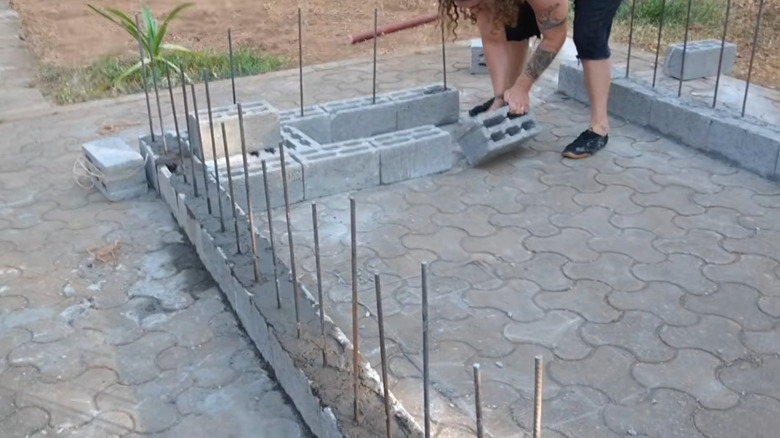
Max and Maria designed the perfect pool for their backyard, and if you follow along with their process, you'll see that this DIY is actually a fairly simple build. The basic structure utilizes concrete blocks for the walls, rebar for support, a simple sand and cement mix as mortar, and plain concrete as a base. Note that they built the pool on top of an existing patio surface, so you may need to adjust for your plans. Essentially, Max and Maria built up a basic footprint for the pool with one layer of blocks, poured the concrete floor, and then built up the rest of the structure, adding mortar in between each block. This created the overall shape of the pool, with a bench and stairs included, but they still needed to address the issue of waterproofing.
For this process, they worked with a local builder to help them properly create a leak-proof seal. They mixed waterproof cement with sand and applied it in layers, similar to plaster, along the inner surfaces of the pool. Max explained on YouTube, "While we are going to apply some chlorinated rubber paint as you'll see in a little bit, really this [cement] step is the stage to make sure that you don't have any cracks or leaks and that your pool is going to last and be strong and secure." They applied three coats of cement to the pool, decreasing the amount of sand in each mix until they were left with a smooth final coat that just contained cement and water. After letting everything dry and rolling on a few layers of white chlorinated rubber paint, the pool was ready to fill and enjoy.
Considerations to make if you plan to attempt this DIY yourself
It is important to consider the cost and maintenance before you try this pool build yourself. Max and Maria live in Kenya, and all-in-all, they spent around $52,960 KES on the build, translating to about $466 USD. This spend primarily covered construction materials and a small amount of labor. Be sure to also factor in any building permits and regulations that may apply depending on your area.
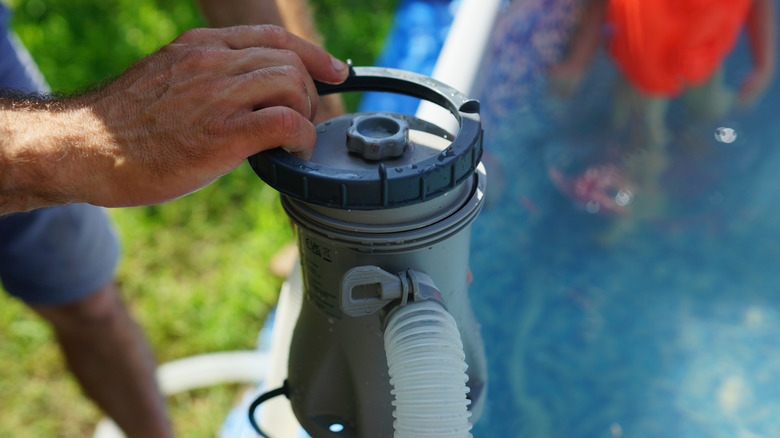
While smaller pools are generally easier to maintain, ongoing tasks may include covering the pool when it's not in use, scooping leaves, and adding chemicals if needed. In an update video posted on YouTube, Maria addressed fans' questions about emptying and cleaning the pool. She explained, "We built in a drain on that corner, and Max attached a valve so you can open it and close it to drain it." Draining might be necessary someday to patch leaks, refinish the inside, or replace chemically imbalanced water. A filtration system might also be worth adding, although the couple eventually opted not to use a filter or chlorine in their own pool. "That's because we live near the sea, so our [borehole] water is salty, so it's sea water. That might vary for you," said Maria. There are several types of above-ground pool filtration systems you could use, but the cost and setup should be factored into your design from the start.
Luckily, because you're dealing with a solid structure comprised of cinderblocks rather than a typical above-ground pool frame, deterioration over time shouldn't be a big concern. In that same update video posted over a year later, Max shared that their pool is still in great shape: "We really love it. It hasn't leaked. It hasn't given us any problems."