

What To Do If You Spot A Brown Recluse Spider In Your Bed
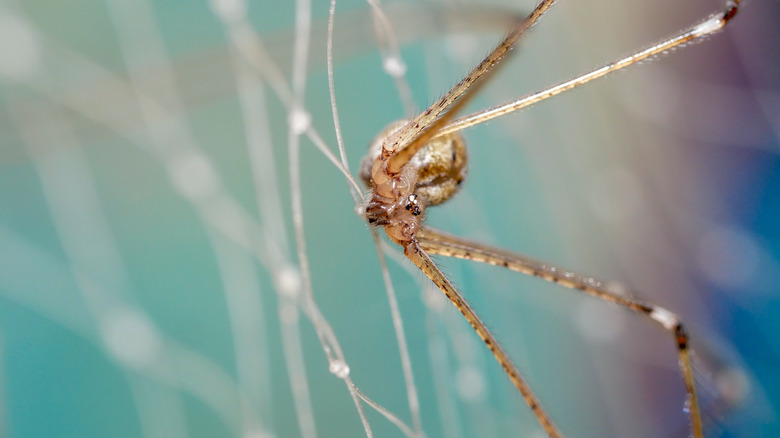
There's nothing more frightening (and icky) than the idea of a spider camping out in your bedsheets. The popular urban legend that you swallow an average of eight spiders in your sleep each year is just a hoax, but the idea of finding a spider in your bed isn't entirely far-fetched. Spiders tend to seek out dark, undisturbed places, and understanding what attracts brown recluse spiders can help you avoid inviting them to bed. Some spiders that might find their way into your bedroom, like the common house spider, won't cause you much harm beyond giving you a sudden scare. However, finding a brown recluse hiding in your bedding is a bigger concern, since its bite can be dangerous.
If you spot a brown recluse in your bed, don't reach for it or try to crush it with your hands. Brown recluses generally bite when they are pressed directly against skin, so it's best to find a safe way to capture or remove the spider. Try trapping it under a clear jar or glass, then slide a piece of stiff paper underneath to secure it. Keep the spider in a sealed bag or jar in case you need to have it identified later in case you are bitten. If capturing it isn't an option, you can smush it with a heavy object or shoe, but be sure to bag the remains for identification.
How to check for bites and protect your bed

After taking care of the spider, you'll need to check for bite marks. Brown recluse bites are often painless at first, you may develop redness, mild swelling, itching, or, in rare cases, tissue damage. Watch for localized redness, a central blister, or a "bullseye" pattern around the bite. If you notice any of these symptoms, wash the bite wound and apply ice for 10 minutes on, 10 minutes off for up to an hour. To minimize any swelling, keep the affected area elevated above your heart. Don't try to cut open the wound or apply heat, as these can worsen tissue damage. Seek emergency medical care if you develop a fever or chills, or if the center of the bite turns black or purple or becomes sunken.
Once you've taken care of yourself, the next step is to check your bed and make sure there aren't any more creepy crawlies hiding out. Carefully remove all the sheets, mattress pads, and blankets, and shake them out thoroughly over a bathtub or outdoors. Don't shake them onto the floor, since that could give any hidden spiders a new place to hide. Before you tuck yourself back in, check the area immediately around your bed. Pull the bed at least 6 to 12 inches away from the wall, and use a flashlight to check underneath and around all parts of the bed. Brown recluses often exist in groups, so finding one doesn't necessarily mean it's the only one in your room. If you continue to spot them, it may be time to call a professional for brown recluse spiders.
Keeping brown recluse spiders off your bed

Whether you've found a brown recluse in your bed or live in an area like the Midwest or South where they are more common, it's always a good idea to take a few preventative steps to avoid an unpleasant run-in. Start by shaking out blankets, clothing, and other items that have been sitting on the floor before putting them against your skin. Similarly, before getting cozy in bed, pull back the sheets and give them a good shake, then wait a few minutes before settling in.
To catch any spiders that might be crawling around, place sticky glue traps by each bedpost or around the perimeter of the room. Depending on how dusty the room is and how many insects you catch, check the traps regularly and replace them when they become full, dusty, or lose their stickiness. It's also important to keep the space beneath your bed clear. Brown recluses prefer dark, undisturbed areas, so avoid storing cardboard boxes, stacks of paper, or other clutter underneath your bed.
You can also take an additional step to keep these pesky critters from getting inside in the first place. Getting rid of dangerous brown recluse spiders by sealing entrances is one of the most effective long-term strategies for keeping these pests and other spiders out. Because these spiders have relatively flat bodies, they can squeeze through surprisingly small gaps. So you'll want to target potential entry points like window screens, weatherstripping, cracks in your foundation, and even attic vents to keep them from crawling indoors in the first place.