

How To Prevent White Film From Building Up In Your Dishwasher
We may receive a commission on purchases made from links.
Whether you use your dishwasher daily to clean up after every meal, or only once in a while when you've used every dish in the house, finding it less than clean can seriously ruin your day. A white film inside your dishwasher means that you either have a buildup of hard water mineral deposits or undissolved detergent hanging around. And while that might not seem catastrophically bad, leaving this issue unresolved will ultimately leave your dishes covered in residue and could even clog your machine and lessen its lifespan — making it essential to start troubleshooting dishwasher problems before they become bigger issues.
Regardless of whether it's due to your detergent or hard water, remember to always run your kitchen sink faucet until the water is hot before turning on the dishwasher. Cold water prevents detergent packets and powders from fully dissolving, which can leave a white film behind. Also, always use a liquid rinse aid when running your dishwasher. Rinse aid breaks surface tension, causing water to sheet off dishes and stainless steel walls rather than pooling into mineral-heavy water droplets that leave spots as they dry. These two processes together help to minimize any buildup from starting in the first place.
It's also important to take monthly steps to make sure your dishwasher stays clean and running efficiently. You can purchase a specialized dishwasher cleaning tablet, like Affresh Dishwasher Cleaner, to clear away limescale and mineral deposits from the tub and internal parts. Finally, don't forget to twist out the filter at the base of the tub and scrub away greasy film under hot running water using a soft brush.
How to fix detergent issues
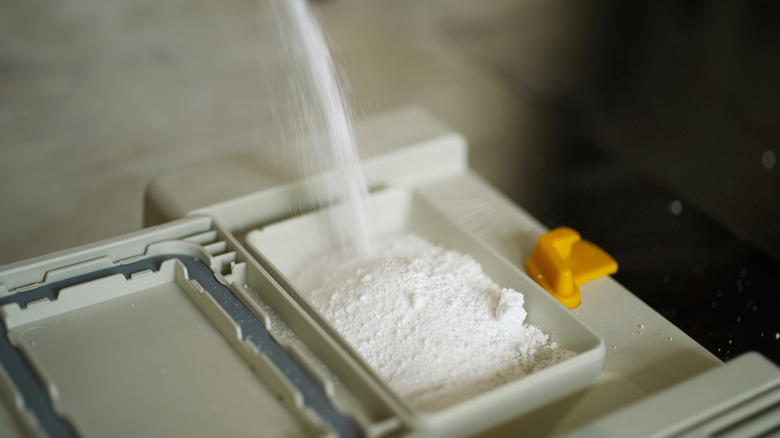
If always running your hot water before starting a load and always using rinse aid isn't doing the trick of removing a white film buildup in your dishwasher, it's time to evaluate your detergent and how you use it. Powder or gel detergent and soft water don't work well if you use too much. The soft water already prevents mineral spots, making high soap doses unnecessary, and using too much of these types of detergent leaves a hazy layer that does not rinse clean. To remedy this, cut powder or gel detergent quantities back to half the dispenser capacity.
Especially if you use pods or powder detergent, you'll need to make sure the detergent dispenser compartment is completely dry before adding it in. Moisture inside the door causes detergent to clump and stick to the tray, which can lead to undissolved soap residue and white film left on your dishes and dishwasher tub. Also, check that large plates or pans in the lower rack do not block the dispenser door from opening fully during the cycle — if they are, the detergent won't release at the right time in the cycle, which could stop it from dissolving entirely.
When all else fails, try changing your detergent type. If you currently use a powder, change to a gel or pod. Over time, your dishwasher can accumulate residual soap buildup or experience degraded performance from older, clumped detergent, causing you to see persistent white film on your dishes and tub walls. Changing the detergent will help dissolve stubborn residue more effectively and leave your dishes sparkling clean.
How to fix hard water issues
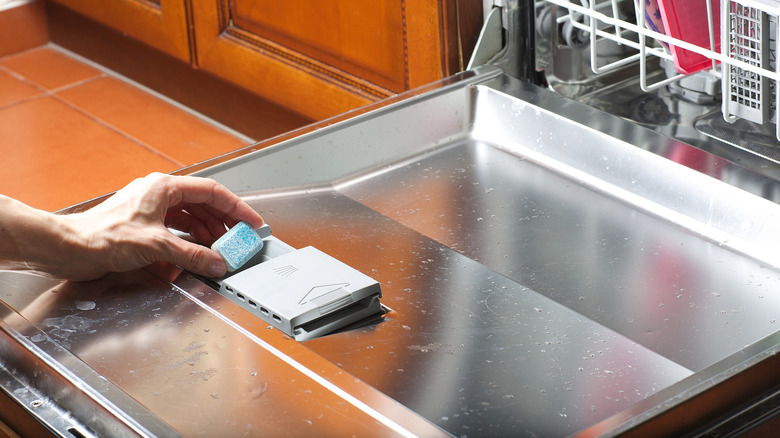
If you've made changes to the detergent you use and you're still seeing white film, you most likely have a hard water issue. Hard water is the most common culprit behind chalky residue, and while the name sounds a bit mysterious, it simply refers to water containing high levels of dissolved minerals. The calcium and magnesium in hard water will settle on surfaces as water dries in your dishwasher, leaving behind a cloudy white mineral film. You can determine what your hard water is made of to help you choose the most effective treatment plan.
If you do have hard water, there are dishwashing detergent additives that you can add right to the main dispenser compartment or pre-wash cup to help combat film residue buildup. If you know you have hard water, you can also add three ounces of citric acid crystals directly into the bottom of the tub before running a cycle. Citric acid binds to calcium and magnesium ions, keeping them dissolved so they wash down the drain rather than sticking to dishware.
If you're experiencing hard water with your dishwasher, you're experiencing it throughout the whole house. Depending on severity, you might see other signs that your home would benefit from a water softener, like stiff, faded laundry, white crusty buildup on showerheads and faucets, soap scum ringed around bathtubs, or dry skin and dull hair after showering. If you're unsure if your home needs one, consult a plumber or water softener installer.