

What Your Peace Lily Plant Needs In Fall To Keep It Healthy All Winter Long
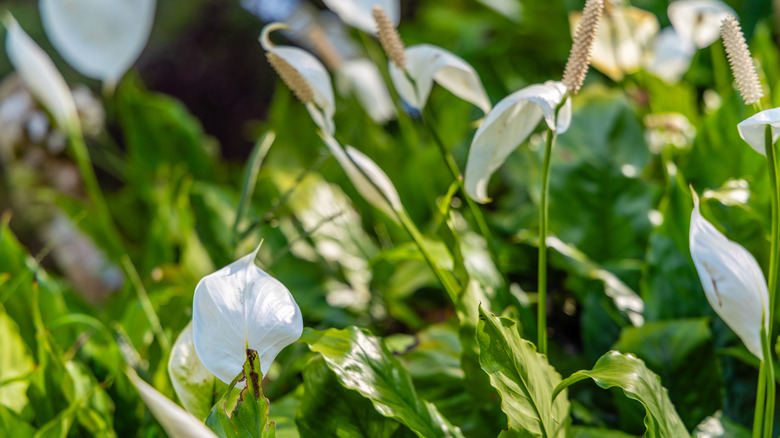
The onset of sweater weather brings with it a slew of changes to prepare for winter, whether that means one final check of the HVAC system or winterizing your lawn and garden tools. But like us, plants are gearing up for the seasonal change, and your peace lily is no exception. Typically found gracing office shelves or low-light corners, peace lilies (Spathiphyllum spp.) are some of the easiest houseplants to grow. If you live in truly warm climates (USDA Hardiness Zone 10B and higher), you can actually grow a peace lily outdoors and enjoy its tropical foliage in shaded beds year-round. However, for most plant owners, peace lilies live indoors for at least part of the year.
Once your evenings begin to cool, you must take a few important steps so your peace lily plants can thrive throughout the colder months. If you've been sunning them outside but live in a place where they're unlikely to withstand winter temperatures, gradually reverse-acclimate them so they can successfully adjust to the indoor environment again. Since their growth starts slowing down around this time, you must also taper your watering and hold off on fertilization. Lastly, given that peace lilies grow in tropical forests in the wild, you may also have to take a few extra measures to improve humidity and light levels.
When to move peace lilies indoors in the fall
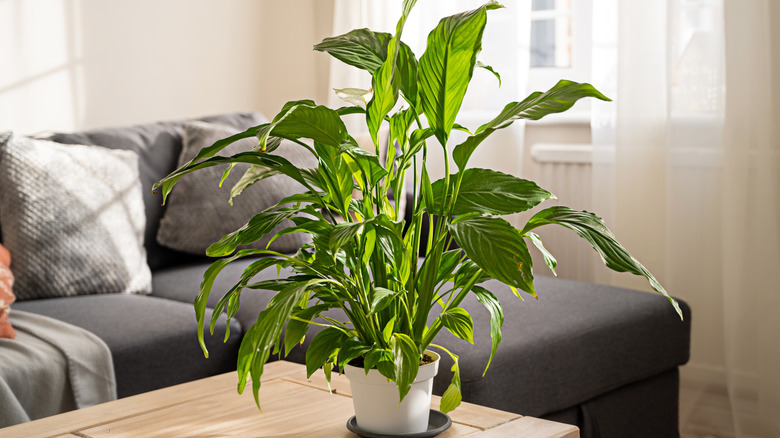
Since the weather varies widely across the U.S., with some already experiencing cool evenings in September while it's still warm further south, you'll need to exercise your judgment about when to bring your peace lily indoors. These plants stagnate and take damage as nighttime temperatures dip below 40 degrees Fahrenheit. So, a few days ahead of the expected downward swing, begin to move your peace lily indoors for a few hours at a time, gradually increasing the time each day.
Also, use this time to trim any yellowing or decaying leaves and check for pests. Peace lilies are especially susceptible to mealy bugs, though scales, spider mites, and fungus gnats can infest them as well. To prevent them from entering your home where they might wreak havoc on other indoor plants, treat them by swabbing their bodies with neem oil or isopropyl alcohol. Since such treatments can stink up your home, carrying them out a few days ahead of the scheduled move indoors is useful. Don't forget to wipe down the thick leaves with a damp paper towel afterwards. This will help get rid of insect eggs and larvae, as well as any accumulated pollen, dust, and debris. You may also cover the soil with a 1-inch-thick layer of gravel or sand to combat pests in the soil.
Adjusting light, water, and fertilizer for peace lilies in the fall
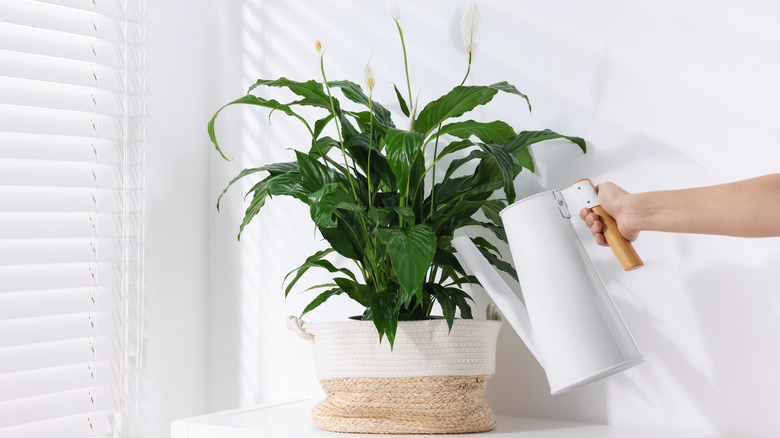
When relocating peace lily planters indoors in the fall, choose their spot wisely. Put them in an area with bright, indirect light, but away from cold or hot drafts (like doors, heaters, radiators, or fireplaces), since they don't take kindly to wild temperature fluctuations. Even though peace lilies can tolerate dim environments, you must move them closer to a window, ideally north- or east-facing, in the fall to ensure they look their lush selves through the winter. This is because sunlight during autumn isn't as intense.
Another important factor is how often to water a peace lily in the fall. It should certainly be less frequent compared to your current routine. But there's no one-size-fits-all approach since it depends on how dry and warm your house is, whether the pot receives ample light, and whether the soil is moisture-retentive. To determine if your peace lily needs watering, poke your finger an inch deep into the soil. If it feels dry, pour water until it runs out of the drainage hole.
It's also important to stop fertilizing at this point, as you may risk burning the leaves (which shows up as brown tips). If you don't notice any new leaves or shoots, stop fertilizing by early September. Since indoor air can be dry, host your peace lily pots on a gravel- or pebble-filled tray filled with water to raise humidity levels around the plant, or keep a humidifier nearby. Remember to keep peace lilies out of the reach of your toddlers and pets, as the leaves are poisonous if consumed.