

What To Do If Your Patio Is Always Flooding After Heavy Rain
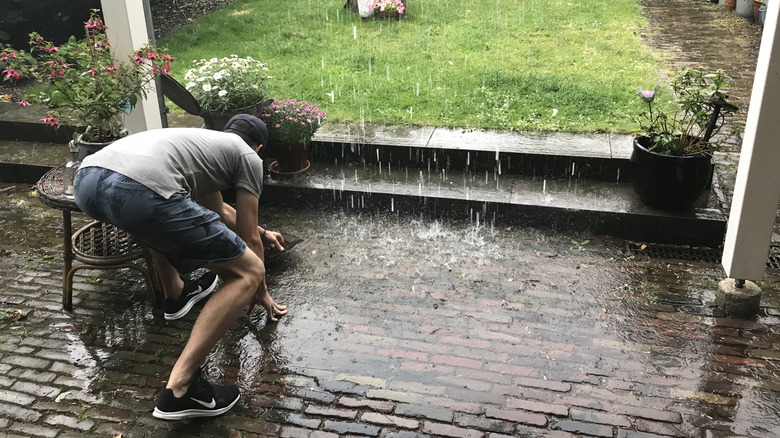
Flooding can be a scary thing. Even if you're not dealing with multiple feet worth of standing water after a severe weather event, minor pooling can cause structural issues, damage, and slipperiness that only worsens each time it rains. For many, this is a particularly stubborn issue on the patio — an area that's often right in the flow of water and dangerously close to the foundation and entry points of your house. Ineffective, poorly placed, or inadequate drainage is the most common cause of this problem, but steps like re-grading the area, adding drainage under your pavers, or reassessing your existing gutter system can help to mitigate it.
If water is pooling on your patio routinely, there are two main issues you have to consider: volume and direction. Volume isn't always something that we can control. If it's raining a massive amount, you're likely going to see flooding from time to time. What you can keep in mind, however, is the volume of rainwater in certain areas. If your downspout is located right next to your patio or your existing drainage system is clogged, it could result in a ton of water being redirected to one space that isn't equipped to handle it.
Direction, on the other hand, is all about getting water to flow away. This is where proper grading and drains come into play. This is likely where the bulk of your work will lie, and there are many approaches you can take to tackle this problem. If you keep these two issues at the front of your mind, you'll be able to correct your patio pooling issues in no time.
How to reduce the volume of water that finds its way onto your patio
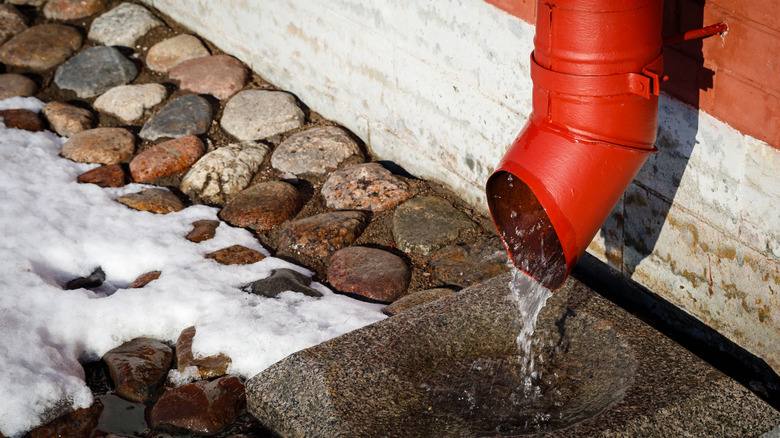
Downspouts perform a very important role in gutter systems. These pipes take the water that would have otherwise collected on your roof or in gutters and safely release it somewhere it can be reabsorbed into the earth — in theory. If this pipe is improperly placed, say, right next to your patio, all of that roof runoff will get dumped into an area without having anywhere to go. If you're dealing with patio flooding in one specific section that's near a downspout, correcting this will likely solve the bulk of your problem.
The simplest solution will likely be a downspout extension. These add-ons will both prevent patio pooling and save your home's foundation from water damage. Rather than reworking your entire gutter system, you can add some additional length to your existing downspout to redirect the water into an area where it can more easily be reabsorbed by the ground. Placing the end in a garden bed with water-loving plants is a great approach; rain gardens can both boost your curb appeal and give you a chance to give back to the environment. But any vegetated area that gently slopes away from your home will do. Less concentrated water will mean less pooling, but you should also take a look at the existing drainage systems in and around your patio once you've handled this issue.
How to ensure water flows away from the patio
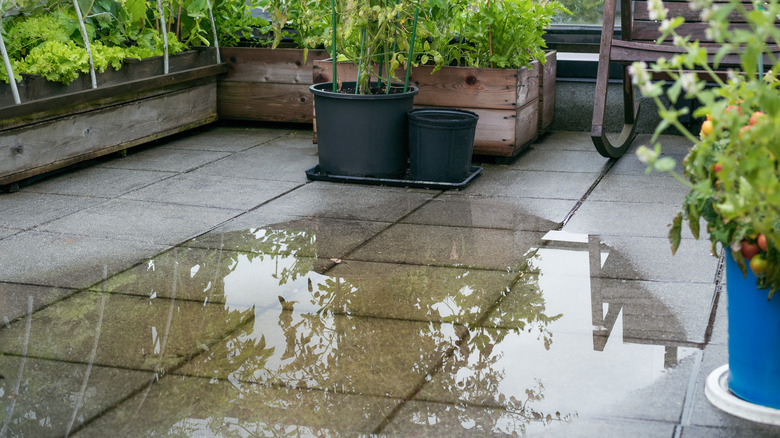
Once you've assessed your existing gutter system, it's time to address the issue of getting the water that does end up on the patio to flow away. One of the biggest issues you might run into (and one of the most thorough ways to fix the problem) concerns grading. A gentle slope in the surface of your patio will allow water to flow away rather than pooling, but over time, ground can settle, interrupting this angle. The exact correction process will depend on the material you're working with, but it can be as simple as adding some sand under brick pavers or as complex as removing the existing surface and pouring a new concrete slab. Patios that sit lower than the surrounding soil will also likely experience pooling, so overall elevation should be taken into account along with the angle.
There's also the option to install more direct drainage within the patio itself. Permeable pavers will allow water to flow directly into the soil below rather than pooling on the surface of the material. Meanwhile, drains will redirect water from low points into areas where it can be safely reabsorbed. Both of these are fairly invasive changes, but they're long-lasting solutions that will help to eliminate this issue once and for all.