

Not Spray Or Traps: The Simple Swap That Can Help With Mosquito Protection
The itchy bump on your skin you can't stop scratching. That familiar slap-and-miss on your arm or neck. The high-pitched whine in your ear at 2 a.m. There is no denying that mosquitoes are one of the most annoying insects out there. Not only do they make our lives miserable, but they also spread dangerous diseases. You can use traps or sprays to keep them away, and both often work well. There is, however, an even simpler preventive measure that may keep mosquitoes out of your home and garden: swapping your bright, cool-toned light bulbs for warm yellow bulbs. In fact, this type of light bulb keeps more bugs away than any other — not just mosquitoes.
Many flying insects are drawn to the short wavelengths emitted by traditional incandescent and cool-white LED bulbs. When you swap in warmer bulbs with longer wavelengths, mosquito numbers tend to drop. However, switching to warmer lights is only part of the equation. The bulbs are not repellents and are unlikely to keep mosquitoes away on their own. You still need to combine them with other clever ways to keep mosquitoes away from your home. How well this trick works depends on the mosquito species, the time of day, and the exact light spectrum your bulb gives off. Don't expect a single warm light bulb to fix all your mosquito problems.
Using warm light bulbs to keep mosquitoes away

If you decide to swap your bright, cool-toned bulbs for warm yellow bulbs, you should keep a few things in mind. In general, the lower the Kelvin number, the less attractive the light is to bugs. Skip anything labelled daylight or cool white, which is usually 5000K or higher. Instead, look for bulbs rated 2700K or lower. For instance, amber lights are typically at or below 2200K, putting them squarely in the warm, long-wavelength range that mosquitoes and other flying insects find less attractive.
Think carefully about the placement of the light bulbs as well. Warm yellow bulbs with a filament may still attract some mosquitoes because they produce heat, which mosquitoes are attracted to. If you want to reduce your exposure, remove this type of lighting from places where you spend a lot of time. If you can, install fixtures that direct light downward instead of flooding the room or area with illumination. Finally, use bulbs with the lowest brightness that still allows you to see safely.
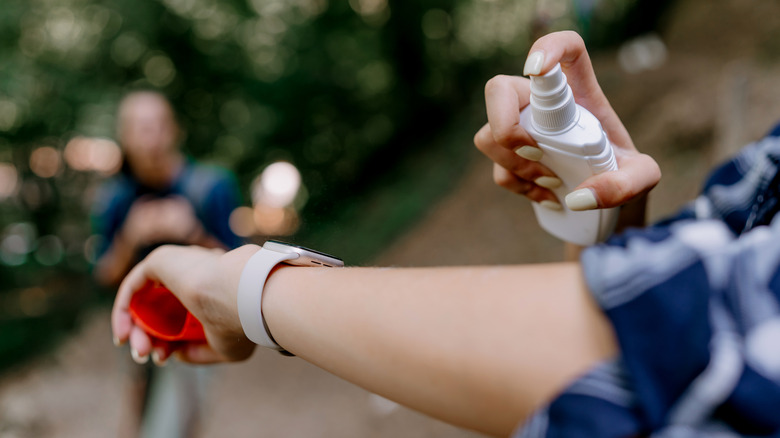
If you're using warm lights outdoors, don't keep them on all night. Instead, use fixtures with timed switches or motion sensors to avoid turning your lights into a beacon for mosquitoes and other insects. Bonus: They're also one of the easiest ways to save on your electric bill that you might have missed. A DIY or store-bought mosquito repellent is the best solution for your pest problem. Apply it whenever you go outdoors. Lastly, get rid of anything else that could be attracting mosquitoes, especially standing water.