

Is It Okay To Hose Down A Hornets Nest?
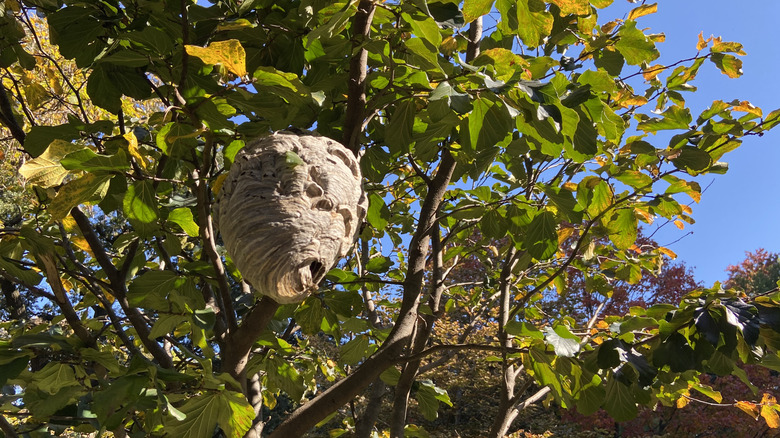
If you love to spend time outdoors, then you know how frustrating it can be to find pests in your garden, especially when those pests are dangerous. Hornets are one pest that you really don't want to find in your yard. While hornets may not be overly aggressive if you encounter one away from its nest, they are known to attack when their nest is approached. If you want to spend any time within about 6.5 feet of the nest, you might be subject to a painful and dangerous, even life-threatening, sting. If you do find a nest, you may be tempted to opt for a quick solution by spraying it down with a garden hose. While some people have had success using a powerful spray of water to dislodge the nest, there are definitely better and safer methods.
Hornets nests are often found in hard-to-reach places. They might be in the trees or near your attic, roof, shed, or garage. If you want to first identify what type of nest is in your yard, hornets nests can be anywhere between the size of a golf ball and the size of a basketball and have a paper-like look. Because they are often in high places, grabbing a garden hose with a powerful spray that can cover the distance seems like a good idea. The water pressure destroys the nest and drowns the hornets while you stay a safe distance away. However, spraying water does not necessarily kill hornets, meaning they are still able to defend their nest. Plus, spraying high pressure water at your home or shed could cause property damage.
Why you shouldn't try to remove a hornets nest with water
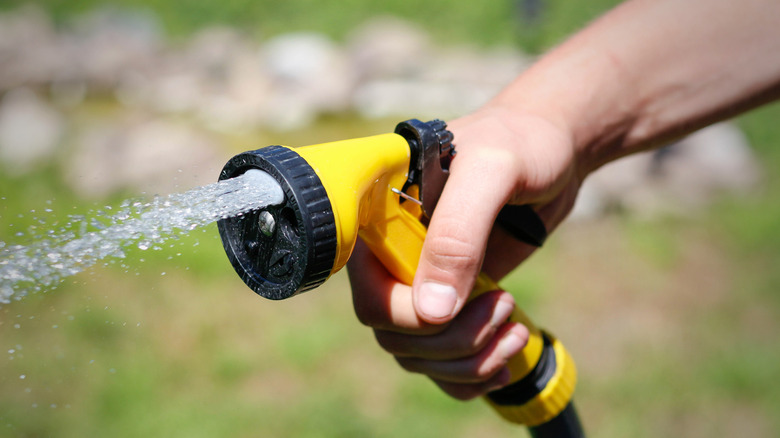
If you decide to try hosing down a hornets nest, the recommendation from people who have tried it is to wait until dark, use water pressure high enough to destroy the nest, stay as far away as possible, and have an escape plan. Hornets are less active at night, so you may avoid stings by waiting until after sunset. After the nest is down, retreat to a safe location where the hornets can't reach you, and do not approach the downed nest. The hornets will likely still be buzzing around it.
The remaining hornets are exactly the reason that it is better to use an insecticide rather than plain water. Hornets can drown if submerged in water, but simply spraying them with water is unlikely to kill them. Instead, it will make them aggressive as they try to protect their nest, making your removal more dangerous. Additionally, hornets may return to the spot where the nest once was, even if you try out some ways to prevent wasps from building nests near your home. Insecticides can help prevent recurrences of nests, but plain water will not.
Luckily, there are better ways to take down a hornets nest. There are plenty of effective commercial insecticides, but if you want a more natural method, you can learn how to eliminate a hornets nest without using chemicals. Once the nest is down and the hornets are completely gone and have been for a few days, then it can be a good idea to rinse the area with your garden hose.
Methods to safely remove a hornets nest
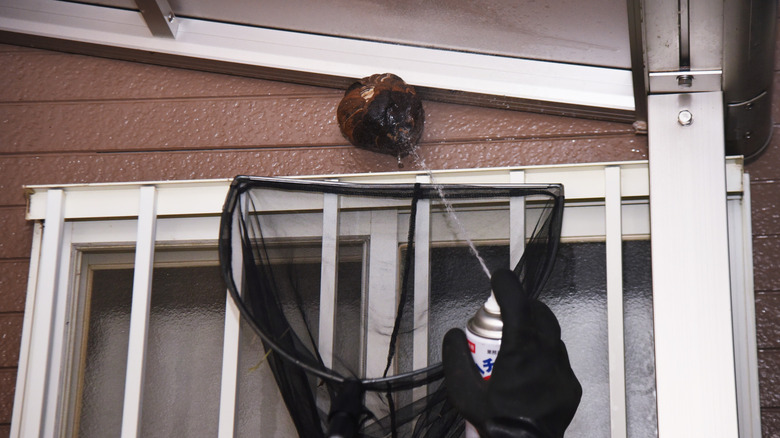
If safety is your main priority, then hiring a professional to remove the nest is your best bet. Anyone with known or suspected allergies to wasp or hornet stings should strongly consider avoiding the risk of stings by calling in a professional to handle it. If you're certain you want to do it yourself, there are still safer ways than the garden hose to try first.
The most widely recommended DIY method is to use a spray designed to kill wasps or hornets. These sprays typically have long ranges to allow the user to stand as far as 20 feet away while spraying the nest. Unlike water, these sprays will penetrate the nest and kill the hornets inside of it. This means that when you begin to actually remove the nest, angry hornets will not exit the nest and seek you out. Still, you should wear thick, protective clothing, work at night, and have an escape plan in case any hornets do approach you.
After observing the nest over a few couple of days, if there is no hornet activity, you can take down the nest. One option is to use a garbage bag to grab the nest before tying it, but if the nest is hard to reach, then it creates a good opportunity to use the garden hose, actually. Without the risk of hornets attacking you, you can spray the nest with the hose to break it down. Just avoid getting water anywhere that could be damaged by pressure or moisture, such as attics or garages.