

Why There's Simply No Need For Plastic Mulch Anymore
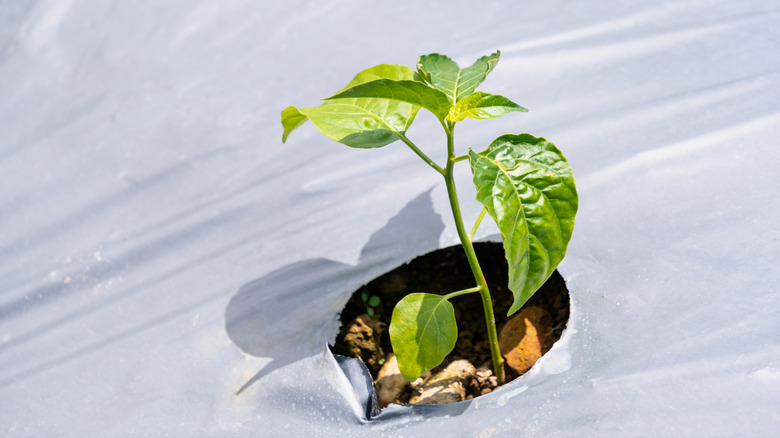
Plastic mulch boasts a wealth of benefits, making it extremely common on both commercial farms and home gardens. This mulch comes in the form of plastic film dotted with holes for plants to poke through, and it is very effective at suppressing weed growth, controlling soil temperature, and increasing produce yields. While plastic mulch is undoubtedly helpful at creating an extremely controlled growing environment, that doesn't negate all the negative effects it can have on one's garden. Plastic is an inorganic material that is not biodegradable, and it can't provide any nutritional value to your plants. With so many other mulch alternatives that work just as well, there's really no need for plastic mulch.
Part of the appeal of plastic mulch is that it's typically cheaper than other organic or inorganic materials. However, plastic sheeting needs to be replaced at least every two years, even under the best conditions, making it potentially less cost-efficient than more permanent mulch alternatives that deter weeds and erosion. Plastic mulch is also difficult to recycle due to how much dirt it accumulates, so large amounts of sheeting end up sitting in landfills. Furthermore, when replacing plastic mulch, consider how easy it is for little shreds of plastic to come off and become stuck in the soil. While in use, plastic mulch can also transfer microplastics and forever chemicals into your garden that can prove toxic to the environment, including any wildlife in the area.
Aside from its negative environmental impact, plastic has a few shortcomings as a mulch material in general. The impermeable plastic provides little airflow and can trap moisture underneath it, leading to root rot for plants, or pools of still water that can attract pests like mosquitos. Fortunately, there are a wealth of other mulching options that work much better than plastic.
Eco-friendly alternatives to plastic mulch
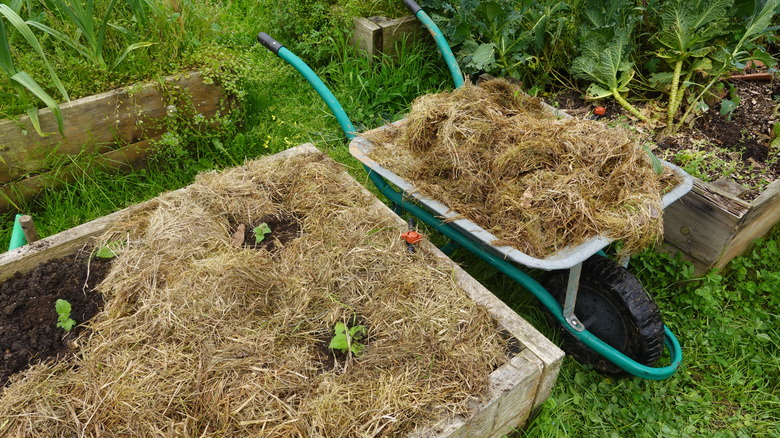
If you are a fan of the easy-to-use nature of plastic mulch, you may want to upgrade to a biodegradable option like a heavy-duty paper mulch. Using sheets of paper or cardboard as mulch may sound strange, but it's actually a very common practice that is particularly helpful for covering large areas. Like plastic mulch, using these sheets (or a layer of shredded paper) can create a clean base for your plants to grow, but unlike plastic, paper products will break down over time. Paper mulch is especially effective when paired with other types of organic mulches and is an example of why there's simply no need to splurge on expensive garden mulch.
One considerable benefit of using an organic mulch like leaves, grass clippings, or straw is that it will infuse your soil with nutrients like nitrogen that will make your plants healthier. And of course, they can also deter weeds and regulate soil temperature just like plastic mulch does. Alternatively, you could use a natural yet inorganic material like gravel for your mulching needs. Gravel tends to last a lot longer than organic mulches without seeping any harsh chemicals into the soil.
There is no one-size-fits-all mulch. Gravel mulch provides superior water drainage, while shredded leaves and grass clippings provide a ton of nutrients. The best type of mulch for your garden depends on the region you live in and your garden's specific needs, but you can be sure that any option is better than potentially poisoning your soil with plastic mulch.