

No More Crusty, Dusty Succulents: How To Remove Dead Leaves And Keep Them Thriving
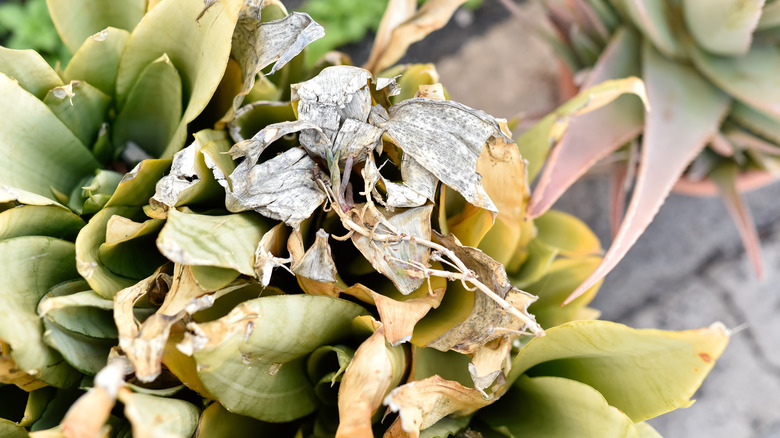
Succulents are living, textural decor – artful in appearance with gentle color variations and mind-pleasing fibonacci spirals among them. Large or small, indoors or out, they intrigue master gardeners and amateur plant-lovers alike. Those in hot climates will appreciate their drought-resistant nature, and cold-climate gardeners can bring the joy inside with succulents that thrive indoors. There are many fast-growing varieties and many are relatively easy to grow, maintain, and propagate.
Because they store moisture in their leaves, they don't need much attention; in fact, too much water can cause rot. Despite their tolerance for benign neglect, these hardy plants still need a bit of routine maintenance to stay healthy and to protect them from predators. It is important to remove any dead leaves because they provide cover for tiny invaders like aphids, mealybugs, scale insects, spider mites, and fungus gnats to live undetected until it may be too late for your plant.
In fact, removing dead leaves is one of the best defense strategies for your succulents. In some varieties, new growth (pups) are just waiting to emerge, so clearing the dead bits allows them to find their way into whatever light exposure the plant has. Those pups can even be used to propagate additional succulent plants.
The best strategies for removing desiccated leaves from your succulents
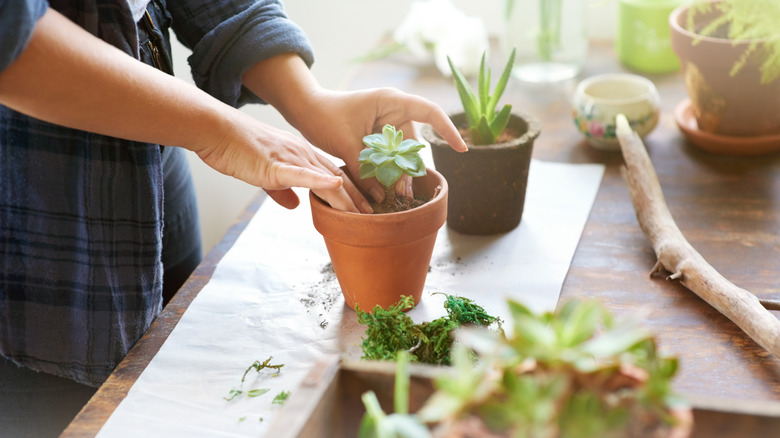
Using large garden tweezers, small shears, or your fingers, gently but firmly remove any dead or dry growth from the base of the plant, starting from just below the healthy section and working your way around and down to the base. Follow up by clearing away any other dead foliage from the area around it, and then give it a good spritz of water to rehydrate the entire plant. Dead leaves may have prevented the soil from drying properly, so water the soil only if it is completely dry. It's a good time to familiarize yourself with how to water succulents for the best success.
With any of the 200 species of popular Echeveria, dead leaves will have a "crispy" texture, and that's normal for a healthy plant. If they're soft and yellow, it could be plant rot. If the crisp leaf doesn't come away easily, leave it. Tugging too aggressively before it's ready can leave the plant vulnerable to rot.
The same procedure applies to dried flowers of blooming succulents like concrete leaf (Titanopsis calcarea), cone plant (Conophytum), or echeveria, bloom stalks that grow succulents such as Echeveria Agavoides Lipsticks, and concrete leaf (Titanopsis calcarea). Carefully snip or pull them away and toss them, as they can't be used for propagation. Your succulents now have space to grow and thrive.