

Say Goodbye To Traditional Mulch: Use This Golden Perennial For Fewer Weeds Under Trees & Shrubs
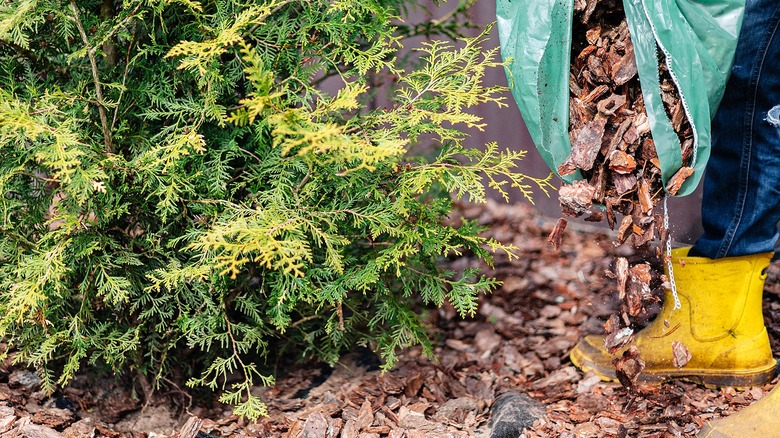
When you're looking for ground covers to plant to crowd out pesky weeds, don't forget to include one or two types that will provide fall color. One overlooked option? The humble autumnal wildflower known as goldenrod (Solidago spp.). This perennial is such a common sight along fall roadways and abandoned meadows that you might not think of it as a useful garden plant. Yet goldenrod, especially the shorter varieties, possesses the exact qualities that can make it a kind of living mulch under trees and shrubs.
Because it spreads so thickly by both underground rhizomes and by self-seeding, goldenrod quickly establishes itself to choke out weeds. That means that you've not only eliminated unsightly growth under prized shrubs and trees, but you've established a golden ground cover that attracts all manner of wildlife. Growers recommend treating goldenrod as a "chop and drop" weed-suppressor, which means that the upper sections of the plant can be scythed down at various times to provide additional nutrient-rich mulching material. This method is just another way you can ditch the mulch for a living plant alternative.
Goldenrod is an herbaceous perennial that blooms in clusters of yellow flowers starting in late summer or early fall, depending on the region and species; the North American native is hardy in zones 2 to 8. Goldenrod is also a pollinator-friendly flower that will add a gorgeous autumn glow to your garden; it can bring butterflies and moths, and the songbirds that are seeking their larvae. At the same time, it's a deer-resistant plant.
Goldenrod is an easy-to-grow living mulch
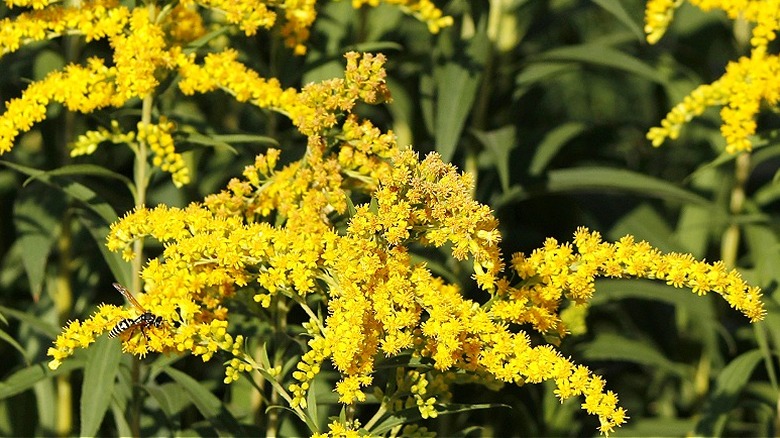
With more than 100 known species of goldenrod, it's not surprising that you'll find several options that work well as ground covers. As noted, the best ones to grow under trees and shrubs are often on the shorter side, and can tolerate shade. Good choices include blue-stemmed goldenrod (S. caesia) and white goldenrod (S. bicolor). The cultivar 'Golden Fleece' is another compact type, while zigzag goldenrod (S. flexicaulis) also thrives in shade and can grow as low as 1 foot. If you do, however, want some height for drama under taller trees, then perhaps consider 'Variagata,' which works well in woodland sites and grows to about 4 feet tall.
As you might expect of a ubiquitous wildflower, goldenrod is easy to grow. It spreads readily in a variety of soils. That said, if given the preference, goldenrod does best in soil that's on the acidic side, and prefers a well-draining patch in which to grow. Once you've established it, goldenrod can often take care of itself, even during drought conditions.
Although a goldenrod patch is quite self-sufficient, a few tips and tricks can make these weed-suppressing plants even more prolific. Specifically, after its first yellow blooms have died back, consider deadheading spent flowers to encourage a new flush. As for plant diseases, the only ones you might need to contend with are fungal ones like powdery mildew and rust. Note that sulfur sprays can keep these diseases at bay.