

Shade Sails Vs Gazebos: How To Make The Right Choice For Your Yard

We may receive a commission on purchases made from links.
Part of the charm of owning a house with a backyard lies in the freedom it begets. In the morning, you can turn a corner into a cozy nook where you lazily taste your coffee while catching up on news. Later in the day, as you're unwinding, you can spend some time taking in the sunset or your garden flowers. Over weekends and holidays, you may turn your yard into an entertaining spot where friends and family gather for celebratory cheer. The catch? Mother Nature must play cool, which, sadly, she rarely does.
To make the most of your outdoors, designing a dedicated, shaded area where you can escape the worst of the natural elements is essential. While there are several ways to go about this, many default to easier options like shade sails or gazebos. But how do you decide which is the right choice for your yard? For that, you take into account your needs, budget, coverage area, sightlines, and the overall aesthetic.
The short of it is shade sails will be suitable if you're looking for a quick-fix, cheap solution to keep the sun out, while bringing in the Mediterranean feels (which, lucky for you, is quite trendy in 2026). However, if you're looking for year-round, durable coverage and don't mind paying extra for it, you must try an enclosed gazebo — it also makes the ultimate backyard dining location.
Pick shade sails for seasonal sun protection
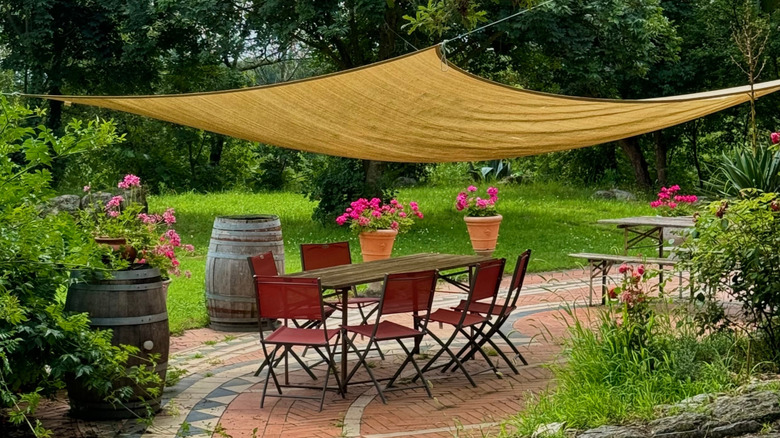
Unlike the sails on ships that help steer them, shade sails, while preserving the look, are hoisted over a patio, a deck, a pool, or a garden. Anchored over steel posts, the sails, usually made from HDPE or PVC materials, stretch taut, forming a beautiful shade canopy. Available in various shapes and sizes, shade sails are fairly flexible and can be used to provide immediate UV relief over asymmetrical or irregular-shaped spots or corners.
Those who are budget-conscious will also find shade sails great for the price. A classic, 95% UV blocker, like this Sunny Guard 10 feet by 13 feet Rectangle Shade Sail, can be bought for as little as $50. However, prices go up if you need to install sturdier posts or opt for waterproof materials. They also last a long time, with many manufacturers offering warranties for 10 years or more.
Since you can easily install or dismantle them, as required, renters or those unwilling to make permanent installations would do better with shade sails. Appeal-wise, they pair better with modern or contemporary designs. Plus, they help preserve surrounding views, as you're simply dealing with a colorful cover overhead. But there are disadvantages to shade sails. They don't hold up well in unpredictable weather — think heavy rains or winds — and must be taken down before expected snow, unless the material is specifically created to bear such heavy loads.
Choose gazebos for a traditional, permanent protection against all odds
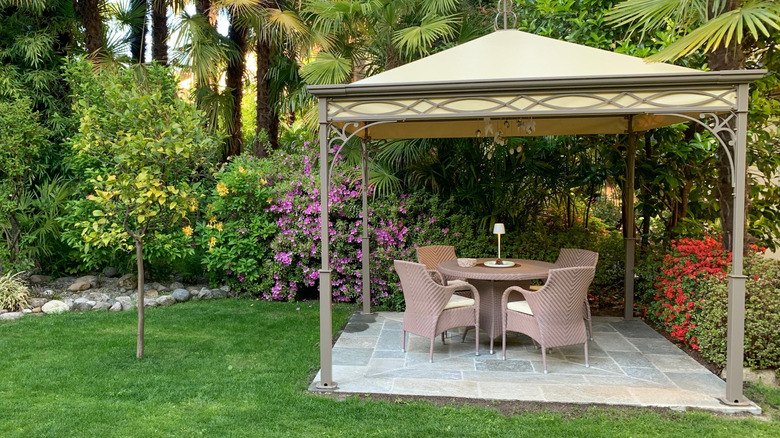
Unlike shade sails, gazebos involve a more permanent make. Since roofs are made of durable materials like wood, asphalt, slate, or metal, they offer greater protection against all elements, including wind and rain. Households looking to create tucked-away, intimate, spa, wellness, or entertainment zones that they can use throughout the year are more likely to be on board with these shade structures. Besides, they're highly customizable, for a price. You can choose to leave the sides open to not impede the sightlines, or put down screens to keep out the bugs without compromising on ventilation. You can also hook them up with utilities to feel right at home, even outdoors.
Gazebos are brilliant for bringing about a traditional touch to your yards. However, they can be quite expensive. In fact, the average cost to install a gazebo can hover over $4,700, though a lot depends on the materials used. For instance, vinyl is cheaper than wood, but this will, in turn, affect their lifespan. While wood and metal gazebos can last several decades, vinyl ones barely make it to the 10-year mark. So, being permanent doesn't necessarily make them the most durable of the two options. Moreover, gazebos require flat land, which can further up the costs if you need to put down concrete footings. Another determinant you must consider is the need for permits. Owing to their permanent nature, some municipalities or HOAs may have regulations in place, especially about size. Also, relative to shade sails, gazebos aren't as easy to install and often require professional help.