

The Everyday Kitchen Appliance You Should Never Put Pyrex Dishes In
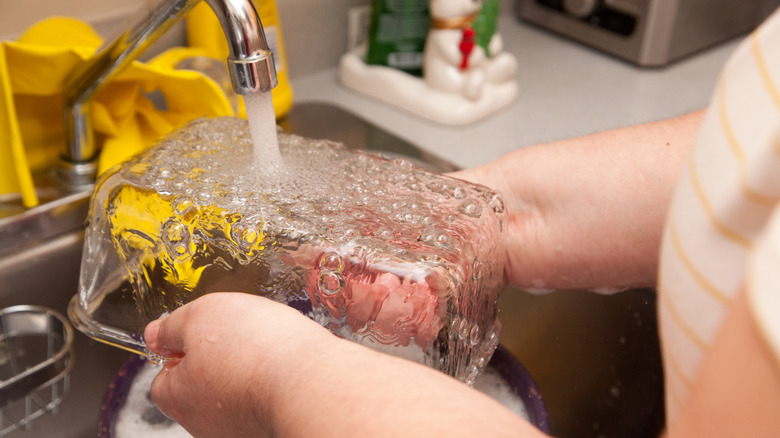
Known for its versatility and durability, Pyrex's glass bakeware is a staple in many of our homes. Whether you're cooking your favorite meals in the oven, storing leftovers in the refrigerator, or cleaning your Pyrex glassware in the dishwasher, it's a relief to know that these dishes are sturdy enough to use throughout the kitchen. That said, there is a limit to what they can withstand. If you're in a hurry or hungry after a long day at work, you might be tempted to pop your trusty old Pyrex glassware into the toaster oven to heat up your dinner quickly. But according to the company, that's a major no-no.
As the company says on its website, "This type of use exposes Pyrex glassware to potentially damaging direct heat sources. Failure to follow the safeguards and instructions may result in personal injury and/or property damage." According to Pyrex, if your products shatter because you didn't follow its safety, use, and care instructions, your warranty may not apply. (If that happens, you can try this easy method for cleaning up broken glass.) While a toaster oven is convenient, it's not compatible with Pyrex dishes.
Why you shouldn't put Pyrex dishes in the toaster oven
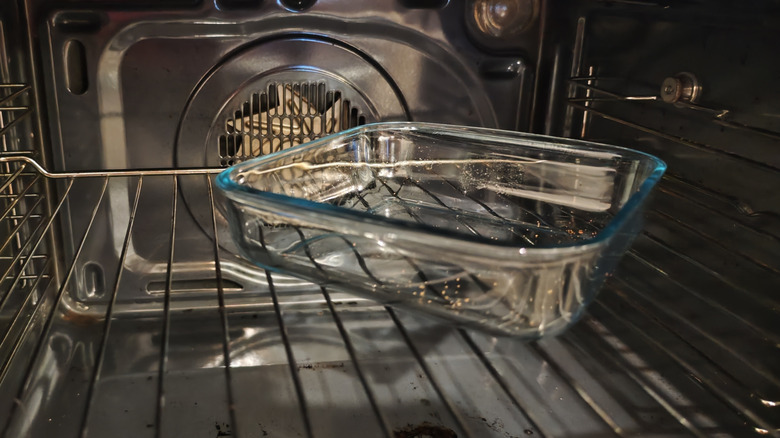
So, why are Pyrex dishes safe for regular ovens but not toaster ovens? It all comes down to how these appliances work. To sum it up, since toaster ovens are smaller than traditional ones, there's less space to heat, so they get hotter — and cook food — faster. If glass is exposed to these rapid temperature changes, it can expand and contract and potentially experience something known as "thermal shock." When that happens, it can shatter or explode. This can also happen if you put empty glassware straight into a hot oven (without pre-heating it beforehand). If you must use some sort of cookware in your toaster oven, some good alternatives are aluminum, cast iron, and non-stick pans.
Aside from putting it in the toaster oven, there are several other things you shouldn't do with your Pyrex glassware due to the risk of thermal shock. The company also advises not to use it on stovetops (including gas and electric models), under broilers, or on barbecue grills. Another common mistake to avoid? Pouring cool liquid into a hot Pyrex dish. For the same reasons we've already covered, this type of quick temperature change can compromise the strength of the glass (and potentially lead to breakage). Instead, if you're making something that could release liquid during the cooking process (like meat or vegetables), add enough liquid to cover the bottom of the glass. And since Pryex isn't made the same way anymore, you'll want to be extra cautious with vintage pieces too.