

The Mulch Mistake That's Preventing Your Landscaping From Being Weed Free
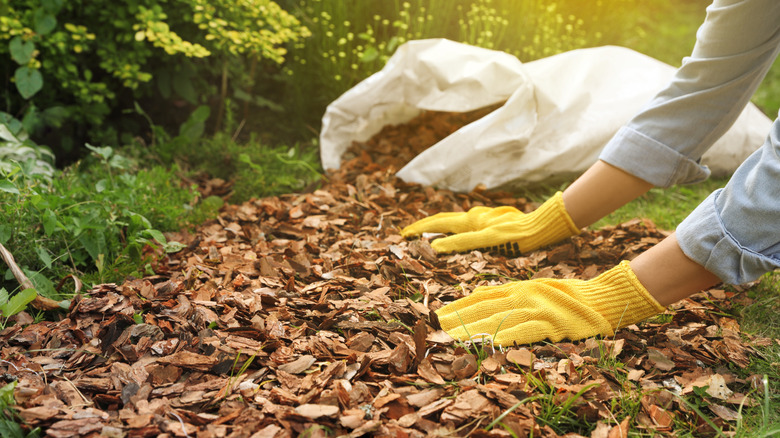
If you've been tending a garden for a while, you're likely already familiar with all the ways to use mulch in your yard. It's great for everything from retaining soil moisture to suppressing explosive weed growth. Even new gardeners have likely heard that using mulch on their beds is good practice. Many people opt for organic mulches, such as wood chips or pine bark, over synthetic mulches, as natural materials benefit the soil when they eventually break down. However, in the war against weeds, there's one mulching mistake you should avoid if you're aiming for a weed-free garden — applying the mulch too thinly.
To understand why a thin layer of mulch is a problem, you need to know why mulch prevents weed growth. Weeds are really good at surviving harsh conditions. Plus, they multiply readily via seeds, sprouting stems, and root structures. Weed seeds can lie dormant in the soil — sometimes for decades — until the conditions are right for germination. To stop this from happening, you can cover the soil with mulch to prevent seeds from getting the sunlight they need to sprout. A layer of mulch 4 inches deep will provide adequate shade.
Apply a thick layer of mulch to your garden bed
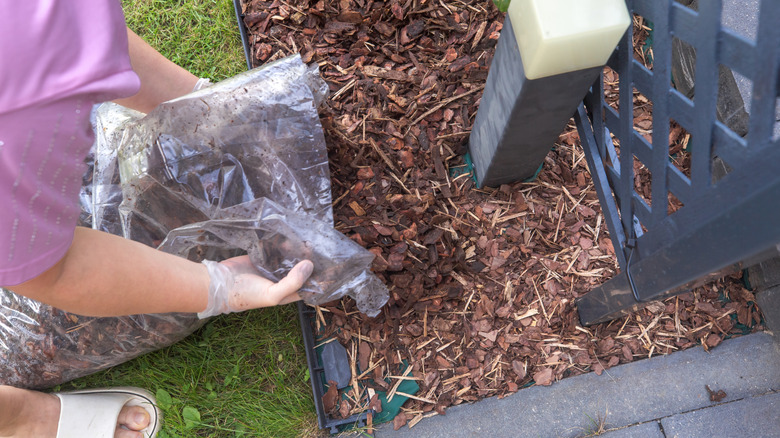
Many gardeners use landscape fabric, newspaper, or flattened cardboard boxes under a layer of mulch. While this can be helpful in specific circumstances, the downsides to using landscape fabric may have you second-guessing your investment. You can expect issues like poor soil aeration and water retention, among others. If you apply a 4-inch-deep layer of mulch to your garden bed, additional cover is largely unnecessary. More mulch isn't always better, either, so stick to the recommended depth. Adding a layer of mulch thicker than 4 inches will cost more in materials and potentially undermine soil health by preventing aeration and water penetration.
Keep the mulch away from plant stems and tree trunks, too. Even though you should be mulching around your trees, shrubs, and other plants, it's crucial to leave a 6-inch circle of soil around any greenery free from mulch. This can reduce the risk of your plants developing fungal diseases and pest infestations. Check periodically to see whether the layer of mulch needs to be topped up — usually once a year. Organic mulches break down over time, and while the resulting organic matter enriches your soil, the mulch still needs regular replenishing. You should only need to add 1 inch of mulch each time.