

The Difference Between Compost And Fertilizer (And Why You Need Both)
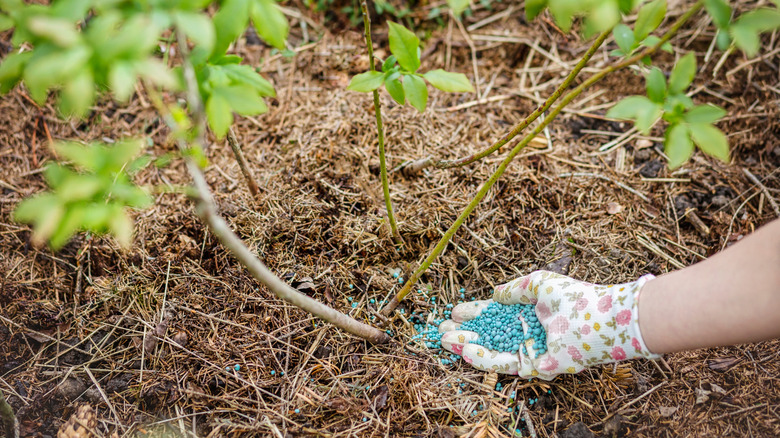
Those who've used carefully cultivated compost in their garden beds often call it a job well done. After all, those kitchen scraps and garden cuttings are packed with nutrients. Surely your plants don't need anything else? The reality is that compost performs a slightly different job to fertilizer. And out of the two, it's actually the latter that serves the bulk of your growers' gourmet needs.
So, what does compost do? Well, compost is organic material like food scraps that help to feed the soil, but it's best treated more as a secondary feed than your primary nutrient delivery method. Compost's nutrients are bound up in organic matter, which needs to break down first before it can feed your soil. Fertilizer is a nutrient soil additive that begins to release key nutrients, like nitrogen and potassium, almost immediately, improving the plant's growth.
The thing is, according to the University of Georgia, a 10-10-10 fertilizer is up to seven times more nutrient-dense than compost. In other words, you'd need to use 70 pounds of compost to get the same nutrients as 10 pounds of fertilizer. What this means is that, if you rely on compost alone, you'd need to make lots of it. Not only that, but since heavy-feeding plants like tomatoes often require regular feeding throughout the growing season, your plants won't get the needed nutrients in time. There are still many benefits of composting. If you've spent hours working on your compost pile, allow us to reassure you that your time has not been wasted. You may just need to rethink the role that your compost plays.
What role does compost play in the garden, other than feeding the soil?
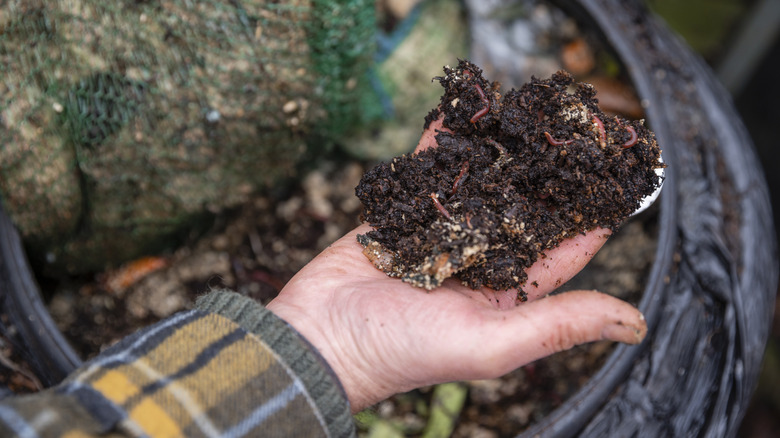
While compost does pass some nutrients into the soil, that's not its primary role. Compost is an addition that boosts the health and productivity of garden soil, aka a soil amendment. These serve different purposes, and the right amendment for your garden depends on your goal. For example, if you're concerned about high pH levels, a dash of agricultural lime can help to neutralize the problem. Compost also helps to improve soil structure. In denser soils, it loosens or aerates the substrate, making it easier to drain excess water and thus mitigates various common plant diseases, like root rot. Conversely, in sandier soils that struggle to hold onto water, it can be used to actually improve moisture retention.
Compost also helps to support your garden's wider ecosystem. It provides a source of sustenance for earthworms and other organisms that live in your soil, which do a lot to improve its health. Worms, for example, can help to loosen and oxygenate the soil, and there are various creatures and microorganisms that play important roles in plant health, growth, and disease-resistance. These creatures can also help to break down the compost, thus recycling those nutrients back into the soil. With that in mind, and especially if you're seeing lack-luster growth from your plants, it's best to use a blend of both compost and fertilizer to feed and manage your garden soil. Your fertilizer will give your growers the nutrients they need, when they need them, while your compost will keep the soil loose, nicely drained, and able to support the beneficial organisms within it.