

Are Shade Sails Worth The Extra Cost Compared To Umbrellas?
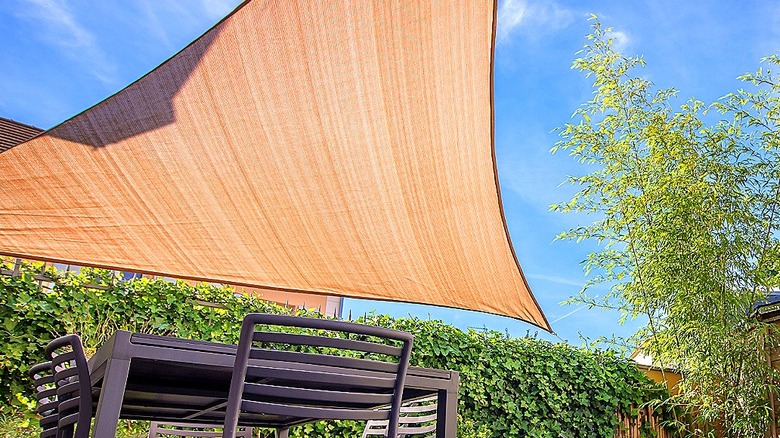
If you've ever sat in your backyard on a particularly sweltering sunny day, you know how nice it is to sit under your umbrella (-ella, -ella). But it turns out they're not the only outdoor accessory that can serve up some shade and keep you cool on summer's hottest days. Much like an umbrella, a shade sail offers protection from the sun. But instead of a covering that attaches to a pole, a shade sail is a more permanent fixture. The UV-resistant fabric comes equipped with rings so it can be anchored between various points, such as the side of your home or another free-standing post or structure.
Because shade sails are larger than your average umbrella, and are available in shapes like triangles, squares, and rectangles, they can cover more real estate. But they can also come with a larger price tag. And while there are some instances where you can install a shade sail yourself, much of the time you'll need to call in a professional. That said, shade sails offer more than just coverage, as they're designed to withstand harsh weather conditions and require very little maintenance. Whether or not they're the best choice for your backyard space, however, comes down to your individual needs.
When to choose a shade sail for your home
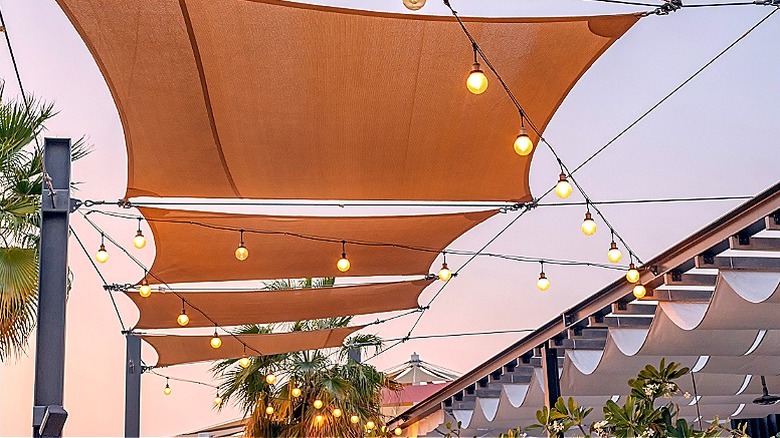
Sometimes bigger really is better. And one of the top benefits of a shade sail is that it can cover more space. Ranging from eight to 24 feet, they're ideal for protecting large swaths of your yard — say a pool or deck — from the sun's harsh rays. The most common materials for shade sails are high-density polyethylene, polypropylene, and polyester (with a polyurethane coating), meant to handle the elements, including wind and rain. Snow, however, is a no-go with shade sails as it can damage both the fabric and the posts. So, if you live in a colder area that sees a lot of snowfall, you'll need to take a shade sail down during the winter months.
And, no shade, but snow isn't the only disadvantage to choosing a shade sail. Gaps in coverage is also something to consider. Because the fabric structure is fixed in place, there are likely to be times when a shade sail doesn't provide coverage, as the sun rises and sets throughout the day– unlike an umbrella that can shift with the sun. As for cost, there's a greater upfront cost, as most shade sails require professional installation to properly anchor them in place. And while shade sails don't require a lot of maintenance, if you do need to clean them, you'll need to take them down first.
Bottom line: If you need to cover a larger space in your yard and are in the market for a more permanent solution, then a shade sail is a worthy investment. If durability is a concern, consider one made with commercial-grade fabric that can last upward of a decade.