

Not Coneflowers: The Native Flower That's A Serious Show-Stopper In The Garden
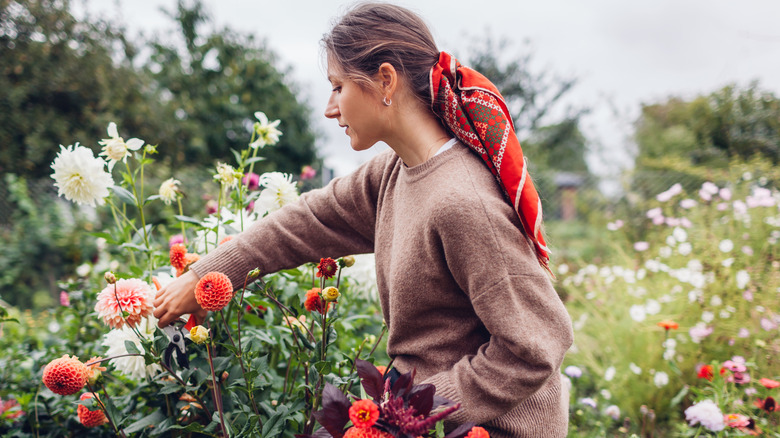
Many gardeners choose to grow numerous varieties of coneflower from seed for a budget-friendly garden. But some folks are up for a challenge when it comes to growing native species, and the Kentucky lady slipper orchid (Cypripedium kentuckiense), sometimes called the Kentucky yellow lady's-slipper, is a bold species that's worth a second look. It's 18 inches tall or more, with each stem producing a single large flower. Rather than typical flower petals, this orchid has a large white or pale yellow pouch paired with two downward-facing yellowish-green petals, or dark purple petals with yellow spots. If you squint, the big pouch looks akin to a woman's slipper, giving it an easy-to-remember common name.
This wildflower, classified as a perennial herb, is in a genus that includes species found in bogs, grasslands, and coniferous forests. Its native range is most of the southeastern United States, but several environmental threats have led to its increasing rarity in the wild. Whether from the destruction of wetlands or digging by feral hogs, this beautiful flower now only persists in small groupings across Georgia, Alabama, Arkansas, Louisiana, Mississippi, Oklahoma, Tennessee, Texas, Virginia, and of course, Kentucky. Remember that while this species is a rare flower worth hunting for, you should never disturb wild populations. Kentucky lady slipper orchids don't transplant well, but more importantly, you don't want to disrupt efforts to keep them thriving in the wild.
How to add rare Kentucky lady slipper orchids to your garden
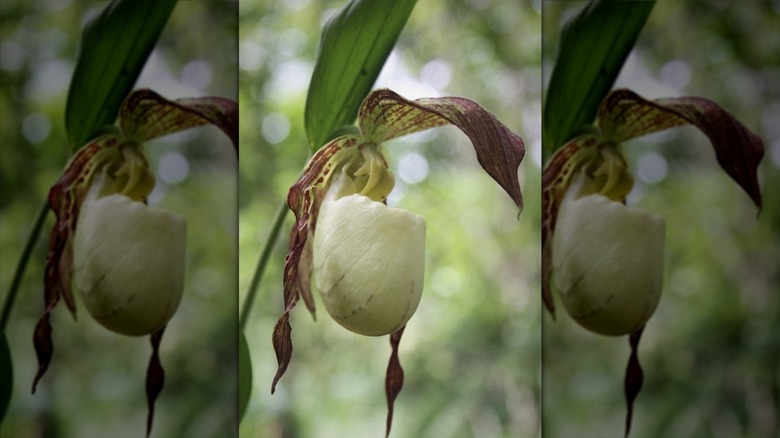
Several organizations are working to restore the Kentucky lady slipper orchid to its home range, and it's a worthy endeavor for any gardener to take up its cultivation. It's hardy in USDA Hardiness Zones 3 to 8 and can be cultivated as far north as Vermont and Minnesota with the right effort. As its native environment tends toward moist, boggy areas of forests, you can't go wrong planting it in well-draining, rich soil with medium to wet watering. Look for the large flowers around mid-May.
If you want to grow this endangered plant native to the U.S. in your garden, start by picking a prime spot. Try to mirror the conditions where it would thrive in the wild, mainly opting for a shady spot out of bright sunlight. When planting, remember that its roots are rhizomatic. Planting them deep in the ground will hinder further growth, so spread out the roots horizontally from the plant, just below the surface, for the best results.
If you're seeking more plants to outfit your woodland garden scene, consider other shade-loving species. One option that matches the Kentucky lady slipper orchid's stature — and then some — is the leopard plant (Ligularia przewalkskii), another native flower, and one that grows 4 to 6 feet tall. Or you can pair it with a moist-soil-loving ground cover like seersucker sedge (Carex plantaginea).