

This Long-Lasting Gardenia Variety With Beautiful White Flowers Looks Great In Winter, Too
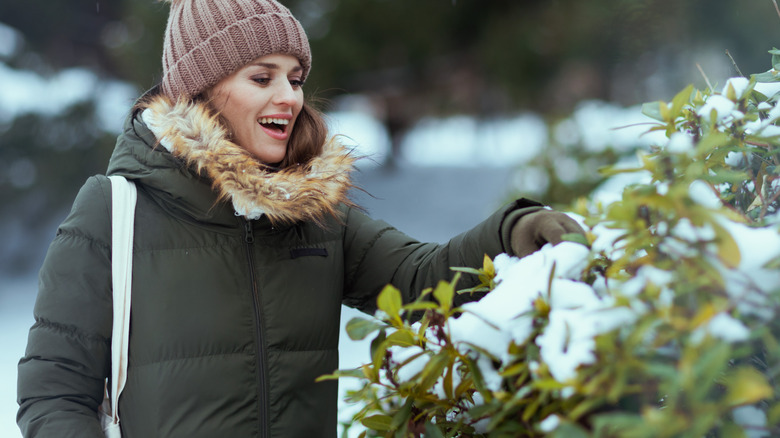
Spring blooms are hard to beat, summer offers fruits and lush greens, and fall blankets the yard in cozy leaves. But in a winter garden, there's mud. If the weather in your area is relatively mild, you might still enjoy curling up on the porch or gathering family around the bonfire, but truthfully, there isn't much to look at — unless you discover the right winter-hardy plants. If you've been on the hunt for plants that will bring color to your drab winter yard, you've probably come across gardenias, which are known in part for their glossy, evergreen leaves. Jubilation gardenia (Gardenia jasminoides 'Leeone') is a beautiful cultivar of the perennial shrub, carefully improved by the Southern Living Plant Collection.
A showy pick for warmer climates, Jubilation survives well in USDA Hardiness zones 7 to 10 and is among the best perennials to grow for gorgeous white flowers. Large blooms emerge on the shrub in spring and return sporadically through fall, with a fragrance like sweet jasmine. Left to their own devices, the withering flowers will turn into orange berries in fall. But even in the dead of winter, Jubilation's dark, evergreen foliage can make your garden feel full and lush.
Jubilation gardenia maintains a joyous show with the right care
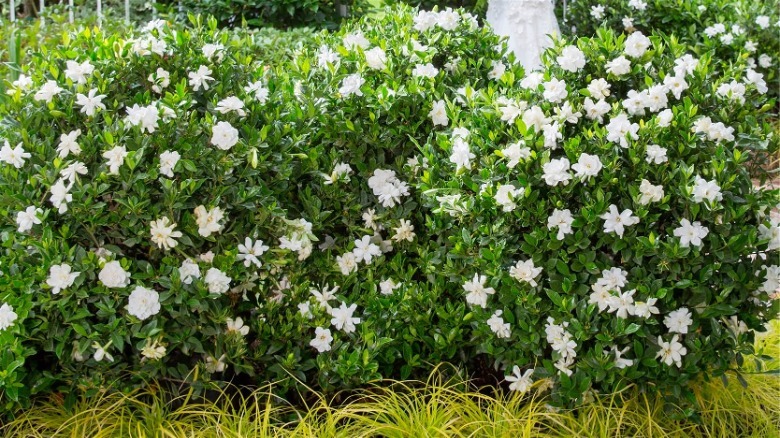
Jubilation needs bright light, but partial sunlight or afternoon shade may be helpful to prevent leaf scorch. Rich, moist soil with good drainage is a must, and acidic soil is ideal. Proximity may be something you want to consider when planting Jubilation; the perfume of its blooms can really be appreciated up close. It's mature size won't reach beyond 4 feet tall and 3 feet wide, so it's humble enough to plant beside pathways and patios or fill in borders without overtaking the view. It can also be grown in containers or as a houseplant.
Routine maintenance for this plant isn't especially complicated, but it does require some work. Water regularly and apply an acidic fertilizer while in bloom, then prune and shape the limbs after the last blooms have faded. Jubilation is hardy even in temperatures as low as 0 degrees Fahrenheit, but dressing the soil with a ring of mulch around the base of the plant can keep the soil moist and help it stay safe through the winter.
Jubilation is perhaps not a good choice for beginners or pest-prone gardens. Although it is stunning when it's healthy, it can suffer from an assortment of ailments, including aphids, scales, spider mites, powdery mildew, anthracnose, and more. It's also picky about its placement, developing leaf scorch with too much sunlight and leaf burn if there's a long, blistery winter. If you can stay attentive to Jubilation's needs, the beautiful and fragrant rewards are worth it, but if you're the type to plant it and forget it, there's another variety that's easier to grow.