

Not Clematis Or Hydrangea: The Sun-Loving Vine That Looks Good On Brick Walls

There's no question that ornamental vines can make your backyard a cozy oasis. And if your yard includes a classic brick wall, whether from a walled garden or an exterior house feature? So much the better! Of course, a woodland setting featuring English ivy, climbing hydrangea, or clematis over brick is a classic sight. But for sun-drenched yards, the cheerful and quirky balloon vine (Cardiospermum halicacabum) can take your exterior space in a whole new direction.
Perennial in USDA Hardiness Zones 9 to 11 and grown as an annual in cooler climates, "balloon vine" is also known as "love in a puff" and "heart seed." These common names hint at some of the more unique aspects of the vine, which blooms with small white flowers in late summer. In autumn, however, the "puff" part comes in, when the seed pods balloon out into lantern-like orbs. When these pods burst, they reveal white seeds with a heart-shaped pattern. The leafy vines grow about 4 to 6 feet tall.
Crawling up the side of a brick wall, this charming climbing plant will make you feel like you're living in a fairytale — but only if you train the vines right. Some vines, such as climbing hydrangeas, scale up brick walls all by themselves, using aerial roots. But balloon vine belongs to the tendril class of climbers, meaning that it will have an easier time twining around three-dimensional objects than scaling flat walls. For best results, attach a wooden trellis or sturdy wire framework to the brick wall.
Give balloon vines the sun and support they crave
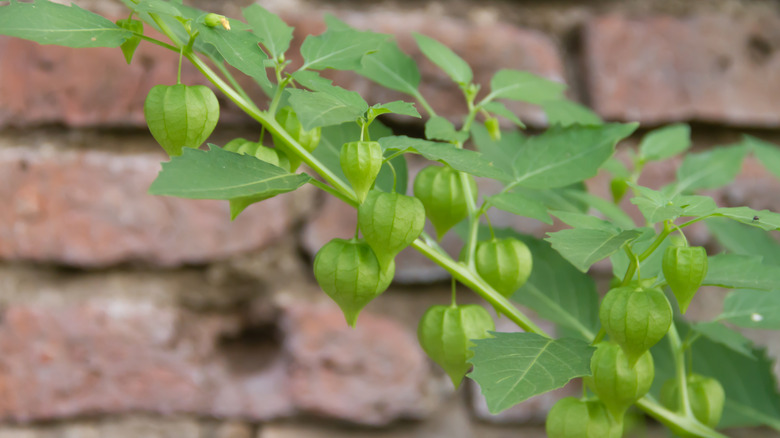
Unlike climbing hydrangeas, balloon vine grows most happily in full sun, so you should reserve the least shady stretch of your brick wall for this climber. Because it does have weedy characteristics, it's not surprising that balloon vine isn't fussy about its growing conditions. It will perform best, however, in neutral or somewhat acidic soil. The vine's roots prefer a moist, well-drained patch in which to establish themselves but can tolerate occasional droughts or boggy conditions.
Even if you live outside the warm climates in which balloon vine is reliably perennial, you can still grow the vigorous vine as an annual. Plant nursery-bought or homegrown seedlings in front of your support structure after the danger of frost has passed. If you grow them from seed, start these indoors about 6-8 weeks before the last frost date.
In the southern climates in which it thrives as a perennial, balloon vine can be aggressive in the wild. It's on invasive species lists in Texas, Alabama, Kentucky, South Carolina, and Maryland, so do not plant it in these states. For other southern states, one gardening hack that helps manage vining plants is to go vertical for optimal control. Keep the vine trained on the wall sections where you want it to grow, and pinch off tendrils that wander to areas in which you don't. Otherwise, it can smother your other plants. If your brick wall is fronted by shrubs and other ornamentals, it's especially important to keep balloon vine well-confined to its support structure. Otherwise, you may find this rambler taking a walk all over your shrubbery!