

11 Types Of Mold And What They Mean For Homeowners
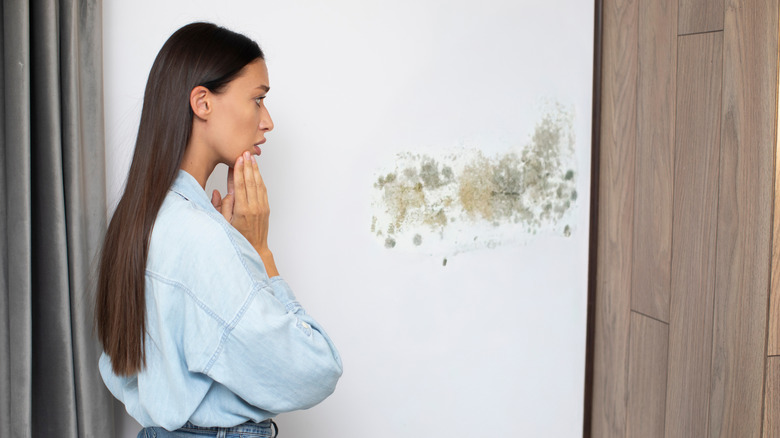
Those with years of homeownership experience will know that mold can crop up in the most unexpected places. Not only that, but it can appear in many forms, leaving those who like to keep their home clean scratching their heads about how best to deal with the problem. In general, it's best to deal with it as soon as you're able to, and fortunately, there are lots of easy ways to clean mold. It's also a good idea to deal with the underlying causes, which, regardless of the type of mold, is often damp and a lack of ventilation.
Where the difference between mold types lies is the surfaces they thrive on, whether they tend to grow outdoors or indoors, and the level of harm they can do to those exposed. Another thing to consider is that there are over 100,000 different types of mold, each with its own unique characteristics and growth habits. Now, we don't have the space here to cover them all, but what we can do is cover some of the most common types of household mold that you're likely to encounter. Below, we've highlighted 11. There are tips on how to identify the mold in your home, details on the risks associated with each type, plus guidance on how urgently each should be cleaned.
Stachybotrys
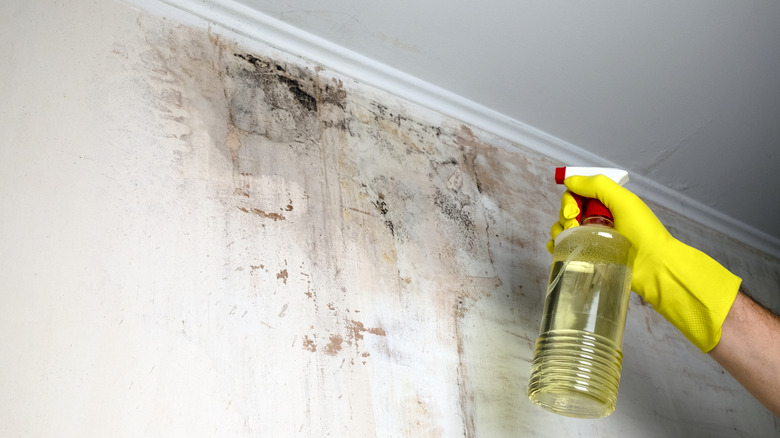
First up on our list is Stachybotrys. It's otherwise known as "black mold," due to its greenish-black coloration. It's among the more common types of household mold. It produces spores, which can enter your home's air, leading to an unpleasant musty smell. These, in turn, can lead to several adverse health effects. In fact, Stachybotrys is believed to be the cause behind several health problems among those who are exposed to it. Like many other mold types, symptoms among people with allergies can include eye and lung irritation, along with sneezing. It can also lead to fungal infections in those with compromised or weakened immune systems. In other words, if you find it, you should clean it — quickly.
As for where it's usually found, it likes to grow on things like fiberboard, gypsum board, paper, wood — any organic material in your home with high cellulose content. It also needs a steady supply of moisture to grow, which makes it a common sight in bathrooms and a frequent cause of smelly laundry rooms. If it's started growing after years without it, then that could also be a sign of water damage or a leak. But if you're constantly dealing with this mold type, and you know you don't have a leak, it could point to a lack of ventilation. Indeed, improving ventilation around the home is usually one of the best ways to prevent future mold growth — regardless of the type you're dealing with.
Cladosporium
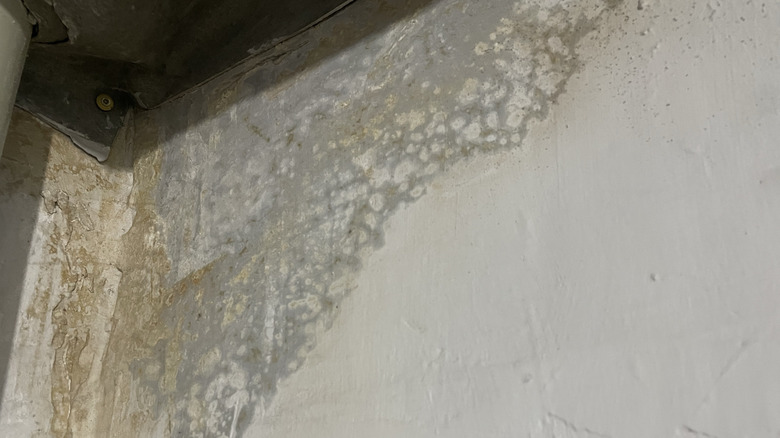
According to the Centers for Disease Control and Prevention (CDC), Cladosporium is among the three most common types of mold. It's especially common outdoors, although it often makes its way indoors, with spaces like basements and bathrooms especially prone to it. It's not the most toxic type of mold, although that's not really saying much, since no mold is entirely "safe" to be around. If it grows in your home, then it could lead to allergenic symptoms like sneezing, itchy eyes, and coughing. It can worsen asthmatic symptoms, and like black mold, can lead to infections in those with compromised immune systems.
Another issue with this type of mold is that it can be tricky to identify. In fact, many mold types can. This particular species can present as dark green, brown, or black, making it easy to confuse with other types. It also shares certain surface and environmental preferences with other molds. Firstly, it likes areas with constant moisture. Secondly, it'll grow readily on fabric, wood, and wallpaper, as well as in your carpets. This mold can also contaminate your AC unit, thus expediting your family's exposure. Generally speaking, you should clean this mold as and when you spot it. It's especially urgent if it appears in your HVAC system, but that's not to say that you should hold off on cleaning if it appears elsewhere. As the CDC explains, you don't need to know what type of mold it is to know that you need to clean it!
Trichoderma
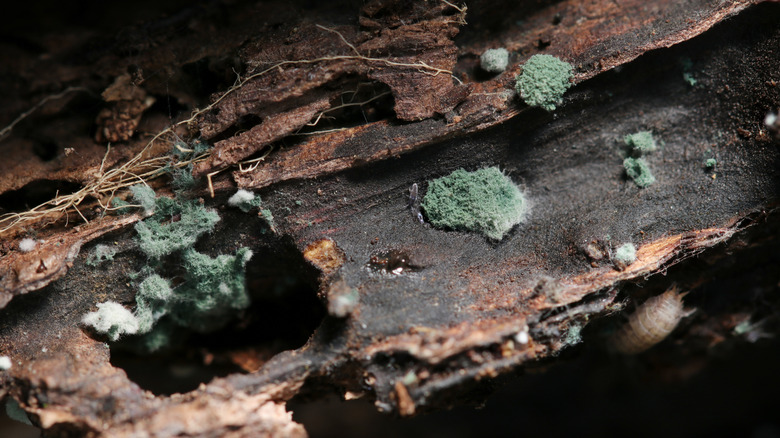
Trichoderma can be tricky to identify depending on its stage of growth. It starts out white, but tends to turn green within a few days. When it does, it produces spores, which then serve to spread the mold to other areas. Like black mold, it loves surfaces with high cellulose content, and can weaken anything made with wood, paper, or cardboard. It also grows very quickly. In terms of health risks, it's mostly regarded as an allergen, with the most usual symptoms including sneezing, coughing, and skin irritation. However, it poses a higher risk to those with weakened immune systems.
The good news is that this mold is usually quite straightforward to deal with. If you constantly find yourself cleaning this mold (or, indeed, any mold), then it's usually a sign of a leak or poor ventilation in high-humidity areas. The bad news is that, if it's been allowed to sit for a while, then the affected materials will likely need removing. This type of mold penetrates its host material in order to feed, which means that surface cleaning is rarely robust enough to deal with it.
Fusarium
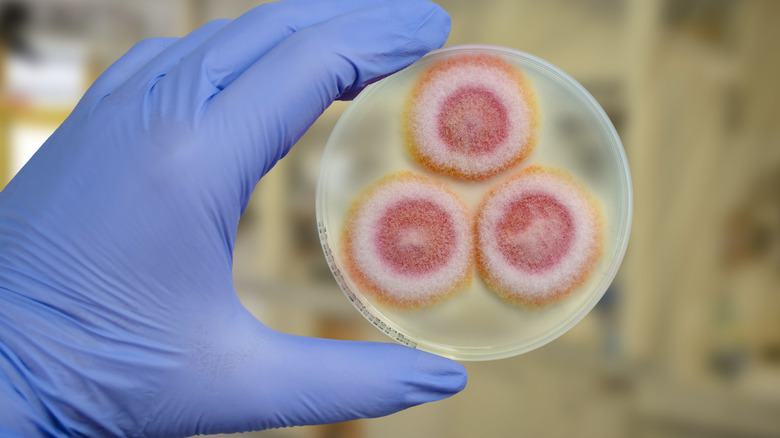
Usually taking hold in water-damaged spaces, fusarium can also appear in bathrooms or kitchens. This is especially true if such spaces are consistently humid and poorly ventilated. Unfortunately, if the mold is allowed to grow and disperse spores, it will continue to colonize materials with high cellulose content. This can put your cabinetry at risk, not to mention things like wallpaper, drywall, gypsum board, and other structural materials.
Fusarium is a very large family of fungal species, and one that's most commonly found in soils. It's one of several causes for crown rot and other plant-based ailments. But if it gets indoors, it can produce mycotoxins that can cause respiratory issues, even in healthy individuals. It often presents as pink or white, although that doesn't mean that if you find a mold of that color that it's definitely fusarium. Instead, like other molds, its presence merely means that you need to first clean it, and then deal with the underlying cause that led to its colonization.
Ulocladium
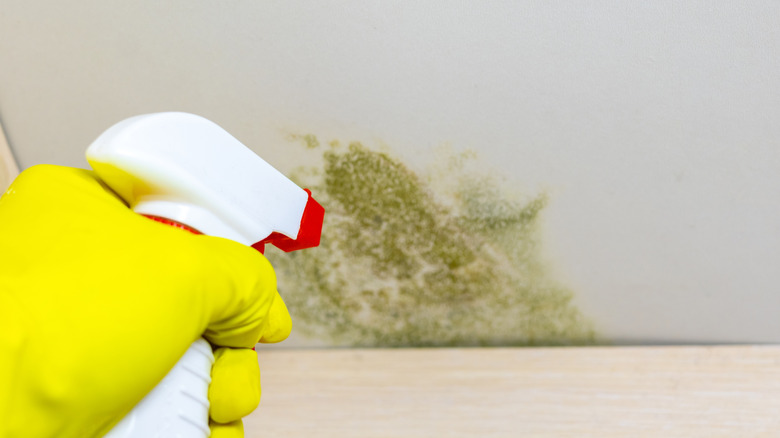
The reason that the CDC suggests removing mold from your house regardless of the type that's growing is that it's hard to know precisely what you're dealing with. As an example, Ulocladium, which is easily mistaken for black mold, can present as black, green, brown, or gray, meaning it could just as easily be mistaken for various other species as well. This specific type of mold is usually regarded as an allergen, although it poses greater risks to those with weak immune systems, including infections.
Further complicating the identification process with this type is that it'll grow quite happily on a variety of surfaces — organic or inorganic. Provided that it's been exposed to water, it's fair game as far as Ulocladium is concerned. You could find it on your walls, in your carpets, staining your furniture, or pretty much anywhere that's damp. It may also appear in your ventilation ducts and A/C unit. The solution? Don't worry about which type of mold it is. Instead, get to work cleaning it, and make sure to address any leaks or ventilation issues that welcomed it indoors in the first place.
Penicillium
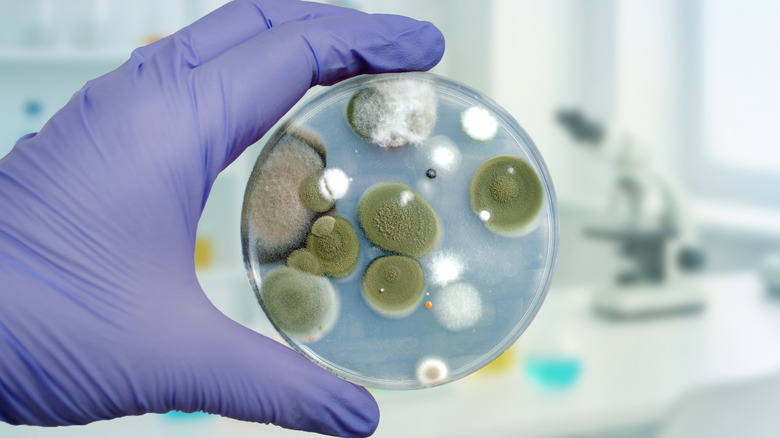
Another of the CDC's three most common types of mold, Penicillium is the same bluish-green mold that colonizes bread if you fail to eat it in time. Unfortunately, there are hundreds of species within this particular family, and while most share that bluish-green hue, visual inspection alone is not enough to definitively identify it. Not only that, but it poses a greater risk to vulnerable residents, including children, immunocompromised family members, and the elderly. In other words, it should be cleaned immediately, regardless of which type of mold you think it is.
Another reason to act quickly is that it can leave stains and pitting on surfaces — even after it's been cleaned. It can also spread quite quickly if left unchecked, producing lots of spores and even migrating to other rooms in the house. And as you might have guessed, it tends to affect more than baked goods. It can develop in any area that's poorly ventilated and subjected to high humidity, like the kitchen and bathroom. In other words, like most other types of mold, the best solution is to first clean the mold, then aim to improve ventilation to mitigate against repeat incursions.
Alternaria
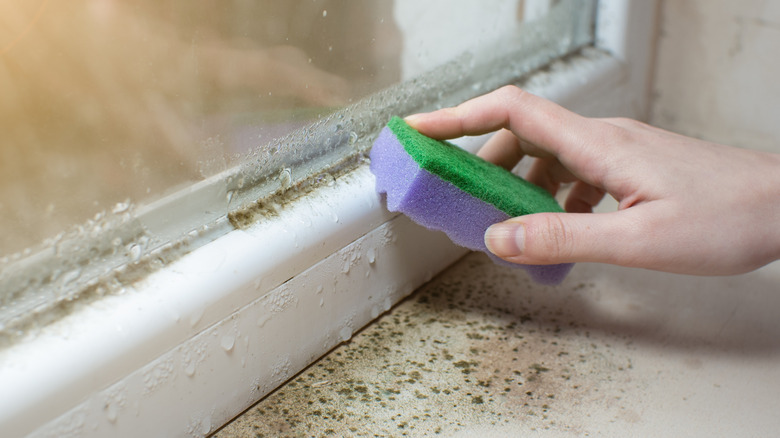
Homes with poorly-ventilated, highly-humid spaces may unknowingly be providing Alternaria's favorite growing conditions. It's widely regarded as an allergen, posing higher risks to those with asthma. Exposure to it can also lead to infections known as "alternariosis," with immunocompromised individuals at greater risk of contraction. It's also rather ugly, as molds go, presenting with a gross wooly or velvety texture, along with brown or dark-green coloration. What it shares with other species is that, if you have it, you'll want to deal with it quickly.
As for where it grows, it often appears on walls, ceilings, and windowsills. It can also be found in carpets, fabrics, and wallpaper. Typically, it favors organic surfaces, which it feeds on. In fact, it's commonly found outdoors in plants. However, that doesn't always stop it from festering inside AC systems. Fortunately, in well-maintained and ventilated homes, its growth levels are usually minimal. But once a space becomes water damaged, be that via flooding or a leak, it can spread quite quickly.
Chaetomium
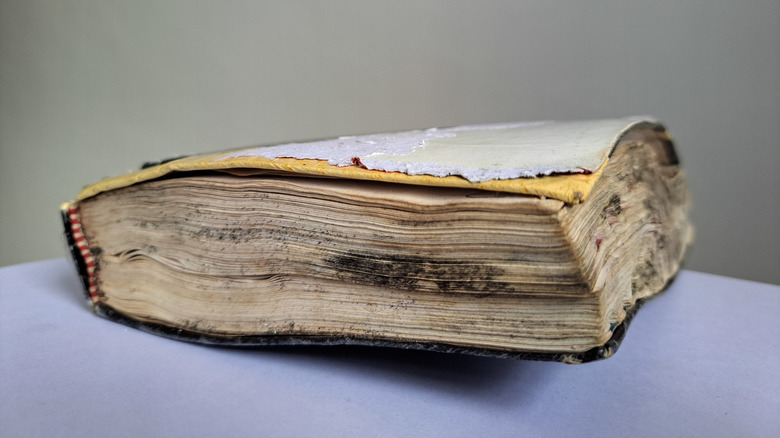
Chaeotomium is often considered a strong indicator of dampness in homes. It likes surfaces with high cellulose content, which puts textiles, wallboards, and wood in the firing line. It's also often found in books. Wherever it's lurking, if you have it in your house, it can be very dangerous, leading to adverse allergic reactions, respiratory problems, and immune suppression. You may also notice neurological symptoms if exposed, such as headaches, fatigue, brain fog, and difficulty concentrating.
With all of this in mind, you'll want to know best to identify it. Unfortunately, it can appear blue-green, dark brown, or even black, which means it's easily confused with lots of other types. It may also result in a musty, damp-earth smell, and is often found in homes that have recently been subjected to water damage. Once again, these are hardly unique to the Chaetomium family. The safest bet — you guessed it — is to clean any mold that you find, before identifying (and fixing) the cause. If your home has been water damaged, aim to repair and dry the area as quickly as possible.
Aureobasidium
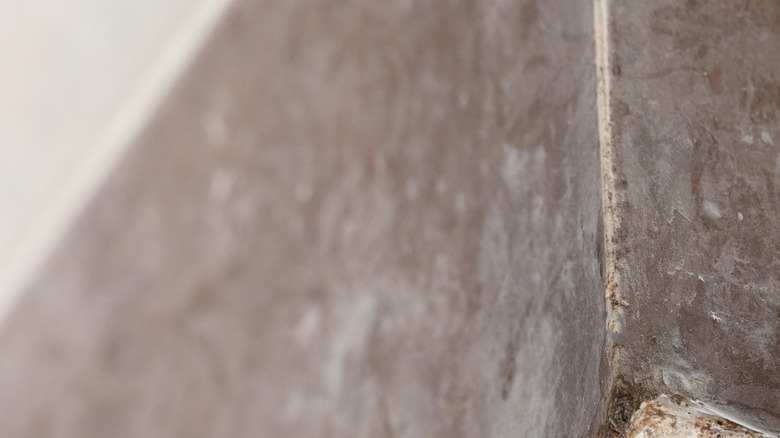
Found across the globe both indoors and out, Aureobasidium is entirely unfussy about where it grows. Fortunately, if you catch it quickly, it's one of the less harmful mold types. However, if allowed to mature and disperse spores, it can lead to respiratory problems and allergenic symptoms, like sneezing. It tends to prefer warm, damp environments. However, it can also be found in the cold, and it will develop on pretty much any surface, organic or otherwise, provided that there's damp or high humidity.
Once again, this means that kitchens and bathrooms are at higher risk, along with any areas where persistent leaks are present, or where flooding has led to water damage. It can also collect in air-conditioning systems, which in turn can cause air quality problems if left unchecked. Michael Sacenti from American Healthy Homes explains to Family Handyman that it's especially common to find it in the bath or shower. There, he says, "Soap scum in the water will migrate down to the caulked joint at the top of the tub." With that being said, the bathroom is a fairly typical place to find mold, which means that identification could prove tricky. This particular type often starts out white, pink, or orange in color, with a nasty, slimy texture. As it matures, it darkens, often to a dark green or black. The best bet? First, clean it, then stop the mold from returning to your shower with frequent cleaning, drying, and proper ventilation.
Aspergillus
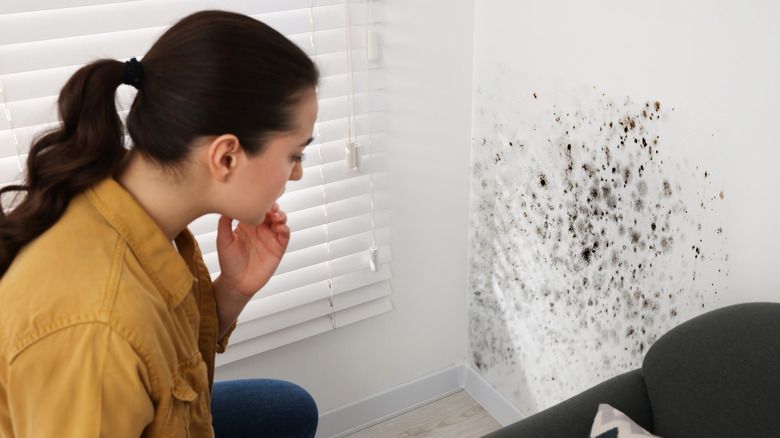
Listed alongside Cladosporium and Penicillium by the CDC as one of the three most common types of mold, Aspergillus is also among the least harmful to healthy homeowners. With that being said, the risks are greater around those who have a history of tuberculosis, or who have a weakened immune system. Not only that, but for immunocompromised individuals, inhaling certain species of this mold raises the risk of aspergillosis, with symptoms including shortness of breath, coughing, wheezing, high temperatures, fatigue, and even unplanned weight loss. Melanie Carver, from the Allergy and Asthma Foundation of America, explains to Family Handyman that it's also dangerous for those with asthma. Exposure, she says, can "cause a severe asthmatic reaction in people with asthma who are sensitive to this mold type."
Now, like other molds in this guide, Aspergillus is actually a family containing several different mold species. Generally speaking, though, it grows best in moist areas, like on bathroom walls, as well as anywhere in the home where moisture is left unventilated. It can present as black and gray, or white and yellow, and tends to grow in large, fuzzy patches. As always, timely cleaning is key to avoiding its spread, along with a longer-term strategy to reduce damp and condensation.
Acremonium
If you're noticing warning signs from your HVAC system like bad, musty smells, then one likely suspect is Acremonium. It delights in damp, indoor environments, including humidifiers, AC cooling coils, drain pans, and windowsills. If disturbed — say, by your AC unit — it can spread and lead to health problems. These can range from allergenic symptoms like coughing, to more severe cases of pneumonia and infections of vital organs. This sounds drastic, and in reality, such cases are rare. However, it does hopefully highlight the importance of dealing with this mold type quickly.
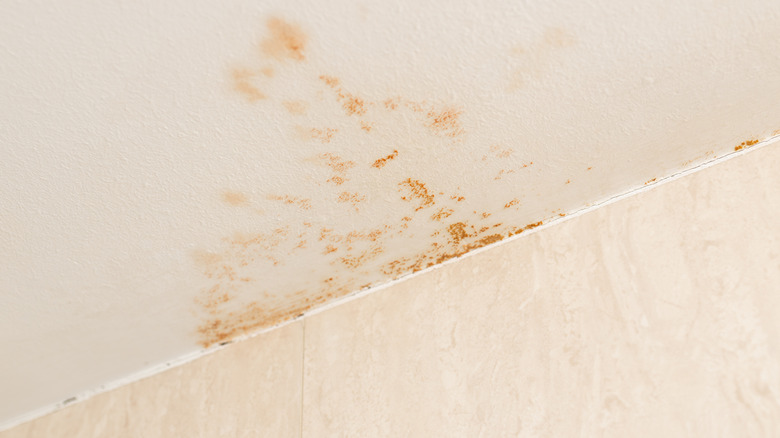
As for identification, you guessed it, visual inspection is rarely enough to determine whether or not your mold is Acremonium. When it's young, it tends to be moist (although you should avoid touching it). As it grows and matures, it turns dry and powdery. Colors can also vary between gray, pink, white, and orange, meaning it could, at least visually, look like a whole host of other mold types. The only surefire way to know that it's Acremonium is to have it lab tested, and that doesn't do anything to remove the problem for your home. Instead (and at the risk of repeating ourselves one last time) it's best to clean, dry, and ventilate the affected area.