

What Is The 3-3-3 Rule For Applying Mulch Around Trees?
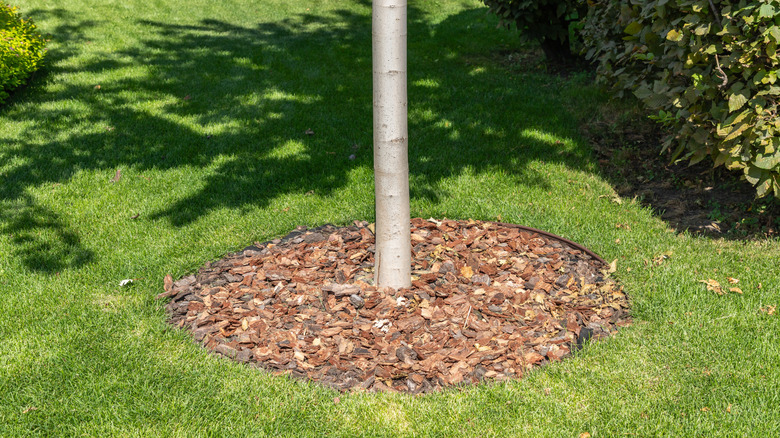
Whether you're looking to boost your home's curb appeal or simply create more shade in your yard, you'll want trees with healthy, vibrant foliage. You'll need more than just water to give your trees the oomph they need to flourish, and that starts with a strong root system. Adding mulch around the base of your saplings and mature trees is a great way to provide them with the protection and moisture retention they need as they go through the various seasons. Mulch stops water from evaporating quickly from the soil and weeds from sprouting, while adding a border around the trees to prevent accidental damage from lawn mowers and trimmers. There's a specific method you can apply when adding mulch around your trees called the 3-3-3 rule. The numbers stand for three inches deep, three feet wide, and three inches away from the tree trunk.
The 3-3-3 rule wasn't a new marketing gimmick created by some gardening brand in an effort to sell more products. It's a trusted, time-tested landscaping standard developed by certified arborists and horticulturists as an easy-to-remember shorthand formula to ensure the mulch placed around trees offers maximum benefit. It's quite simple — all you'll need is a decent amount of quality mulch and a little elbow grease.
How to apply the 3-3-3 rule when mulching your trees
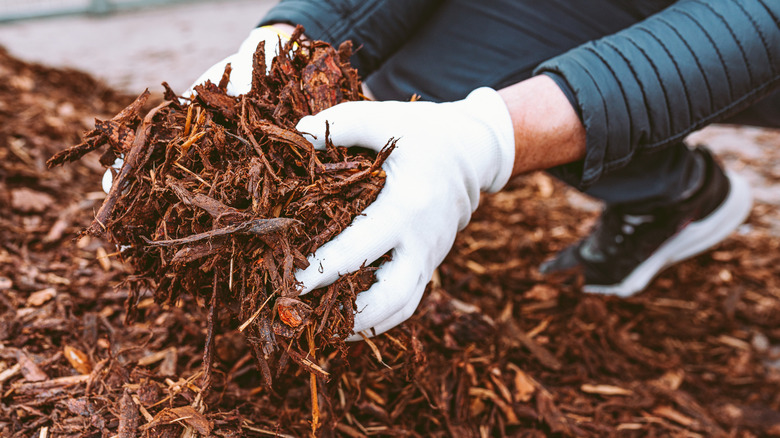
Before you start, the mulch you choose is important, and we recommend you go organic. One of the best types of mulch for your garden is shredded bark, as it's great at improving soil, keeping lawnmowers at bay, and holding moisture in for the tree. Other good options include wood chips, straw, or good old compost. For the first part of the rule, you'll be focusing on the depth of the mulch. You can go slightly more or less but aim for three inches.
Next is how far out from the tree you should add the mulch. No matter what mulch you're using, make sure there is a space of three inches between the trunk of the tree and the start of your mulch. The main reason for this is to avoid crown rot, which may happen if the mulch sits right up against the trunk. Then, starting at the three-inch point, measure three feet in radius around the tree and then add the mulch to that entire area, going a little bit over the three-foot mark. If you need to go further, you can but just make sure it's no less than three feet.
The best time to add mulch around your trees
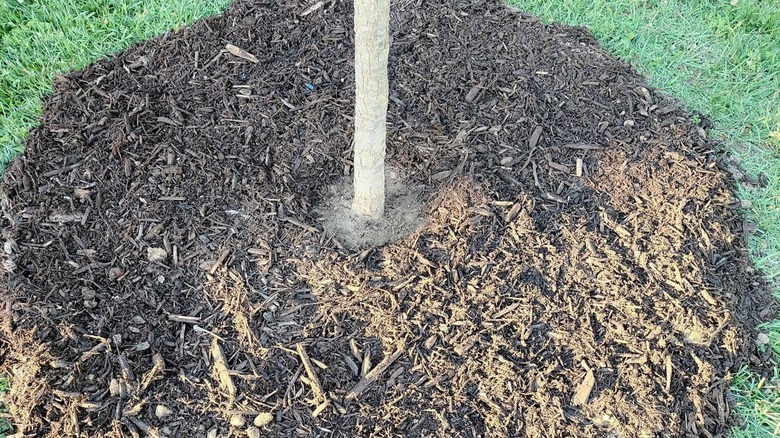
With the 3-3-3 rule in mind, knowing when to add mulch to your trees is important. The best time of the year is during spring but don't do it too early in the season. You want to make sure the soil has dried properly; otherwise, the added mulch will stop the cold, wet soil from heating up. If you find the soil around your tree is still wet and cold, it's a good idea to wait a little longer. In South Carolina, for example, you may be mulching your trees in early spring, while in North Carolina, you'll probably wait until late spring. It really depends on how soon the warmer weather arrives.
Another good time to add mulch to your trees is in the fall. This layer of mulch is really about prevention for the winter months, as mulch insulates trees, so it's impacted less by temperature fluctuations. As you'll be coming out of the warmer months, you'll need to first remove any extra growth the season has brought with it, like weeds or unwanted plants. You may also find there's a lot of debris from the tree itself. You'll need to get rid of that as well. If you refresh your mulching at the right time, you'll set your trees up for proper growth over the warm months and keep them protected during the cold ones.