

The Beautiful, Endangered Tree That Only Grows In Florida
Did you know that Florida is home to one of the rarest trees in the world? This beautiful but critically endangered tree can only be found along a short section of the Apalachicola River in ravines or on forested bluffs. The situation is even more dire because some specimens are growing on privately owned land, and the laws that protect vulnerable species don't extend to plants growing there. However, the tree also grows in Torreya State Park and the Apalachicola Bluffs and Ravines Preserve, managed by the Nature Conservancy. As such, it isn't yet one of the beautiful American plants on the brink of extinction. If you haven't guessed already, we're talking about the Florida yew (Taxus floridana).
The Florida yew is a coniferous tree with soft, needle-like leaves. It grows between 10 and 20 feet tall and sheds its bark, uncovering red stems and branches. The tree is dioecious, producing male and female reproductive structures on separate trees. Only the female tree will produce seeds, which are encased in a cone with a red, berry-like aril. The male trees produce orange-colored pollen cones. Both the seeds and foliage are toxic to humans, pets, and livestock, but the bark contains a compound called taxol, which is used in chemotherapy. Taxol was first synthesized in a laboratory in 1994, which helped reduce the need to harvest endangered yew trees, including the Florida and Pacific yews, for the drug.
How to grow a Florida yew in your backyard or where to see one
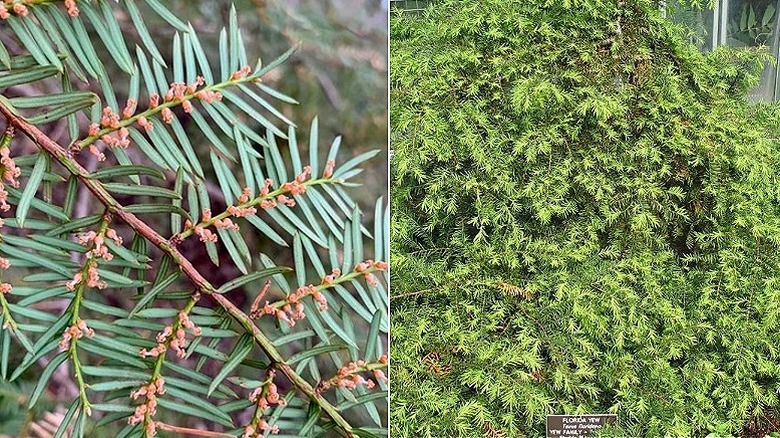
Just like many other endangered plants native to the U.S. that you can grow in your garden, if you live in Florida or zones 8 through 10, you may be able to add this tree to your yard. Why should you plant this yew tree in your backyard? Aside from helping to preserve the species' diversity, it's great for privacy, stays green all year round, and the needle-like leaves might trap and filter pollutants, among many other benefits.
This rare tree is sold by specialist nurseries at prices around $44 for a 1-gallon pot and about $120 for a 3-gallon pot. The Florida yew prefers fertile, slightly acidic soil that's moist but well-draining. You can plant the tree in full sun if that's the only spot you have available, but it will be happier in part shade. Protect it from strong winds and salt for the best growth.
If you don't have the space or conditions for growing a Florida yew in your garden, there are a few places you can visit to see one in person. The United States Botanic Garden in Washington, DC, has a specimen growing in its Medicinal House. You can also see it at the Arnold Arboretum in Boston, where it takes the form of a sprawling, low-to-the-ground shrub. The Atlanta Botanical Garden is rooting cuttings in its Conservation Greenhouse to help preserve the species.