

Not Climbing Hydrangea: The Flowering Vine That Looks Great On A Brick Wall
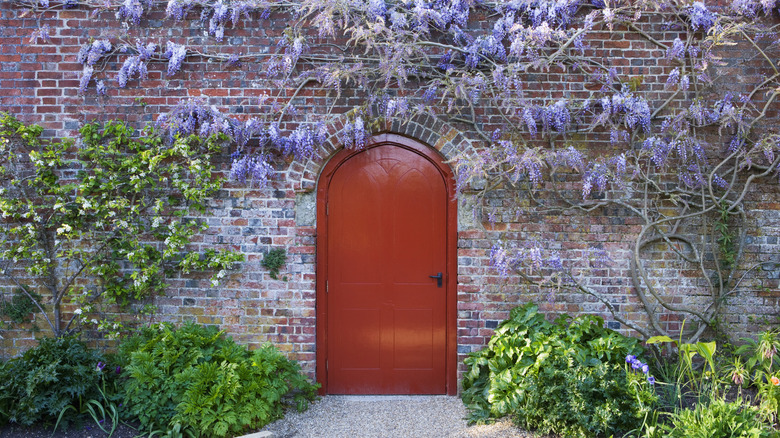
Do you have a brick wall that's just looking a little bare and lonely? In your efforts to find just the right plant to spruce it up a little, you've probably discovered that there are some to avoid, such as English ivy. Instead, you may have thought about using a lovely climbing hydrangea to fill your garden with heavenly scents, but you haven't had a lot of success with other types of hydrangeas in the past. As an alternative to a climbing hydrangea, why not consider a gorgeous flowering vine that will look amazing on your brick wall and has flowers that are sweetly fragranced, known as woodbine or European honeysuckle (Lonicera periclymenum).
Woodbine is quite a large climber and can reach heights of 20 feet and a spread of up to 6 feet, if given the right structure. This honeysuckle needs something to twine around, so if you want this climber to cover your brick wall, your best bet would be to install a trellis. Woodbine is quite a vigorous grower, and depending on the cultivar you choose, can have those delightful honeysuckle flowers in shades of pink, purple, or yellow. You'll find that the fragrance of these is strongest in the evening, which is why they tend to attract moths. However, the flowers are pollinated by long-tongued bees, and butterflies tend to enjoy them too, making this another vining plant that pollinators love. The plant is also the larval host of the red admiral butterfly. The flowers are followed by red berries, which visiting birds will appreciate.
How to grow the woodbine honeysuckle vine on your brick wall
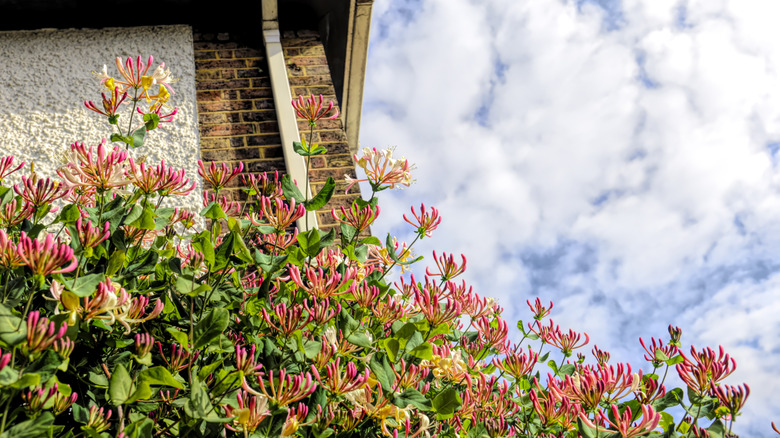
You can enjoy this gorgeous flowering vine while it's growing up your brick wall if you live in USDA Hardiness Zones 5 through 9. It prefers dappled sun and likes the soil to be moist but well-drained. Essentially, woodbine will do best when its root system is shaded, but the top growth receives sunlight so that you get plenty of those pretty blooms.
Once you have your climbing support installed, it's just a matter of attaching the vine as it grows and guiding it to twine through the trellis spaces. Make sure you know the right way to tie plants to a trellis. This should create a nice screen and add some color and beauty to that blank brick wall. One thing to remember if you want to prune your vine back a bit is that it will flower on old growth, so make sure you leave enough of that growth to allow more of those fragrant blooms to develop. Although the main species tends to bloom in spring with creamy white flowers that have tinges of pink, there's a stunning cultivar known as 'Scentsation', which has yellow flowers that bloom from spring right through to late summer.