

Say Goodbye To Traditional Mulch: The Long-Blooming Perennial That Can Suppress Weeds
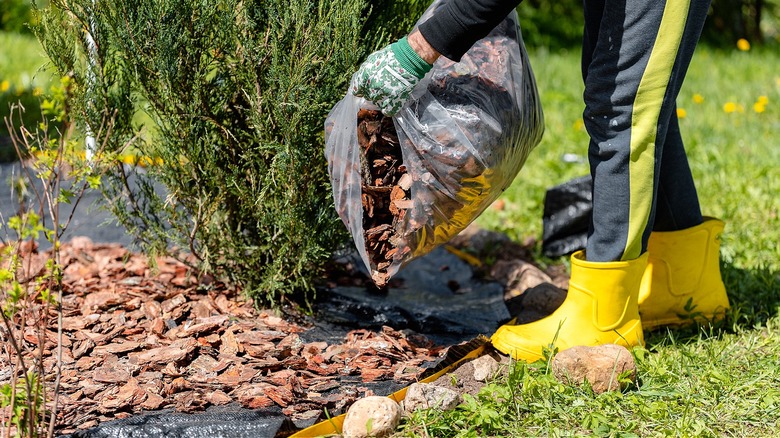
It's a common practice for gardeners to apply mulch over their garden beds to help suppress weeds. While this works well, depending on what type of mulch you're using, it'll require regular topping off in order to keep the soil well-covered and prevent any weed seeds from germinating. However, if you want a bit more color in your weed control — with less maintenance, too — there's a long-blooming perennial you might want to consider instead to help keep weeds at bay: Catmint (Nepeta spp.).
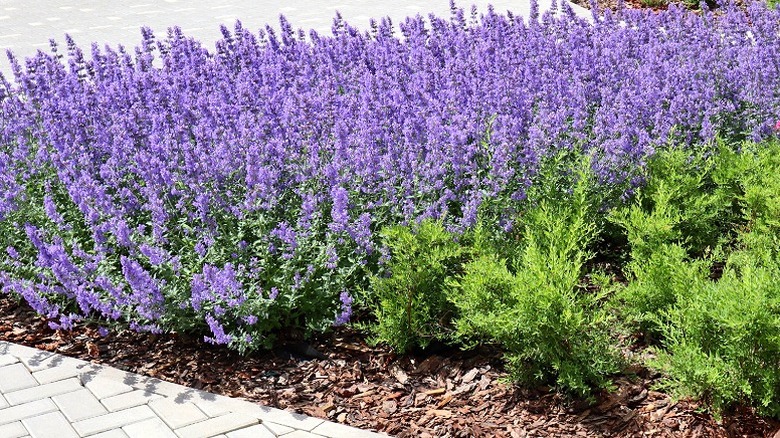
Along with other ground covers you can plant to choke out unwanted weeds, such as goldenrod or creeping thyme, catmint is a low-maintenance clumping plant that can help to cover bare soil completely if you space your plantings correctly. This simple tip will definitely cut down on weeding time in your garden, as catmint's dense growth means that it shades the ground, thus blocking out sunlight, which weeds need to germinate and sprout.
There are plenty of hybrids and cultivars to choose from, producing pretty upright flower spikes in blue, purple, or white through the spring and summer. When you make your selection, you want to check how wide each plant will spread to determine the best spacing. To create a catmint blanket, you'll ideally want the plants to grow together, with their edges overlapping. Apart from helping you with your weed problem, catnip offers a few more benefits: As a mint, the plant's leaves are edible and can be used in cooking, while its two-lipped flowers will attract pollinators, including bees, butterflies, and hummingbirds.
Growing catmint as a weed-suppressing ground cover
Like most herb plants, catmint is easy to grow and requires minimal fuss. It'll grow in a wide climate range, thriving in USDA hardiness zones 3 through 8. A sunny spot is best, as is soil that has excellent drainage. Catmint is a resilient plant; once established, it becomes drought tolerant. All you need to do is cut it back once the flowers are spent. Doing so will result in a continuous supply of blooms right into the fall. This'll also help maintain a bushier shape for the plant. When pruning, cut back one-third of its growth from the top.
The only other upkeep you may want to do is add catmint to your list of perennial herbs you should be dividing in spring. This allows you to separate the old and new catmint growth, the latter of which you can replant. Catmint's average lifespan is between three and 10 years; the recommendation is to divide the plants once every three years or so, so you can plan for one or two divisions while catmint is growing in your garden as ground cover.
Meanwhile, if you want a particularly dense-growing variety, you could try Nepeta xfaassenii 'Cat's Meow', known for its sturdy stems. Alternatively, for a dwarf hybrid, take a look at Nepeta 'Cat's Pajamas' and its pretty blue blooms.