

13 Long-Lasting Fall Flowers That Bloom Until First Frost
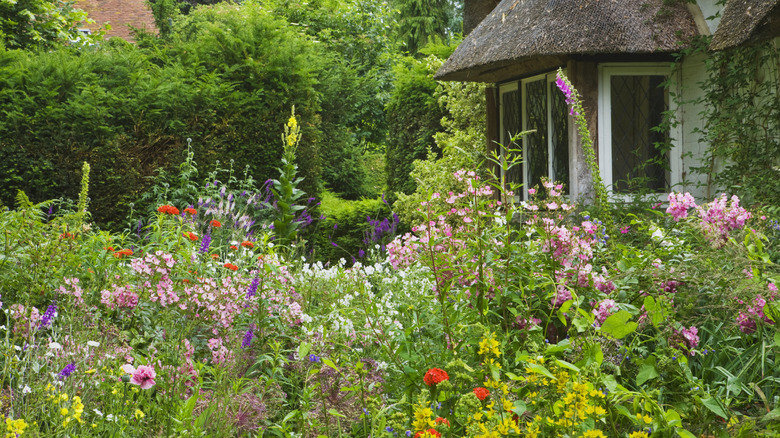
As summer wanes, your garden beds may start to look tired and forlorn. However, you don't have to give up on color and beauty just yet. Fall is a great time to plant and grow cool-season or hardy annuals and perennials. Many of these plants thrive in cooler conditions and can tolerate light frosts, although their exact cold tolerance varies by species and cultivar. But to overwinter them successfully, you should get them into the ground or pots a month ahead of the expected hard frost. That way, they'll have sufficient time to develop vigorous root systems.
For long-lasting fall flowers that bloom until first frost, if not further, look into pansies, hardy mums, asters, 'Autumn Joy' sedum, and sneezeweed, many of which can be grown as perennials across a range of climates. Frost-tolerant annuals like snapdragons, calendula, and sweet alyssum also look gorgeous in fall displays. However, since they kickstart their season earlier than that, they may already be in bloom when you purchase them. With that said, here's a quick rundown on 13 long-lasting fall flowers that will amaze you until first frost.
Pansies
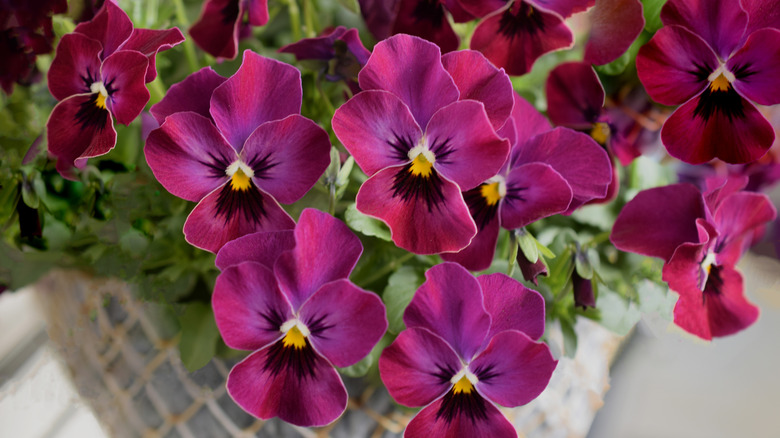
Planted early enough in September, pansy seedlings (Viola x wittrockiana) can continue blooming into winter, depending on the climate and severity of the cold. Depending on your weather, you might see colorful flowers pop out amidst the snow-laden landscape, even through Christmas. If they've established well and offered winter protection, they can handle light frosts and temperature dips to the lower teens and, after a brief break, may recover and resume flowering in spring. All in all, they can offer flowers for up to six months if the weather remains frost-free. They'll overwinter perennially in zones 6 to 10 or can be potted up elsewhere.
Violas
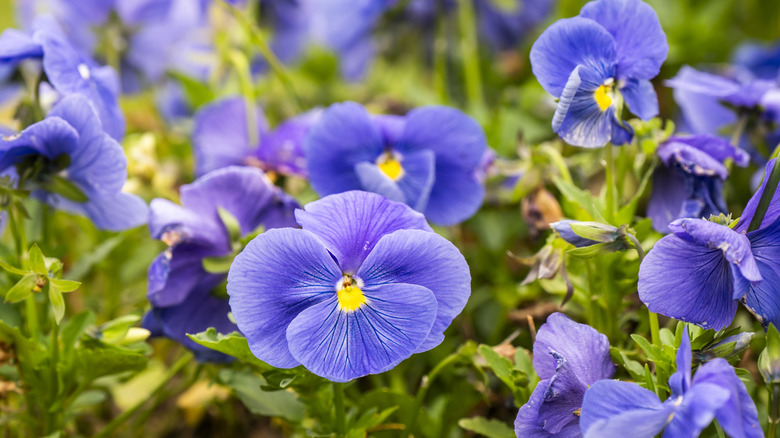
With violas, the naming can be a bit confusing since the whole genus (which includes violets) goes by the name, though in this context, we're talking about hybrids of Viola cornuta. Compared to pansies, their flowers are daintier. However, they're more floriferous and generally handle chilly fall and winter weather well, ensuring a reliable, long-lasting display. So, when deciding whether to grow violas or pansies, take this into account. Planted in fall, violas can continue blooming into May in frost-free areas until it gets too warm for them in the summer.
Hardy mums
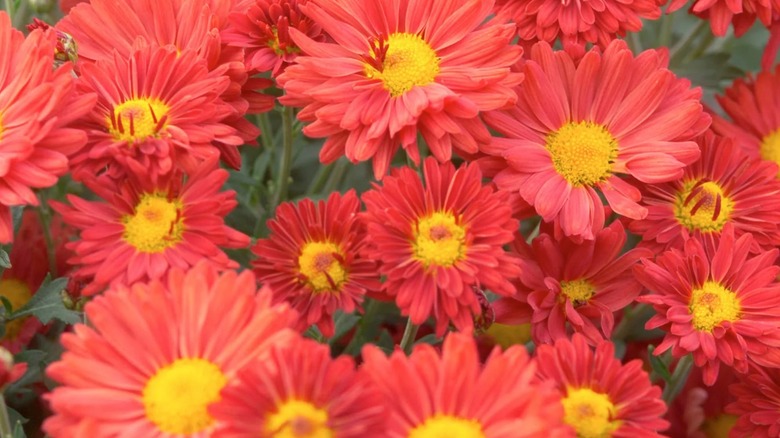
Garden mums (not florist mums) are fall darlings that continue blooming up to a hard frost. Researchers at the University of Minnesota have bred mums for superior winter performance and frost tolerance, ensuring their survival overwinter in zones 3 through 9. Shrub cushion mums, especially Mammoth Coral Daisy and Mammoth Dark Bronze Daisy, are frost-resistant, while the rest reasonably tolerate light frosts. However, mums are shallow-rooted and can heave out during repeated freeze-thaw cycles. Top their winter beds with fluffed-up organic mulch, like pine needles or straw. Following a fall mum care guide can help keep them thriving.
New York aster
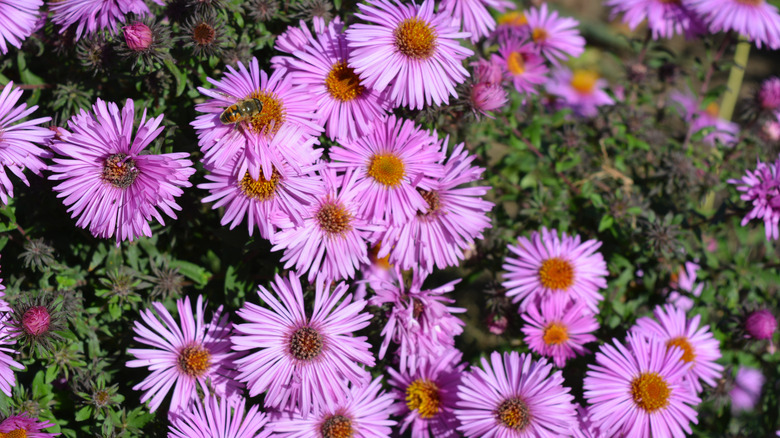
New York aster (Symphyotrichum novi-belgii) also gets called Michaelmas Daisy because its flowers traditionally bloom around Michaelmas in late September. While it's already in bloom by August, the purple or pink ray flowers can persist into October or until the first frost. Its foliage can also serve as food for butterfly caterpillars. Allowing the plant to set seed can provide food for local birds, but seedlings may become a nuisance if you don't remove unwanted volunteers. Since it takes some shade, it's a worthy alternative to sun-loving mums in zones 4 to 8 for an extended display.
New England aster
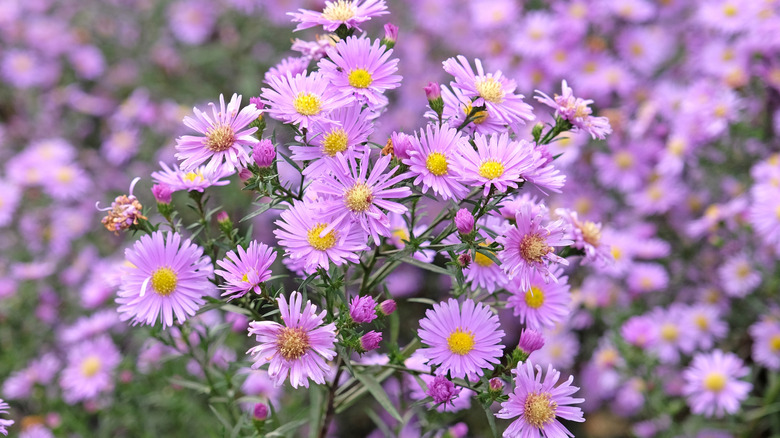
Hardy in zones 4 through 8, New England aster (Symphyotrichum novae-angliae) is a sun-loving perennial with a penchant for moist soils. While it starts blooming in late summer, providing nectar for migrating monarchs, hoverflies, and bees, it can continue into October and until frost. Although a U.S. native, today it boasts a litany of cultivars in different shapes and heights. So, if you aren't keen on installing stakes, look for compact options like 'Purple Dome,' which can handle frost and, on top of that, withstand deer pressure.
Frost aster
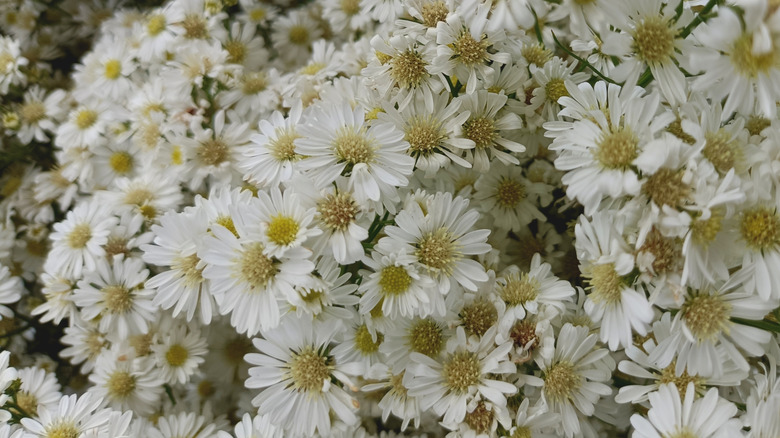
Unlike other asters, frost aster (Symphyotrichum pilosum) is late to the party, since its white, daisy-like flowers don't make an appearance until late in September. However, it makes up for the late start by continuing to bloom into November in suitable climates. Frost aster can become weedy and spread readily in suitable conditions. So, unless you've got a "plant and forget it" patch where you don't mind its spread, you'll have to stay on your toes to keep it contained. Frost aster is a pollinator magnet and can be grown perennially in zones 4 to 8.
Snapdragons
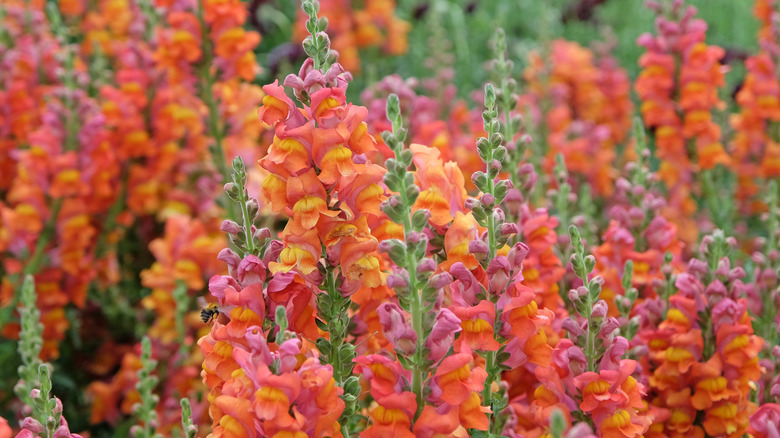
Snapdragons (Antirrhinum majus) are surprisingly cold-hardy, tolerating winter temperatures of 15 degrees Fahrenheit. While they do not reliably overwinter as perennials outside zones 7 to 10, you can enjoy their colorful flowers through fall and potentially beyond the first light frost. To enjoy their full season, it's best to plant them in late summer, though their preference for cool conditions makes late plantings a workable option. Before an expected cold spell, water them well and lay down straw to protect them; they may rebloom in spring. To keep your snapdragons looking vibrant through the autumn season, be sure to deadhead.
Calendula
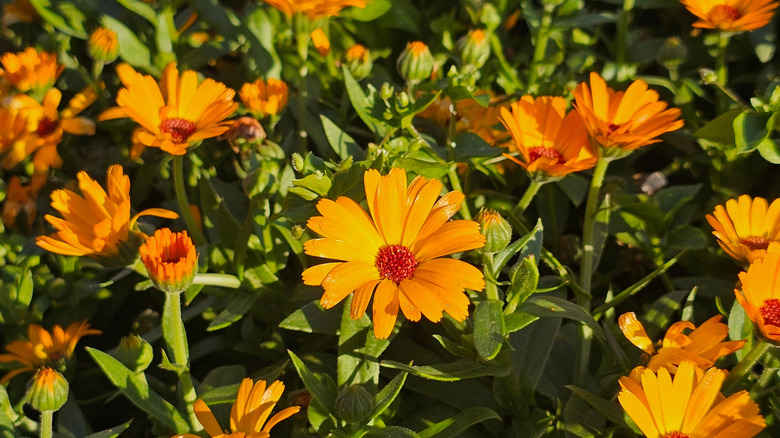
Another cool-season annual with cheery blooms that you can grow for long-lasting fall interest is calendula (Calendula officinalis), or pot marigold. This Mediterranean herb produces orange or yellow, daisy-esque flowers well into November, and only stops when a heavy frost gets to it. To maintain the display, you must regularly clip off old blooms. But you can leave the last flush to set seed, potentially producing volunteer plants the following spring. Calendulas are popular with pollinators, and you can harvest their leaves as garnishes or flavor agents where they'll lend a slight spicy tinge.
Sweet alyssum
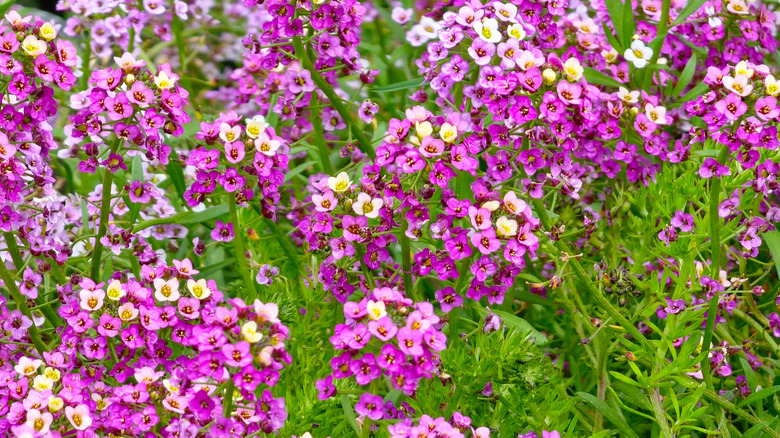
As hardy annuals, sweet alyssum (Lobularia maritima) can be directly sown or planted as starts for fall color that may last through the first frost. Proven Winners' Snow Princess is especially cold-tolerant and can continue blooming into chilly fall weather. Because they're short, alyssums are used to edge borders. Butterflies, moths, and beneficial insects are attracted to their mass of highly fragrant, white flowers, making them useful in pollinator and vegetable beds. While they tolerate full sun in cool areas, they require some shade in the south. Sweet alyssum is considered invasive in some California habitats.
Hummingbird mints
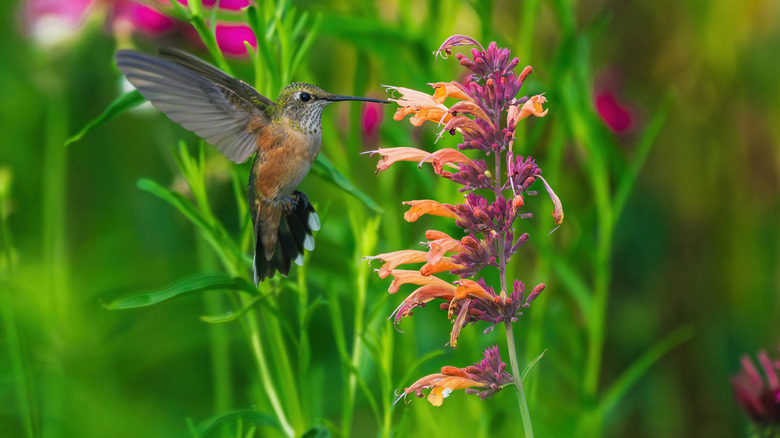
Hummingbird mints (Agastache spp.), which include anise hyssop, can provide a long summer-to-fall display. Although a part of the mint family, they do not spread in the garden, making them a well-behaved plant. Different varieties may produce pink, purple, or red tubular flowers, which you must regularly deadhead to maintain a steady display. This will also limit any self-seeding. Hummingbird mints, in keeping with their name, attract hummers along with bees and butterflies. Keep in mind that species can cross-pollinate and new plants may not resemble the original plantings. They may overwinter in zones 5 to 9.
Sedum 'Autumn Joy'
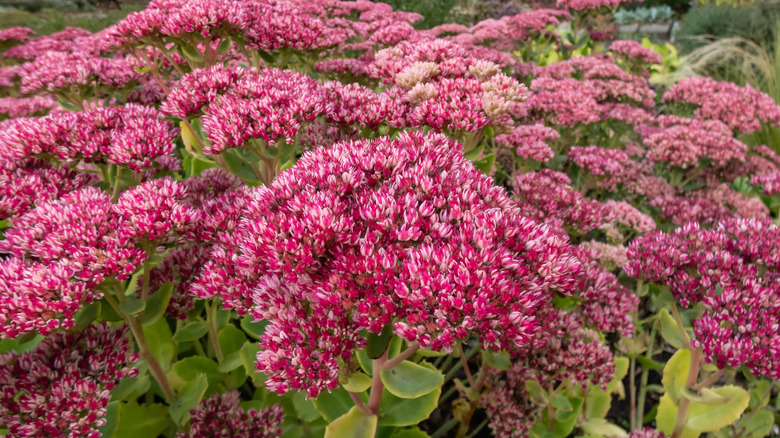
For all the joy it brings during summer and fall, Sedum 'Autumn Joy' creates a lot of confusion when it comes to its scientific name. The plant has appeared under several botanical names, including Hylotelephium, 'Herbstfreude,' AUTUMN JOY, and older Sedum classifications, which can make its labeling confusing. Regardless, it's the same plant. Considered a year-round beauty, 'Autumn Joy' sets its light pink buds in a broccoli-like flathead mid-summer. Over the months, these open to reveal pink petals that warm into shades of red and bronze in fall. After frost, dried flowerheads remain standing, offering winter interest. They're perennials in zones 3 to 10.
'Fireworks' goldenrod
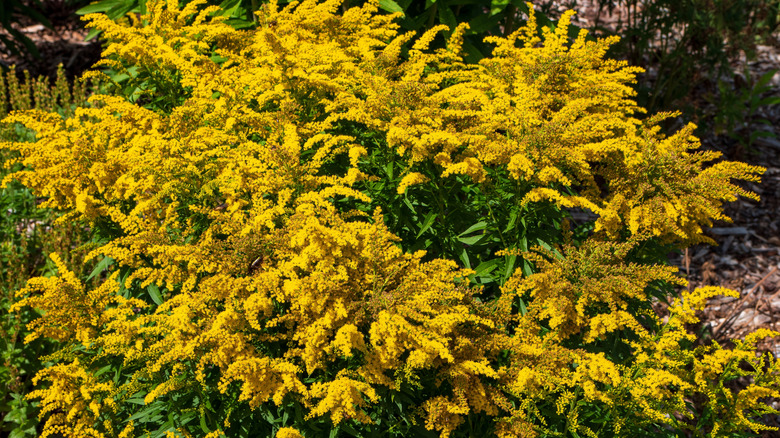
Although goldenrods are renowned for a long season that typically lasts into mid-fall, 'Fireworks' (Solidago rugosa 'Fireworks') takes it up a notch by continually blooming through the first frost. Named for sprays of yellow flowers that resemble exploding fireworks, it draws the attention of butterflies and other beneficial insects. Consider leaving the old stems standing through winter, since hollow or pithy stems can provide nesting or overwintering habitat for some native insects. 'Fireworks' averages about 3 feet in height and has a similar spread, and can be grown successfully in zones 4 through 8.
Common sneezeweed
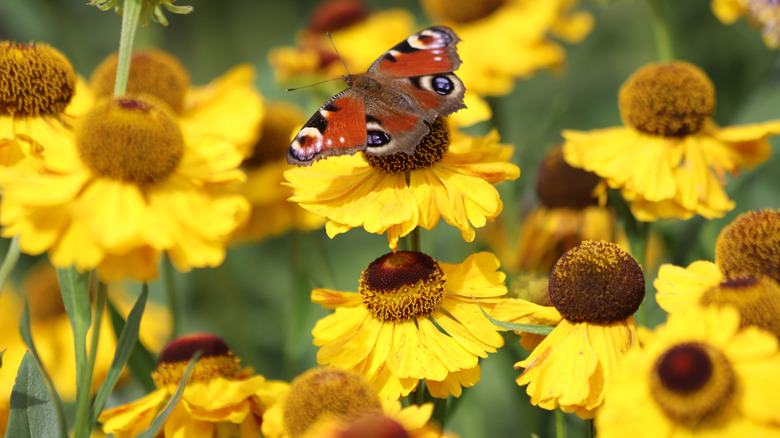
Native across much of the U.S., common sneezeweed (Helenium autumnale) can become a garden showstopper with its long-lasting late-season display. Standard specimens feature drooping yellow petals suspended over a sea of slender, green leaves, though cultivars like 'Helena Red Shades' and 'Moerheim Beauty' offer red hues that work better with the autumnal vibe. Before growing them, know that contact with the plant can cause dermatitis in some people, while consuming large quantities can be toxic. They can work well in damp areas and rain gardens in zones 3 through 8.