

12 Functional '80s Kitchen Appliances We'd Be Thrilled To Find At The Thrift Store
We may receive a commission on purchases made from links.
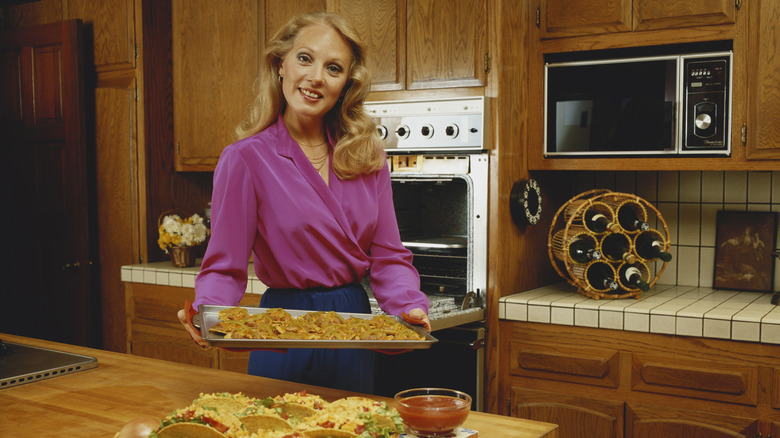
I grew up in the '80s, so I can confirm that it was the golden decade of single-purpose countertop appliances and gadgets. If a company could make something with one very specific purpose — preferably in beige, brown, or burnt orange plastic — that would take up space on the kitchen countertop, they did it. Then they proclaimed that the average '80s housewife couldn't possibly manage without their wondrous new appliance that often solved a problem that nobody really had. And it worked, as people bought these things in their millions. Companies like Presto, Sunbeam, Cuisinart, and Oster all raced to put machines on the '80s kitchen countertop for nearly any task a kitchen could possibly have.
I've been thrifting for decades and have a large collection of '80s wonderments, including some fantastic '80s appliances like a working Presto PopCornNow air popper. The beauty of many of these '80s kitchen appliances is that they were fairly simple in their construction, with just basic motors and thermostats. There weren't really any circuit boards or delicate parts, so there are fewer things that can go wrong. Not everything is practical now, of course, but there are a number of kitchen appliances from this decade that are worth grabbing if you want a functional '80s-inspired kitchen. If it's been well looked after and you continue to do so, then an '80s kitchen appliance can keep working for many years. You do, however, need to exercise a bit of caution with any vintage electrical item. Check over the cord and plug, and before you even think about putting it in an outlet, you'll also want to check whether the item was ever recalled, since there are quite a few '80s countertop favorites that were recalled at some point for a fire risk.
Oster Hot 'N Toasty sandwich grill
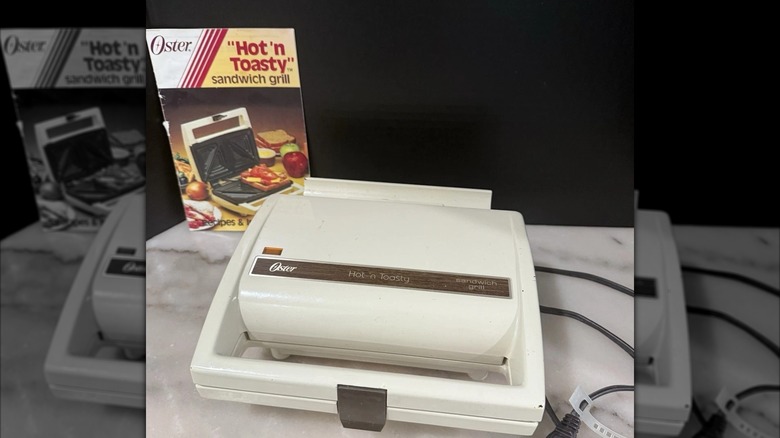
This is definitely one of those retro appliances that deserve a comeback. I don't think there's anybody who doesn't love a sandwich press. Oster's Hot and Toasty sandwich grill is like the ancestor of the fancier sandwich presses sold today. It's a simple hinged electric press. It clamps two slices of bread or some pastry around a filling and then seals the outside into a golden crust between its heated plates. There's no control panel because it works with a thermostat and a single spring-loaded hinge. You can fill it with cheese and ham, or bacon and beans, or you can do what an awful lot of '80s kids did: spoon in pie filling to make a burning-hot hand pie in minutes.
These things were also marketed as being perfect for cooking everything from quesadillas and turnovers to empanadas and mini pot pies. So they were a little more than a conventional single-purpose appliance, as you could definitely do more with them than create grilled cheese. If you encounter one of these in the wild, check that the hinge still closes tightly and that the non-stick coating hasn't flaked. Plug it in and see if it heats evenly within a minute or two. If it does, this is definitely an appliance I would consider purchasing.
Sunbeam Oskar mini food processor
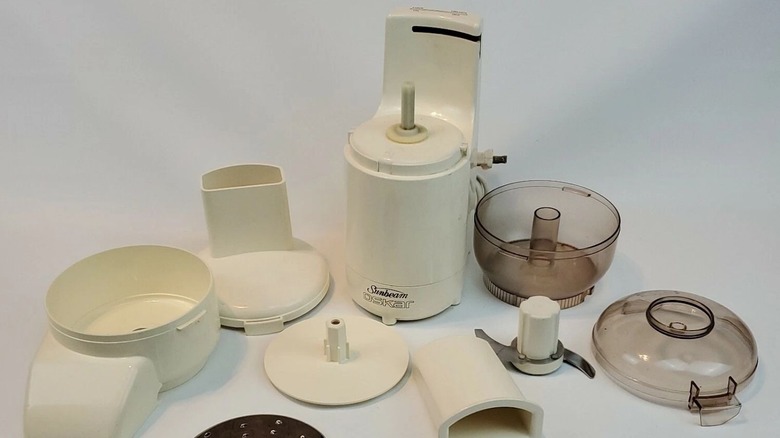
During the latter half of the decade, people were starting to make a move to healthier food choices, wanting more fresh veggies and less fried stuff. The problem for many people was that the majority of the full-size food processors available were extremely expensive, so Sunbeam launched the little Oskar food processor. It quickly dominated the market. In fact, by 1985, it had captured a whopping 25% of the food processor market. That's a pretty impressive feat for a little machine that's approximately half the size of a Cuisinart. It still wasn't cheap, though, selling for around $60, which was quite a lot of money in '80s terms. In today's money, that's around $243.
The Oskar had a 2-cup capacity. That's just the right size for smaller tasks like mincing garlic or chopping herbs and nuts. This machine was well-suited to those smaller everyday jobs, whether it was grating cheese, making breadcrumbs, or shredding vegetables without having to pull out the humongous cutter. This nifty little machine saved time, as well as cupboard and counter space. If you spot one while thrifting, you want to make sure the bowl, lid, and blade are all present and that the bowl isn't cracked or excessively damaged.
Presto SaladShooter
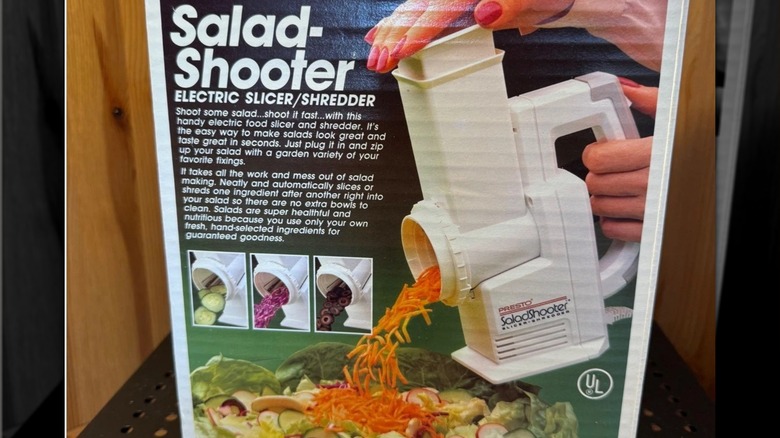
Presto still manufactures SaladShooters today, and they haven't really changed much since they were introduced in 1988, because the idea was simple and effective. You just feed food into the top of the machine and a spinning cone underneath slices or shreds it straight out the front into whatever waiting vessel you choose. It was fast too, shredding a whole block of cheese in mere seconds. As with Sunbeam's Oskar mini food processor, the salad shooter was introduced to help consumers who wanted more fresh vegetables and less processed foods in their diets.
Interestingly, Presto still sells replacement shredding cones for the original model, which shows you just how popular the 1988 version still is. It's like the older brother of those hideous hand-crank spiralizers, just much more effective. Make sure you check that the twist lock ring still fits properly before you buy one of these secondhand, as a loose one isn't easily replaced and it allows food to slip sideways instead of shredding through cleanly.
Braun's Aromaster KF40 coffee maker
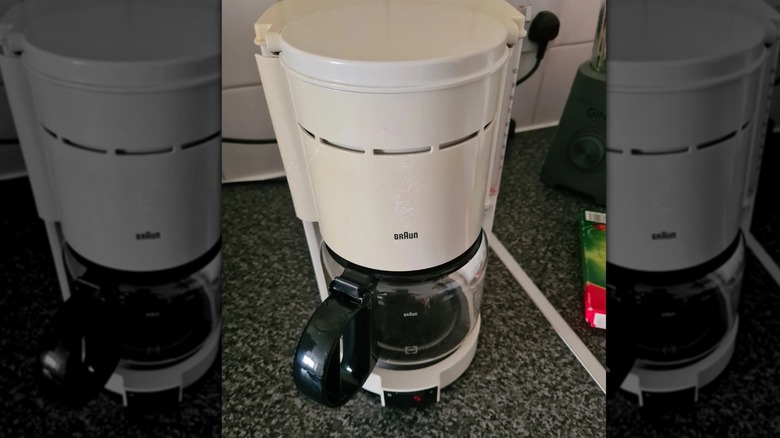
Coffee machines and espresso makers were all the rage in the '80s. Braun has made some fantastic coffee makers over the years, including the fabulously space-age Aromaster KF20 in bright orange or fire engine red from the '70s. From their '80s releases, the Aromaster KF40 is considered among the most collectible. Released in 1984 and designed by Hartwig Kalke, the Aromaster KF40 had an unusually attractive shape and appearance. It had a fluted body in a cylindrical form, but it was its swing-out filter basket that made it so very popular. The water tank wraps around the swing-out filter basket, making this piece wonderfully sleek and compact, while being exceedingly efficient.
The overall form and function of the Aromaster KF40 coffee maker saw its inclusion in the Museum of Design in Plastics. And, if your idea for a perfect coffee bar is '80s-inspired, this would make a fantastic addition. Originally the Braun Aromaster KF40 was white. However, given that it's over 40 years old, many examples are now yellowed. Unfortunately that discoloration is how plastic of this type ages. Given its simple but efficient design and how reliably it operates, if you stumble across one of these at the thrift store, it's worth checking whether the element still works. You'll also want to plug it in, run a pot of plain water through it, and listen for the percolating sound that means the thermostat is cycling correctly. If it is, this is a great purchase, especially if it comes with the original glass carafe with its specially-molded handle designed to keep your knuckles away from the hot glass.
The Panasonic or National bread machine
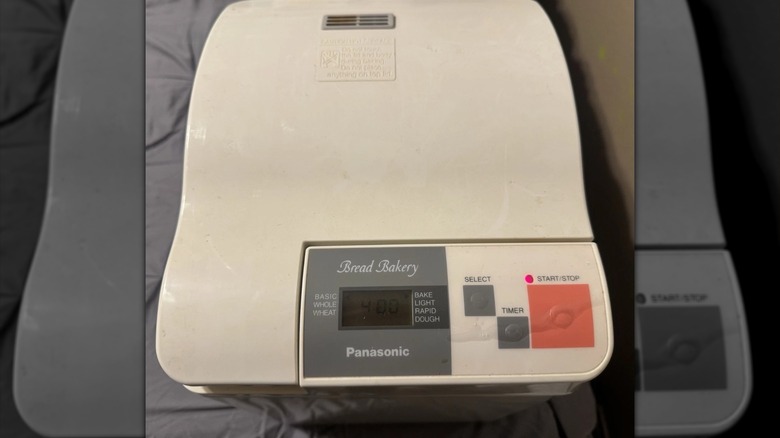
This bread machine is a real hit of nostalgia for me. I remember my mother's huge bread-making beast taking up half a countertop and producing wonderful-smelling bread. Panasonic, also known as National outside the U.S., introduced bread makers worldwide in 1987, and suddenly people everywhere wanted to make their own bread. The idea of being able to dump flour, yeast, and water into the bucket and walk away felt very futuristic, maybe even magical, given how time-consuming making bread is from scratch without a bread machine.
As people moved away from convenience food back toward fresh and homemade goods, the bread machine offered a fantastic blend of both convenience and homemade goodness. Those early machines have a very basic mix, knead, rise, and bake setup, with few bells and whistles. You won't find any buttons or options for things like adding nuts or seeds to the mix, but if you can find a working one, you still have the ability to bake fresh bread with minimal effort. They tend to cost far less than the more contemporary machines, which still produce the same loaf of bread, just with a lot more unnecessary faff and fanfare. You can still quite often find one of these machines in good condition because, for many people, as they are today, they were a novelty. They'd be used maybe a dozen times and then relegated to the back of the cupboard and left there until somebody cleared out the house.
Donvier hand-crank ice cream maker
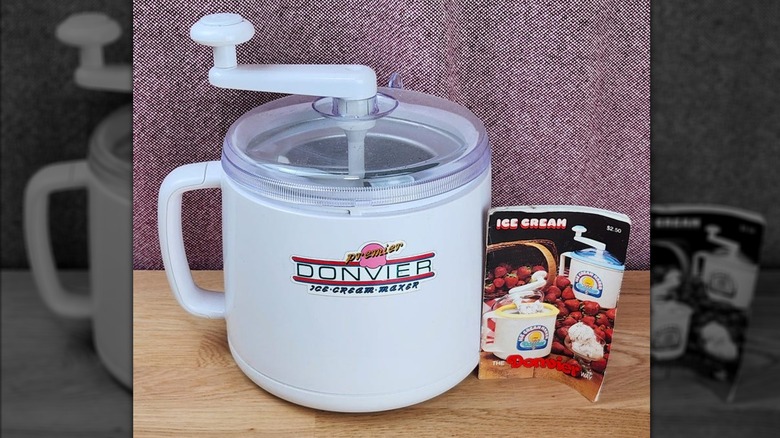
This one is not electric, but is still a fantastic piece of '80s engineering and a useful appliance. The Donvier hand-crank ice cream maker makes ice cream in minutes with no electricity, no bags of ice, and no handfuls of rock salt. Because it's not an electrical appliance, it doesn't have an ancient electrical cord that you need to look at for signs of danger. It was released in the U.S. in 1984 and is a very simple device. It has a cylindrical metal tub that's double-walled, inside of which is a sealed pocket of gel refrigerant. You freeze this container overnight. Then, when you're ready to make your ice cream, you bring it out, put it inside the exterior, and add your ingredients. You simply put the lid on and turn the hand crank, which, in turn, turns the paddle inside. Very rapidly you get delicious ice cream with absolutely no fuss. Because these are so well-made and simple, you'll find them at the thrift store on a regular basis, sometimes even still in their box.
If you enjoy making your own ice cream, this is a great purchase, as you can usually pick them up far cheaper than many of the current ice cream maker models, many of which carry a high price tag because they are electric and have lots of different settings. In comparison, the Donvier hand-crank ice cream maker is very simple. You freeze the inner container, then add your ingredients and crank the handle. That's all there is to making a fresh batch of ice cream. Just be sure to remember to freeze the Chillfast container beforehand.
Black & Decker SpaceMaker can opener
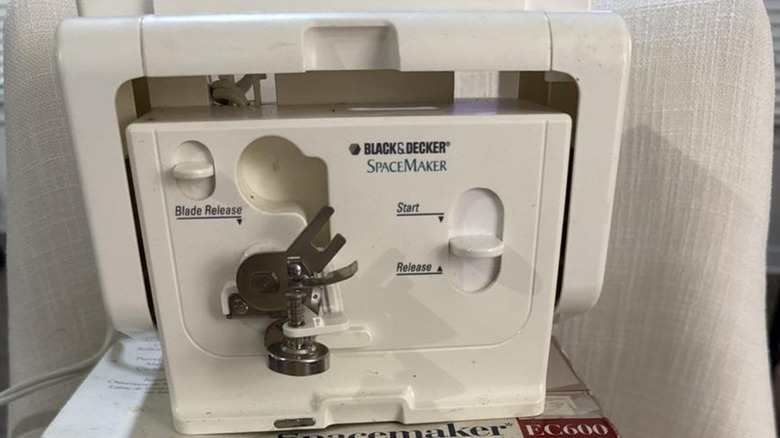
The Black & Decker Spacemaker can opener was actually originally introduced by GE in 1983. However, Black & Decker bought GE's small appliance business in 1984, but kept the Spacemaker branding. This particular can opener is a small cabinet-mounted appliance. It simply screws under a cabinet. Then you can lock a can in place and the device clamps and spins the lid off. Some models also had a bottle opener and a knife sharpener on the side, giving you multiple appliances in one.
The SpaceMaker range also included a toaster oven and coffee maker, and the whole line was designed to save space on the countertop. While I'm not convinced that the under-counter toaster oven is strictly necessary today, the can opener is still a useful appliance. Given that most of us are terminally short of counter space, having one that mounts underneath and that only costs a few dollars is a smart move. Do, however, avoid the coffee maker, even if you are enchanted by the SpaceMaker line. Don't be tempted by the coffee maker or at least exercise extreme caution, because almost a million of them were recalled between 1984 and 1988, due to the thermostats presentig a fire hazard.
Cuisinart DLC-7 Pro
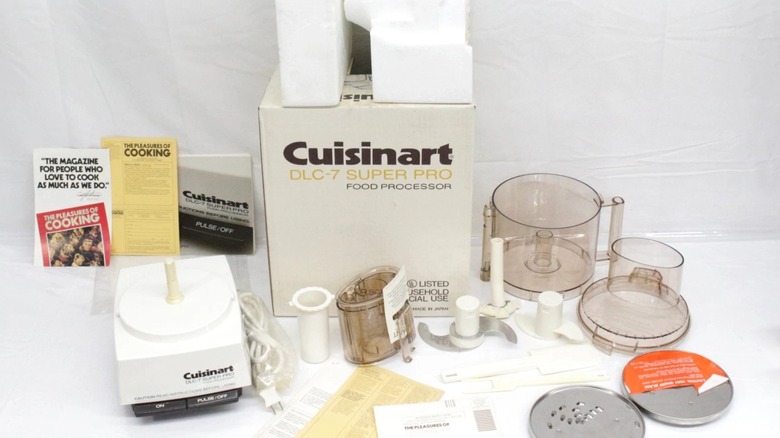
A behemoth of a food processor, the Cuisinart DLC-7 Pro, is big, heavy, and takes up a ridiculous amount of cupboard space — but it was also built like a tank. Unlike many cheap modern compact food processors, which are lightweight and prone to overheating, the Cuisinart DLC-7 Pro was able to handle batches of bread dough weighing up to 3 1/2 pounds without issue. This is pretty impressive, especially if you can find a fully functional model at the thrift store at a great price.
If you tend to prepare food in big batches, this is the kind of food processor that will make your life considerably easier, as it has a substantial feed tube which could accept whole tomatoes for slicing, as well as a massive bowl. If you are short on cupboard or counter space, this is probably not the food processor for you. If, however, you've got ample space and you like to meal prep or you're feeding a large crowd on a regular basis, and if you can score one of these at a good price, you'd be crazy not to. Do be aware, though, that these machines weigh close to 16 pounds without the bowl and blades attached. Before you make your purchase, check that the bowl is present and in good condition, and that the standard blade and dough blade are both included, as finding replacements can be difficult.
Zojirushi Micom rice cooker
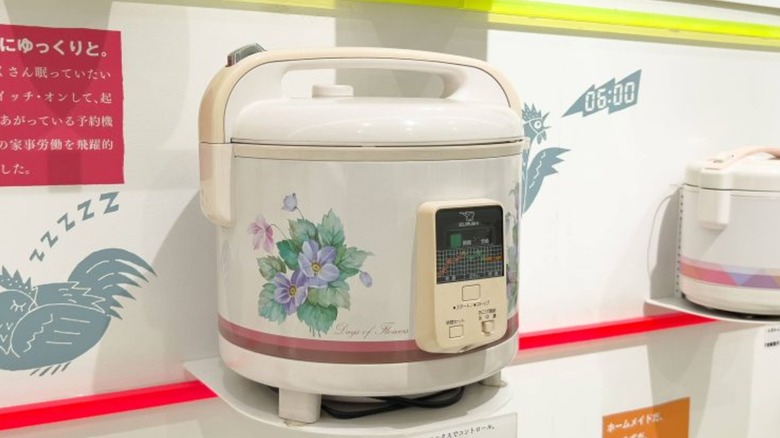
Zojirushi's 1983 Micom rice cooker was among the first appliances to have a built-in microcomputer, which is one of the reasons it's so popular and has so many collectors and enthusiasts. Other rice cookers of the time simply relied on a timer and thermostatm but the Micom tracks how the rice is cooking and can be adjusted for different rice types. Plus, this upgraded rice cooker handled much more of the process without any user input. It would soak, cook, and steam without the user having to touch anything once the rice and water were loaded and the dial was set.
The Zojirushi Micom rice cooker was ahead of its time and is still a perfectly functional kitchen appliance if you can find one in complete condition. You need to check that the inner pan isn't warped or excessively scratched, as a damaged pan impacts even heat transfer. You also need to check that the keep-warm light actually comes on.
Presto FryDaddy deep fryer
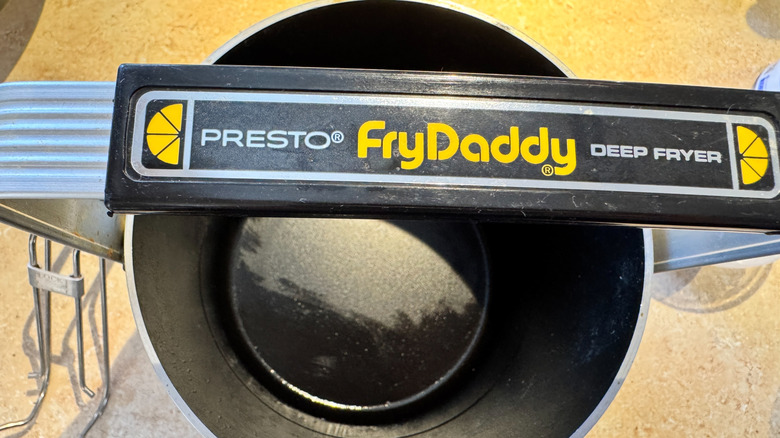
The Presto FryDaddy was actually released in 1977, but was a major feature of many family kitchens all the way through the '80s and is still in production today. This extra-large deep fryer could make four servings, so it was able to cater to families. It also had automatic temperature control, but had few other bells and whistles. It was popular because it could fry four servings with just 4 cups of oil. It has a snap-on lid that helps limit the risk of spills, keeps the oil fresh, and traps in that deep fryer oil odor so your kitchen doesn't smell greasy between uses.
It also came with a lift-and-drain scoop instead of a basket, and the surfaces are all no-scour, non-stick, and wipe-clean. While there aren't any fancy settings, the machine is functional and takes up a relatively small amount of space given that it makes four servings at a time. The design was so successful and popular that it's never really gone away. In fact, Presto still sells a nearly identical model. If you can find a used '80s one at the thrift store that's still in working order, you're getting a comparable piece of kitchenware at a fraction of the cost. Just make sure that you check that the inside of the pan isn't damaged.
Presto's PopCornNow hot-air popcorn popper
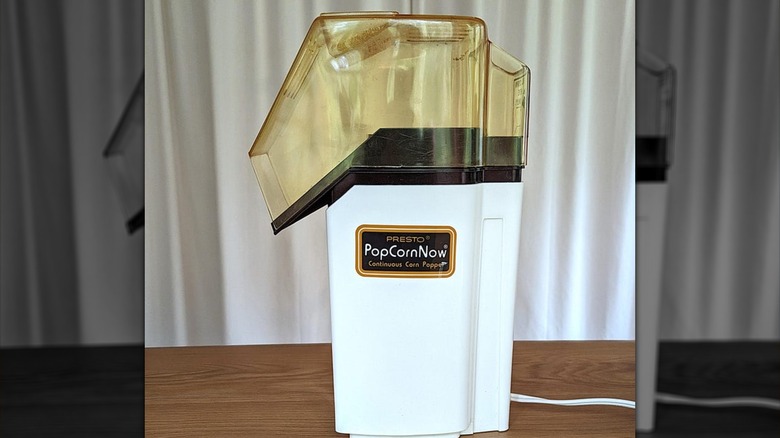
Everyone owned one in the '80s, and I firmly believe it still deserves a spot on the countertop. I love my Presto PopCornNow hot air popcorn popper. They were originally released in the late '70s, but it was incredibly popular all through the '80s and it inspired many other similar products. It was one of the first hot air poppers, rather than an oil-based one, and it was very easy to use. I appreciate the odd look of the Presto PopCornNow in all its '80s glory, with the little butter tray perched precariously on the top and dripping melted butter over the popcorn as it comes out. The only thing is that you have to reach around and load the corn in the rear of the machine, which is slightly awkward. But it's got few moving parts and was built to last.
You can often pick these up for a few bucks, so it makes more sense to buy one of those than a comparable modern one, which will likely carry a much higher price tag. With the Presto PopCornNow hot air popcorn popper, there's minimal cleanup, because there's no oily cooking vessel and you simply place whatever popcorn-receiving receptacle you like underneath.
Sunbeam Radiant Control Toaster
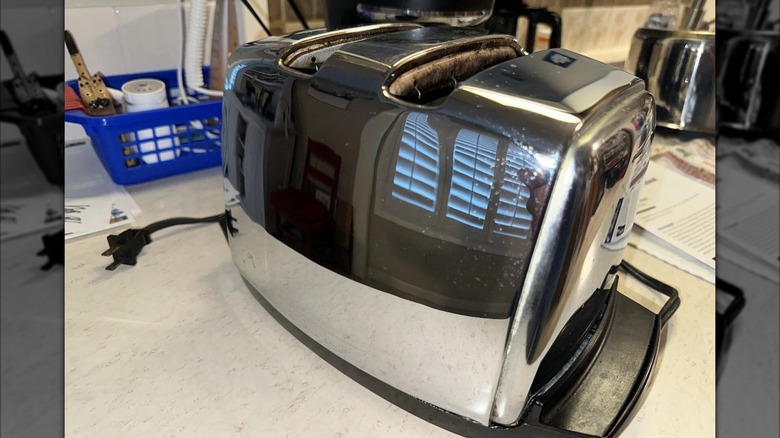
This one is absurdly brilliant in its simplicity. The Sunbeam Radiant Control toaster requires no operation from the user. It's a remarkable piece of engineering. All you do is drop the bread in. That's it — the machine does the rest.
The weight of the bread activates the toaster. It begins to heat up, which causes the wire inside to expand, which in turn triggers the carriage to begin lowering. There's also a thermostat that responds to the heat radiating from the surface of the bread and, once it detects the bread has reached the appropriate level of "doneness," another mechanism activates that raises the toast again. It's really very clever and, during the '80s, seemed incredibly futuristic, even though it was actually pretty simple and was introduced in the '40s. This clever toaster is brilliant and I would love to find one at the thrift store. Although, you do need to check that the cable is in good safe condition and that there's no motor to burn out. Sometimes, though, these toasters do develop a slight problem with lowering and lifting. The fix is generally a simple one and only requires you to adjust the heating wire. Do remember, though, that pre-'80s toaster models may be hiding asbestos in their electrical cord.