

The Beautiful Orchid That Looks Like The Bees It Attracts
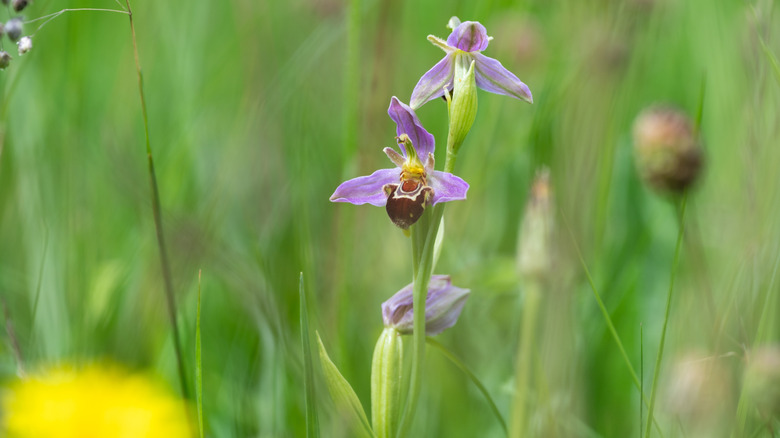
If you're interested in gardening, you probably know that there are tons of pretty orchid varieties, ranging from showy boat orchids (Cymbidium) to vibrant corsage orchids (Cattleya) and beyond. But aside from coming in a rainbow-like range of colors, some species have other interesting qualities. In particular, the bee orchid (Ophrys apifera) is a curious little flower that resembles a bee.
Native to Europe and Asia, this orchid species can be found in England, Ireland, and several other countries today. However, it is somewhat rare in certain areas — and like other wildflowers, it's protected by law in the United Kingdom. If you'd like to grow these flowers in the U.S., you can buy seeds from gardening websites. For example, Seedfella sells a 100-pack for $14.99. The company notes that bee orchids are suitable for USDA Hardiness Zones 5 through 9, which includes much of the continental U.S. That said, it prefers milder climates.
At first glance, the first thing you might notice about a bee orchid is its spiky pink or purple petals. But as you get closer, you'll see a yellow-and-brown center that hangs down — as if a bee is dangling from it. According to the Chicago Botanic Garden, the species looks (and smells) like a female bee, which encourages male bees to stop by. They land on the orchid to mate, but instead end up pollinating it. As a result, these flowers are an excellent option for bringing more pollinators into your yard and garden.
How to grow and care for bee orchids
Aim to plant the seeds — either straight in the ground or in pots — after the final frost of the season. That's usually sometime in spring, depending on your region. With the right care and conditions, bee orchids should bloom beginning in spring. However, according to the Suffolk Wildlife Trust, it may take up to six years to reach the flowering stage. So, this isn't an instant-gratification gardening project. If you decide to grow bee orchids, you'll need a little patience before you get to enjoy their distinctive, bee-like blooms.
When you're choosing a location for bee orchids in your garden, keep a couple of important tips in mind. For starters, this plant needs full sun or partial shade — or at least four to six hours of sunlight per day. In other words, don't stick it under a large tree or put it in a pot on your patio. For the best results, it's also important to place these orchids in well-drained, nutrient-rich soil. Be sure to water them occasionally, but don't let the soil stay soaked. If your bee orchids get waterlogged, they could develop root rot, a common (but dreaded) plant disease that can be fatal.
Something else you should know about these orchids before planting: They can survive light frost, but they need protection in harsher winters. If your area experiences extreme winter weather, you can keep the cold at bay by adding a layer of mulch around the base of your bee orchids. Alternatively, you can keep them in containers and move them inside when temperatures start to dip. With the right growing conditions and some patience, you can eventually enjoy one of the garden's most unusual sights: an orchid whose flower mimics the appearance of the very pollinator it evolved to attract.