

Not Just Insecticide: Deter Carpenter Bees With A One-And-Done Solution
We may receive a commission on purchases made from links.
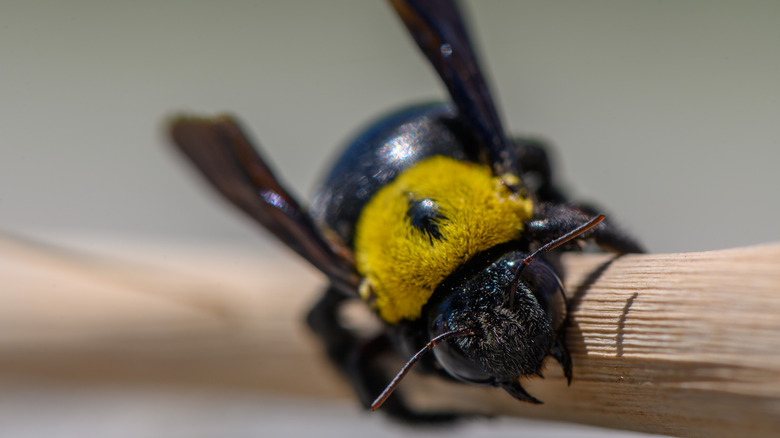
If you've noticed small perfectly round holes drilled into your deck rails, eaves, trim, or siding and a little sawdust on the ground below, those are clear signs you've got a carpenter bee problem. These wood-chomping insects are well known for terrorizing structural lumber in a bid to build their nests where they lay eggs. New bees emerge, then eventually return to hibernate through winter. Beyond that small entry hole are tunnels that can extend several inches or, if reused for several years, even up to 10 feet long. Now, the reflexive thing to do when you find carpenter bees in your shed might be to bring out the insecticide and spray them dead. But insecticides can wear off on outdoor surfaces, and then you'll have to repeatedly spray, especially around peak seasons. If you want a one-and-done solution, you'll need to also seal the bee holes with mesh caps or cover the lumber with metal flashing after applying insecticides.
These metal treatments are a more long-lasting solution for deterring carpenter bees. They work perfectly because the bees can't chew through metal. The female bee's mandibles, although large, are only able to bore through wood. So once you've covered the exposed wood and sealed previous entryways with metal, the bee infestation will come to an end.
How to properly use metal mesh caps to control carpenter bees
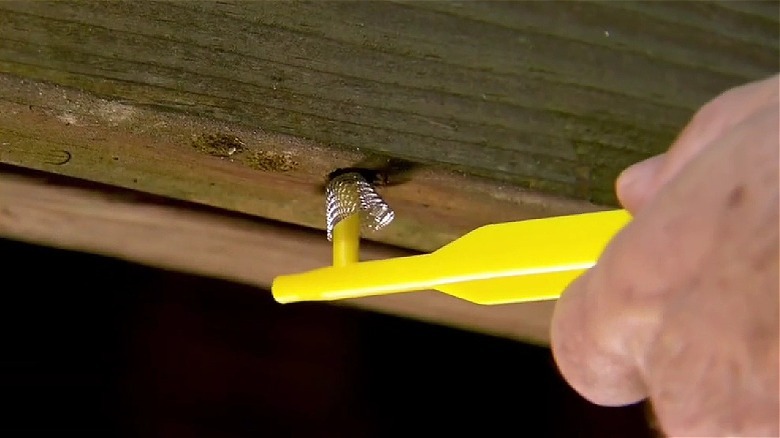
The first critical step before installing mesh caps is ensuring the tunnels in the wood are actually vacant. We don't want to seal up holes with carpenter bees still inside because they might be able to dig another hole out. For this reason, it's best to use insecticide to kill any lurking adult bees or larvae. Spray the inside of the nests with insecticidal dust that contains chemicals that work against carpenter bees, like deltamethrin in Delta Dust Deltamethrin. Remember to always put on personal protective gear when handling the insecticide, and spray the dust as far inside the tunnels as possible. Then let it stay for a few days to give it time to kill every last bee still in there. Once that's done you're now ready to seal the holes with mesh caps.
You can use metal caps like these HASSLICKIT Stainless Steel Carpenter Bee Hole Plugs available on Amazon for just $6.99. You don't need any fancy tools or glue. Simply position one plug at a time on the applicator stick and push it into the nesting hole until it fits in snugly. Do this for all of the holes you can see on the lumber. This way, when the bees return to their nests, as they often do for generations, they won't be able to enter. Mesh caps can work well for the occasional bee hole, but for larger infestations, metal flashing can come in handy to prevent them from drilling new holes next to the sealed ones.
Using metal flashing to deter carpenter bees
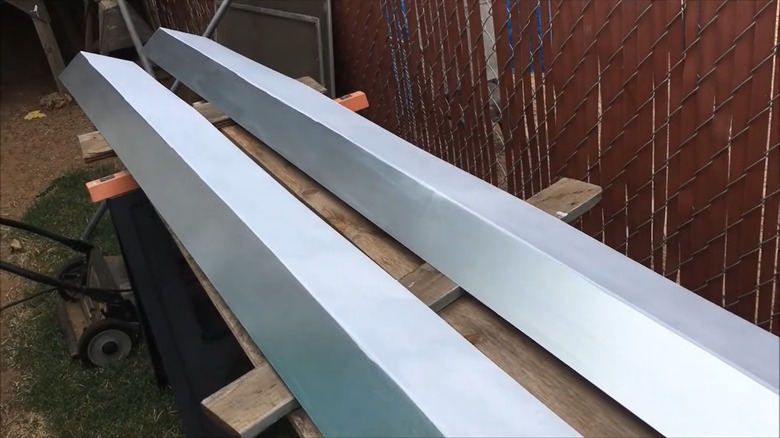
Besides metal mesh caps, you can also use metal flashing as a long-term solution to deter carpenter bees. This is a sheet of metal, most commonly made of aluminum, stainless steel, copper, or galvanized steel. You might already know what roof flashing is, but if not, this ELECTRAPICK Aluminum Flashing Roll on Amazon is a good example. When installed to deter carpenter bees, it can cover the entire surface of a beam and therefore blocks access to the wood. To use metal flashing, apply an insecticide using the same process mentioned above, then securely attach a strip of flashing to cover the nest holes. It might be wise to work with a professional to seamlessly integrate the flashing in with your home's structure.
When addressing multiple carpenter bee holes on your lumber, instead of having to seal each of them one by one using caps, flashing can be cut to size, covering all entries using just one metal sheet. It will also prevent woodpeckers from damaging the wood as they search for carpenter bees and larvae. Furthermore, considering that bees might come back later to drill other holes close by, using flashing instead of caps is a better solution to prevent new nest holes on the same beam, especially if you live in an area where carpenter bees are a constant issue. If you're still on the look out for more ways to deter carpenter bees, you can also repel carpenter bees using herbs they can't stand.