

It Was Popular In Medieval Times — Now It's The Elegant Table Decor To Search For Secondhand
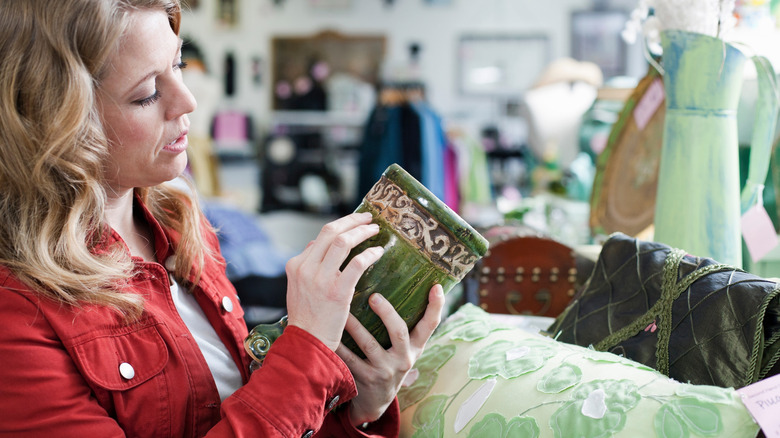
Fans of history often look back to the past hundred or so years for inspiration when it comes to interior decorating — for a few true antique lovers, this even extends back a few centuries — but when was the last time you considered incorporating a trend from the Medieval era? Medieval modern is the romantic interior design trend we can't get enough of, and despite the fact that we're pulling inspiration from a time that spans from 1600 to 600 years ago, its influence feels undeniably fresh. We're not talking about dramatic tapestries or weathered stone walls. We're talking about champlevé, an elegant technique that uses carved metal and enamel to transform everyday objects like vases into stunning works of art.
Champlevé vases and other items were actually popular during two major periods of time: the Medieval Era, spanning from the 12th to the 14th century, and the Art Nouveau period, from the late 19th century to the early 20th century. During medieval times, the practice was primarily found in France, but the art style spread gradually throughout the world, and the technique is still practiced today, albeit on a more limited scale.
Unless you're a curator of artifacts, you probably won't find champlevé enamel vases from their original medieval time, but that doesn't mean you can't find gorgeous items created during the Art Nouveau era or even by modern producers. Thanks to the fact that both enamel and metal are incredibly hard-wearing materials, champlevé vases can last an incredibly long time, so you might be able to secure a gorgeous piece of history.
Champlevé enamel vases are handmade works of art
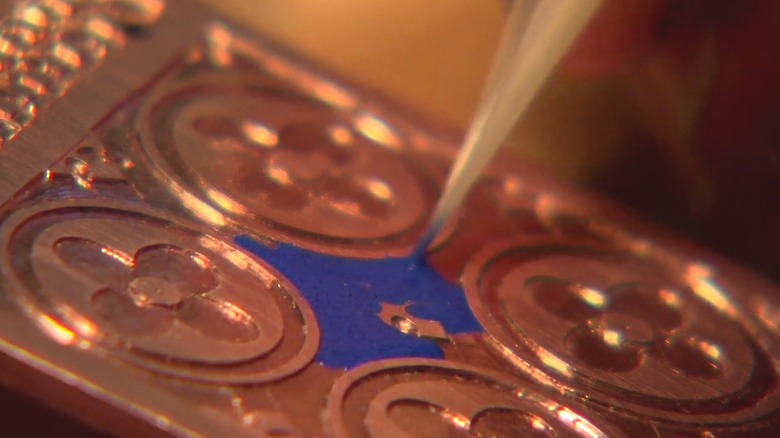
Champlevé translates to "raised field," and the name is a very accurate descriptor of the artistic process. Essentially, a soft metal such as copper is carved and etched by hand. The depressions left behind in this metal are filled with powdered glass, then the entire piece is fired to melt the glass and set it into the metal, creating a cohesive and permanent image. The design doesn't fade, discolor, or wear easily, and because of this, it's a great choice for an object like a vase that needs to be both decorative and durable, since it's handled from time to time.
Another enameling technique, cloisonné, produces fairly similar results to the untrained eye, but the process is very different. Rather than carving out the metal, thin pieces of metal wire are attached to the surface to make the cells before adding enamel powder and firing. You can differentiate between the two by analyzing the details of the design and taking into account the overall thickness of the metal — because champlevé is carved in, the base metal tends to be thicker. Another big tell is the texture itself. Champlevé designs will look and feel more similar to woodcutting: often slightly imperfect and varied, though they can still be very complex. Cloisonné is typically smoother and with very precise metal lines.
How to find and style champlevé enamel vases
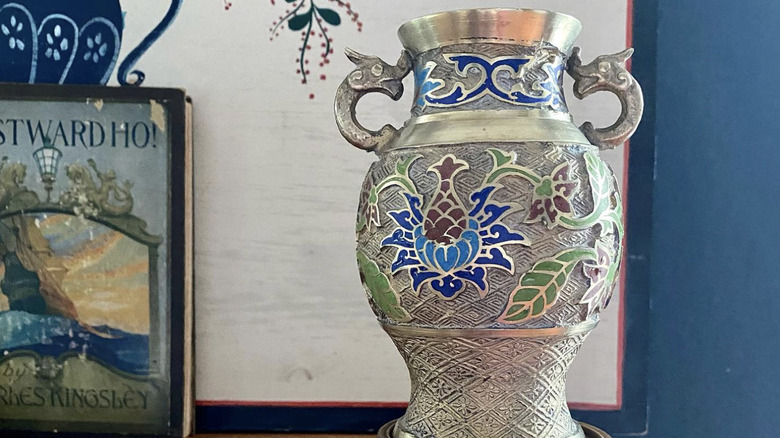
For fans of champlevé specifically, it can be difficult to find. That doesn't mean it's impossible, though. Keep an eye out for French-produced items and read guides on Art Nouveau decor to familiarize yourself with common motifs from this era — flowing lines, ornate florals, and depictions of women were popular. You can expect to spend between $50 and $150 for an antique vase in this style from an online secondhand site like eBay, but prices will vary heavily. You could always get lucky and score one from the thrift store for a few bucks, or you could head over to an auction site like 1st Dibs and find more ornate pieces listed for thousands.
When it comes to styling these vases in the home, the designs really speak for themselves. Pop one on your dining table for a conversation piece while hosting friends, use one on a side table to bring interest to a boring corner, or set one on your mantle for a focal point in the living room. The designs along the sides are often the star of the show, so keep your florals simple, if you decide to include them at all. Match the flowers you choose to a color on the vase for a cohesive look, or go low-maintenance with some dried grasses in a neutral tone. A large, colorful floral display in an already heavily patterned vase could be great for a true maximalist, but if you want to allow your antique find to shine, basic is best.