

Light Mulch Vs Black Mulch: What's The Difference?
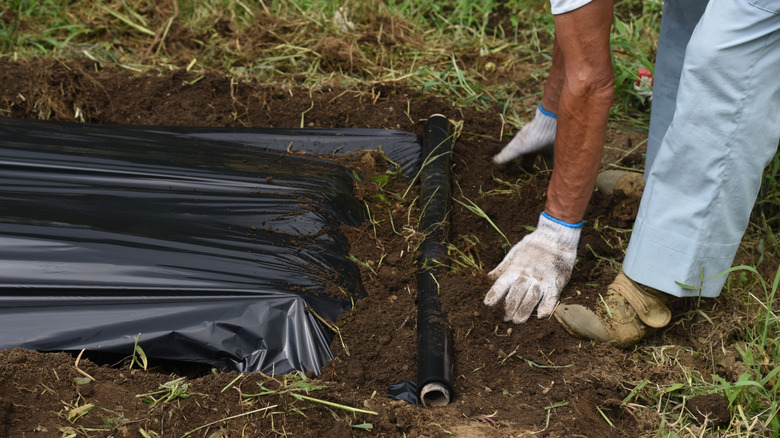
Mulch is available in a wide array of materials, shapes, and colors, ranging all the way from bright white to saturated black. It's often assumed that the final decision on the best type of mulch for your garden comes down to simple aesthetic preference, and while that's a big part of the puzzle, that's not the complete picture. All mulch can be used to get rid of weeds in your garden, reduce erosion, mitigate temperature changes, and retain moisture in the soil, but certain colors and types of mulch are better at specific jobs than others. This phenomenon is exemplified when we place the whitest of the white and the darkest of the dark head to head: light and black.
Simply put, light colors reflect light and dark colors absorb it, which makes a major difference when it comes to something like soil temperature. True white and black mulch most frequently refer to plastic sheeting rather than wood chips, so neither will do much when it comes to bolstering the nutrition of your soil. Making the right choice can, however, help you minimize the negative effects of weather in your area and even extend your planting season. As a general rule of thumb, black mulch is better for locations where you need an extra boost of heat — think areas with long winters where you want to start planting a bit early. White mulch, on the other hand, reflects light, and therefore heat, away, so it's best for garden beds that you want to keep cool. Which you choose can vary based on your USDA Growing Zone, but you'll also want to factor in the needs of the specific plants you're cultivating.
Other features of black and light mulch
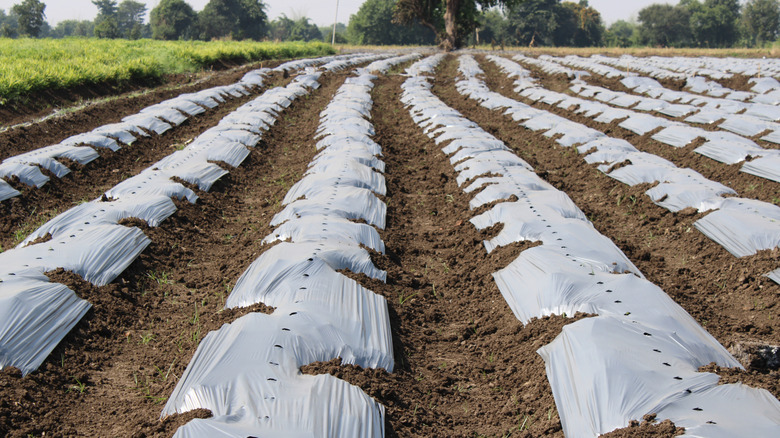
Soil temperature isn't the only thing the color of your mulch will have an impact on, although that should be the main factor in your decision. Because of the fact that it reflects light upwards and away from the soil, white and light-colored mulches can help to ensure your plants are getting enough sunlight. Think of it like one of those suntan face reflectors from back in the day — even if the lower leaves would have otherwise been shadowed, they'll get to enjoy some light bouncing off the ground. This is ideal if you're trying to cultivate sun-loving plants in an area that sees frequent cloudy conditions.
Black mulch, on the other hand, provides an additional benefit: decreased weed growth. While white mulch will still do this job well if it's opaque enough, the dark coloring gives an extra boost to this protective layer. Black mulch completely blocks the sunlight that would otherwise make it into the garden bed and give stubborn weeds the resources they need to sprout.
Across the board, any color of mulch applied correctly will help to maintain moisture in the soil, reduce erosion, and suppress weeds, so the main consideration here should be temperature. If you also want to enjoy the extra nutritional boost as the mulch starts to break down, consider going with dyed black or light-colored natural wood mulch rather than plastic sheeting — you can still cater the color to your temperature needs, but be aware that natural dyes will start to fade over time.