

How To Prevent Grease Buildup On Kitchen Surfaces, For The Uninitiated
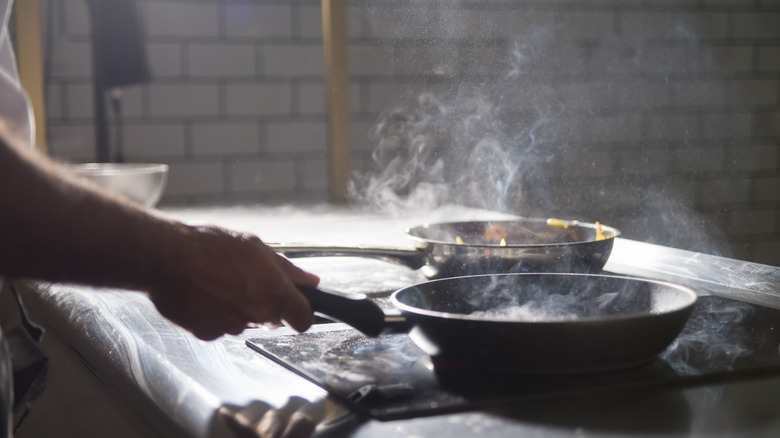
If grease builds up on your kitchen surfaces, it's an unpleasant annoyance at best. At worst, however, it's a health hazard. Kitchen grease is a fire risk that can also attract roaches and other pests. Since it's difficult to get rid of stubborn grease on kitchen surfaces, it's better to mitigate the mess entirely by taking steps to prevent it. Proper ventilation is among the best ways to prevent airborne grease and grime from dirtying your kitchen, and it's as easy as turning on your range hood.
While you cook, smoke and evaporating moisture both rise from your pots and pans, carrying odors and oil particles from your food along with them. If they have nowhere to escape, they'll settle on your kitchen surfaces. Range hoods solve this issue by circulating air, either by filtering it and returning it to your kitchen or drawing it out of the house via ductwork. It's especially important to use your range hood if you deal with respiratory issues, since cooking-related pollutants like small bits of fat and oil can also exacerbate lung conditions. For cleaner kitchen air and a lighter cleaning schedule, ensure you have the right range hood for your home and use it correctly during cooking.
Tips for choosing and maintaining a range hood
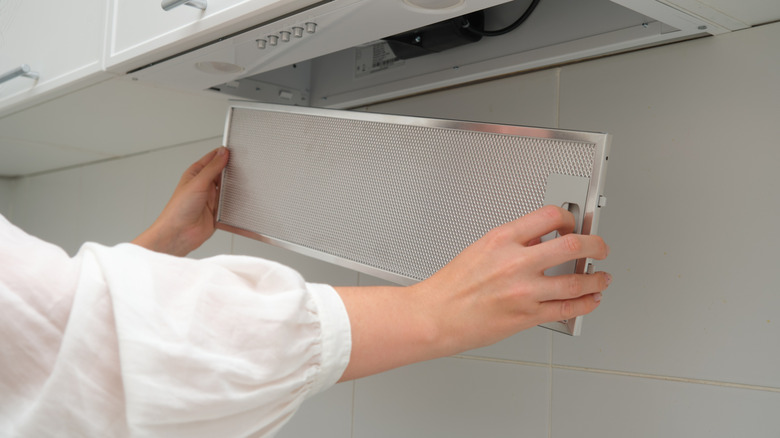
Range hoods come in a variety of styles and models to accommodate different kitchen layouts and housing styles. If you're replacing your appliances, or if your current range hood doesn't seem to help cut down on grease buildup, try calculating what CFM (cubic feet per minute) you should have for your range size and strength. Factors like frequent high-heat cooking, having a higher range hood, or covering larger burners will all require a hood with higher CFM. While it's possible to install many range hood models yourself, seek professional assistance if you need to add or upgrade ductwork.
Cleaning and maintaining your range hood are also essential for its performance. Grease and dust can build up inside the hood and on its filters, making it less effective and increasing the risk of fire over time. Wipe outer surfaces clean with a multi-surface spray or a stainless steel cleaner. Metal range hood filters should be cleaned every three months, while the charcoal filters in recirculating models should be replaced annually. Metal filters can often be cleaned in the dishwasher, but if yours can't, simply wash it in hot, soapy water. If your range hood uses a centrifugal grease trap instead of a filter, carefully remove and clean the oil tray by disposing of the accumulated oil and soaking the tray in soapy water.
Adapt your cooking methods for less grease buildup
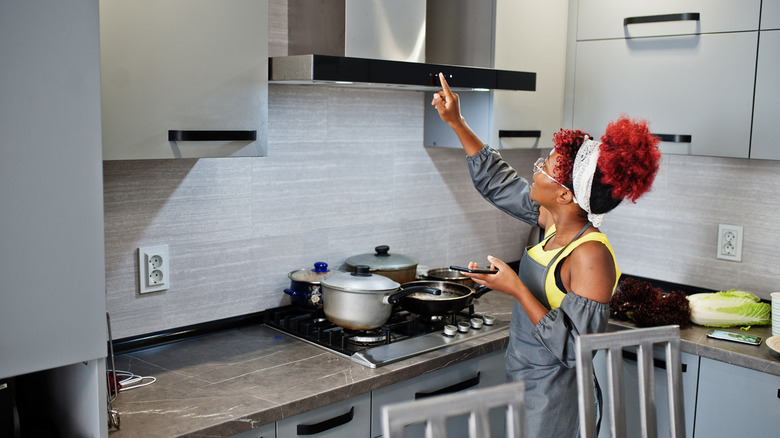
To get the best results from your range hood, turn it on before you start cooking and let it run for up to 15 minutes after you finish. This gives the hood time to fully extract lingering smoke and odors. Along with running your range hood, consider using a splatter screen to trap flying oil droplets before they reach your filter. Whenever possible, cook with less oil and at lower temperatures.
Covering up kitchen surfaces is an easy way to prevent grease buildup and lighten your cleaning schedule. While you're cooking, especially if you're deep-frying, drape nearby utensils and appliances with a dish towel. The towel will catch grease spatters before they can accumulate, and all you need to do to clean up is toss the towel in the laundry. Covering also works especially well for hard-to-reach surfaces like the tops of your upper cabinets. Next time you clean the space above your kitchen cabinets, spread out wax paper or aluminum foil on the freshly scrubbed surfaces. Grease will build up on the disposable surface instead of your cupboards, so all you have to do is throw the paper or foil away.