

Do This To A Concrete Driveway In October To Prevent Stains & Cracking During Cold Months

Concrete is an incredibly hard-wearing material, but it does have one major weakness: water. More specifically, water that freezes and thaws. Because concrete is porous, it sucks up rain and moisture. This isn't that big of a deal for most of the year, but liquid absorbed during the colder months that then re-freezes and expands can lead to cracks in the surface. While you can't control the weather that your driveway has to face, you can give it another layer of protection in the form of a sealant.
A sealant will create a barrier between your concrete and moisture, and if you live somewhere with frequent winter freezes, it's important to apply it before the chilly weather starts to really ramp up. Given this, October is the best time of the year to seal your driveway, as you no longer have to deal with the oppressive temperatures of summer — which can negatively effect both your comfort while you're working and how the sealant cures – and it's not cold enough in most areas for true freezes to occur yet. The relatively low humidity during the fall season also works in your favor. Applying your sealant on a dry, sunny autumn day is the best way to ensure it goes on smooth and that you're not inadvertently trapping any existing water in the material.
Luckily, this driveway maintenance task isn't very challenging to handle yourself. Applying concrete sealer is about as difficult as painting a wall, so if you get your timing right, you should be able to prepare your concrete driveway for winter over the course of a free afternoon.
How to seal your concrete driveway in October
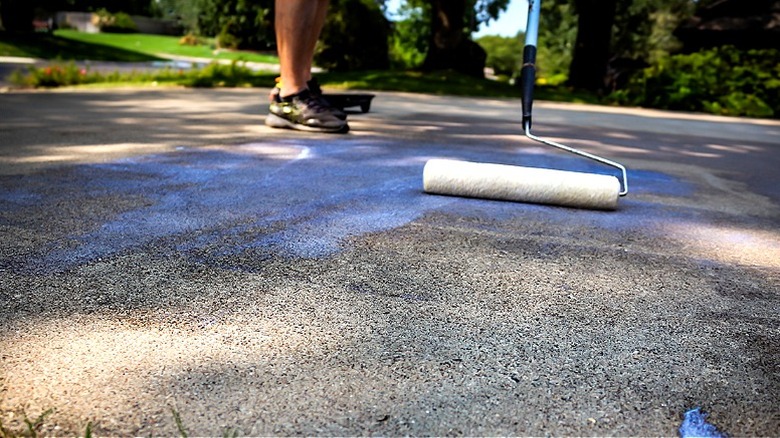
There are three main factors that'll impact the results you see from sealing your concrete driveway: formula, timing, and preparation. Not every product on the market that claims to seal concrete is the same; the types of sealant you can use on concrete floors on your garage, for example, usually aren't intended for constant exposure to sun and the elements. So, for your driveway, it's best to go for a water- or solvent-based penetrating sealer. Penetrating sealers sink into the concrete and create a durable finish that's specifically designed for application in outdoor settings.
Next is timing. We've already narrowed down October as one of the best months to complete this task, but you'll also want to make sure there's no rain in the forecast within at least 24 hours. It's also best if it isn't windy, as gusts could blow dirt, dust, and leaves onto the driveway while the sealant is still drying down.
Before you actually apply your sealant, you'll want to prepare the driveway with a deep clean. This includes sweeping away leaves and debris, but you should also scrub away any stains or even use a pressure washer to get things looking fresh and bright. Let everything thoroughly dry. Then, if the weather is right, use a sprayer or a paint roller to apply a thin, even coat of sealant to your entire driveway. Follow this up with a second thin coat after drying for even more winter protection. If you check all of these boxes and follow the manufacturer's instructions during use, you should be left with a driveway that is pristine and protected from the changes in weather to come.