

Orchids Drooping? This Small Daily Action Could Be Harming Their Blooms
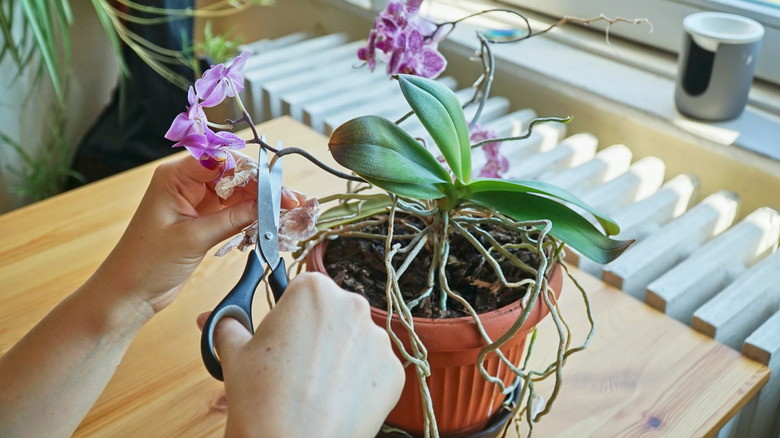
If your orchids are looking a little sad, then you may start to worry that they aren't getting enough water or light, but there may be a much more obvious cause to consider first. For those prone to touching your orchids, even something as innocent as trying to "check" a new bud, this can cause damage to the flowers particularly if it's happening regularly throughout the day. It can be tempting to touch, especially with the prettiest orchid varieties, but try and resist. Admire the petals, take a photo, but then leave the plant alone as much as you can. Their flowers are actually very delicate and our hands have natural oils and dirt that can leave marks on both the blooms and leaves, as well a clog the plant pores, which are vital for processes like photosynthesis.
Now before you start roping off a VIP section for your orchids that no one can get past, it isn't just an accidental touch or two that is doing irreversible damage. It's really only an issue if you're repeatedly handling the plant, especially around unopened buds and fresh growth where oils and grime can collect dust on the plant's surface. And your hands can also carry bacteria which may enter the plant through damaged tissue and spread disease. Too much handling could therefore become one of the common mistakes sure to kill an orchid.
Give those blooms some space
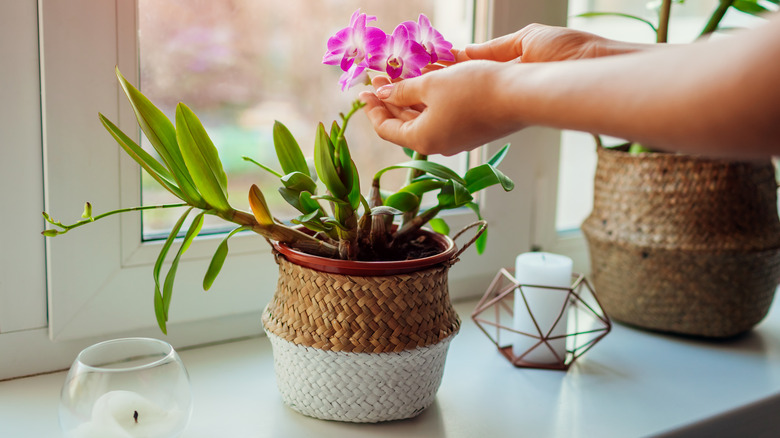
Once you start to train your mind not to directly touch the orchids, it's actually quite easy to do. If you need to move the pot then hold the pot itself, if you need to inspect a bud then look closely without actually touching it. It's a very useful habit especially with popular varieties like phalaenopsis, also known as moth orchids, whose flowers can remain open for up to four months under the right conditions, and so protecting them can make a real difference.
In the instances when you do need to directly handle your plant, say to stake it, prune it, or repot it, then make sure your hands are washed and use clean scissors to make any cuts. Disposable gloves are also great protection. Further, sterilizing your tools between different plants is a good habit to get into.
Once you have a routine of not touching your orchids down to an art form, you'll be able to better assess if the plant is drooping from other possible causes such as water inconsistency, poor light, temperature changes or root damage. It's important to choose the right type of orchid too since different varieties have different care needs and you'll need to ensure your home is suitable for them to flourish in. Then, trust us, just leave those beautiful flowers alone as they do their thing.