

What's The Typical Lifespan Of An LG Dishwasher?
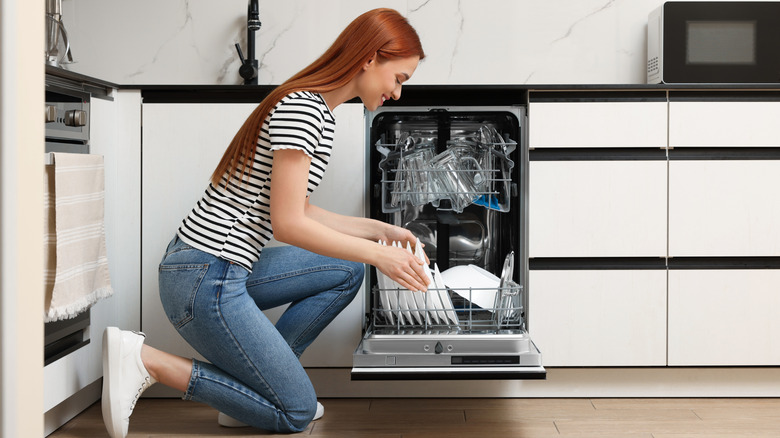
When choosing the right dishwasher for your kitchen, homeowners take several factors into consideration, including how long it'll last before it needs to be replaced. Dishwashers are among the household appliances that are most likely to break down and are a major investment you'll need to budget for, ranging from roughly $300 all the way up to $2,000 or more, depending on the brand. LG models generally fall in the midrange, costing around $550 to $1,500, so before you buy, you'll want to know it's worth the investment.
You should be able to get a solid 10 to 13 years out of your LG dishwasher before it reaches the end of its lifespan, depending on factors like routine maintenance and water quality. LG equips its dishwashers with direct drive motors backed by a 10-year limited warranty. Over time, however, key parts of an LG dishwasher break down, requiring either repair or full replacement. Watch for problems with the water inlet valve, drain pump, or door latch, any of which can break within the first seven years.
While it would be every homeowner's dream to keep their LG dishwasher running for well over a decade, it's good to know when to cut your losses and swap it out. A common rule of thumb is to consider a replacement if repair costs approach 50% of a comparable new dishwasher, especially if the appliance is already several years old. If the repair cost is much less but it's for an older dishwasher that is nearly a decade old or has needed repeat repairs, putting more money into it may only buy you a short amount of time.
How to get the most out of your LG dishwasher
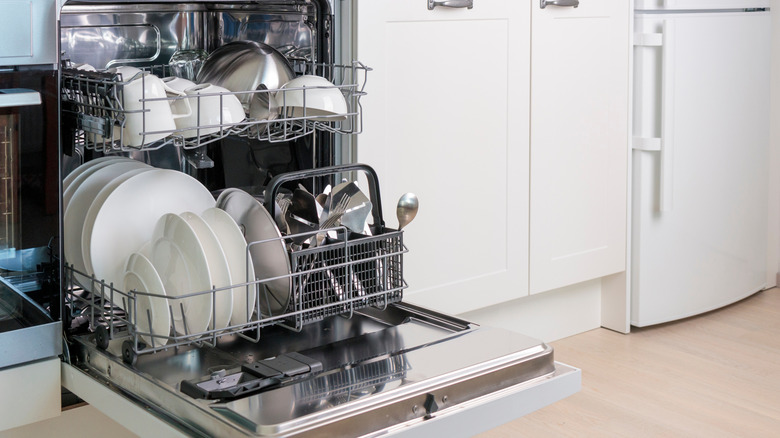
Getting the most life out of your LG dishwasher is simpler than you might think. While proper care doesn't guarantee the coveted 10- to 13-year lifespan, it can help prevent premature repairs and keep your dishes coming out clean. One of the easiest things you can do is to optimize daily loading and operation, which directly improves efficiency and reduces strain on the motor. This includes simple habits like angling dishes downward to allow proper water drainage during the dry cycle and checking spray arm clearance to make sure all plates, baking sheets, or dangling utensil handles aren't blocking them.
Getting the dishes cleaner is about more than just shiny plates -– it can also help protect the internal parts of the machine. If you want to prevent white film from building up in your dishwasher, use the appropriate amount of detergent and rinse aid. Keeping that mineral scale from building up reduces strain on heating elements and spray arm nozzles. Another easy trick: purge the cold water from your kitchen sink before pressing start. Running hot water at the faucet first ensures the tub fills with hot water immediately, so your detergent can dissolve and get to work right away.
Keeping up with a few basic chores goes a long way toward avoiding surprise breakdowns. Rinsing out the mesh filter every two to four weeks helps keep stray food scraps from working their way into the drain pump and messing with the motor. Toss in a dishwasher cleaner tablet every month or two for a dedicated hot cycle, too. Doing so helps strip away hidden grease and hard water scale before it can clog the internal lines or start stinking up your kitchen.
Signs it's time to replace your dishwasher

Whether you've gotten a decade or more out of your LG dishwasher or it's breaking down earlier than expected, recognizing the signs that it may need replacement can save you from unexpected kitchen floods and wasted money on repeated service calls. If your dishes suddenly start coming out wet or cold, it's a clear sign your dishwasher isn't reaching the proper sanitizing temperature. While heating elements can sometimes be replaced, an aging unit with heating issues often struggles with secondary electronic failures. Without proper heating, your dishwasher can't properly dissolve detergent or sanitize your dishes, leaving them dirty and spotty.
Another warning sign is standing water or moisture pooling around the front or underneath the appliance. A leaking door gasket may be a relatively easy fix, while a leak from beneath the tub may signal degraded main pump seals or internal tub corrosion. Unnoticed leaks can quickly cause mold and thousands of dollars in subfloor damage. Water on the floor is an issue, but water left in the dishwasher tub signals a serious drainage breakdown. If clearing the filter, drain hose, and garbage disposal connection doesn't solve the issue, the drain pump motor or main control board timing circuit may have already failed.
A cracked or warped tub is another strong reason to consider a replacement, no matter the age of your dishwasher. Visible cracks or warping often appear in the tub liner, and it's usually caused by extreme temperature changes or stress from aging. Given that the tub is the major structural component of the dishwasher and can't be easily patched like valves or motors, repairing or replacing it may not be the most economical choice. In that case, you may want to look into a replacement.