

Woman Transforms A Gourd Into A Natural Birdhouse During Cold Months With An Impressive DIY
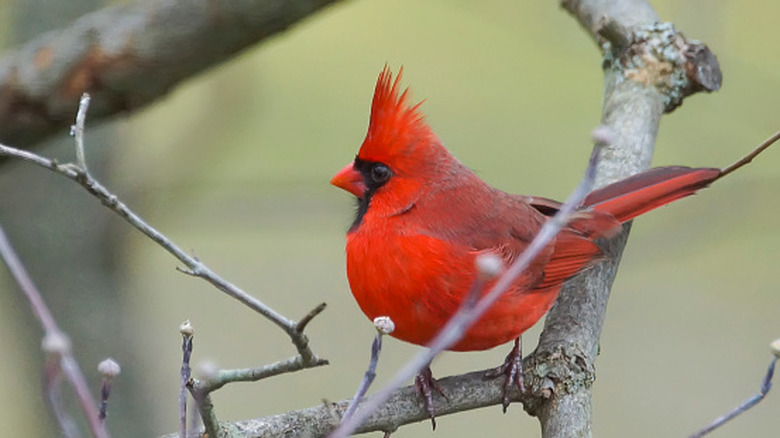
As winter rolls in, the backyard birds you're used to seeing often search for a warm, sheltered spot to ride out the cold months. So if you're looking to attract more birds to your yard or keep them there during the colder months, there is a fairly unique way to do so. Try following the lead of Instagram user @easygrowing_ and transform a dried gourd into a natural birdhouse with a drill, a wire hanger, and a few decorative touches.
Unfamiliar with gourds? These hourglass-shaped vegetables are close cousins of pumpkins and squash and, like them, have a hard, wood-like shell that's easy to hollow out and hang. And surprisingly, this is actually a centuries-old practice. Native Americans hung hollowed-out gourds to attract birds like purple martins, and the tradition actually still goes strong in backyards today. You can create one of these shapely birdhouses for your yard, adding an all-natural twist to the list of charming DIY birdhouses you can build right now as the winter approaches. Many commercial grocery store chains may not carry them, which can make finding fresh ones tricky.
However, you can also try local farmers' markets, garden centers, or online farms. If you want to skip the drying process entirely (takes one to six months), consider buying pre-dried ones. Once you have your gourd, the rest of the supplies are easy to round up. They include a scouring pad, an electric drill with a 2-inch hole saw, and a regular drill bit. To hang the birdhouse, grab a wire hanger and a pair of pliers. To personalize your final design, you'll need a few acrylic paint markers and a clear outdoor sealant to protect your artwork.
Steps to build a gourd birdhouse
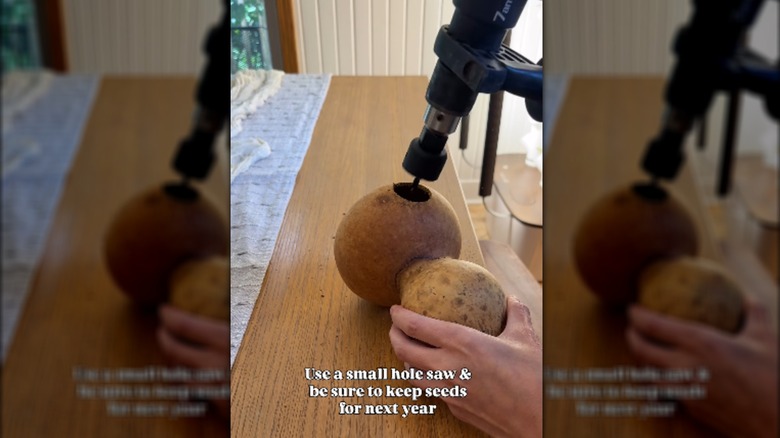
Before you start drilling, your gourd needs to be completely dried out. To do this, first wipe it down with a diluted bleach solution, then set it somewhere with good airflow, such as a garage or open room. As you wait for it to dry, note that it's normal for the vegetable to develop a mold-like crust. You'll know it's dry when you shake it and can hear the seeds rattle inside. This means your gourd is ready to go, and the next step is to scrub it with a scouring pad and warm, soapy water. This should easily remove any crust and flakes.
Now you're ready to make your holes, so put on a dust mask first to keep moldy dust out of your lungs. Attach your hole saw bit to the drill and cut an entrance in the side, about a couple of inches from the base. Shake the gourd to remove the seeds and dried insides. Then switch to your regular drill bit and add about four drainage holes in the bottom to prevent rainwater from pooling inside. Next, create your hanging holes.
For this, use your regular drill bit to drill two holes at the top of the gourd, then use your pliers to bend the wire into a circle. Thread one end of the wire through both openings. Then bring the two ends together above the vegetable and secure them with the pliers. Finish by drawing your decorative designs on the birdhouse and sealing it with a clear coat so your colors stay bright throughout the season.
Ways to personalize your gourd birdhouse
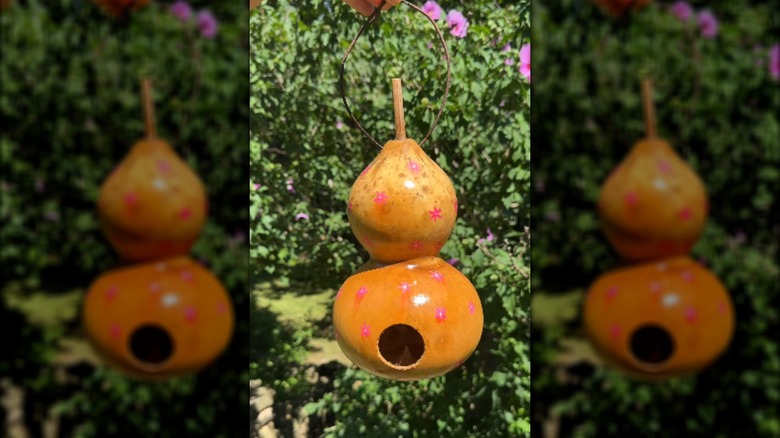
If you want to cover the rustic surface of the dried gourd with paint for a different look, consider colors that blend in well with your backyard's theme; perhaps brown, orange, or a muted tan can go well. Or make it pop against the greenery with bolder colors like ocean blue, sunny yellow, or wine red. Add creative designs such as polka dots or stenciled botanical vines and leaves to play up the vegetable's nature-inspired look.
When choosing your paint colors, you can also pick ones that appeal to the backyard birds that love birdhouses in your area. For example, purple martins prefer white birdhouses, since the color reflects heat and keeps things cooler during warmer months. Add pinecones or popsicle sticks to the top of the gourd for a chapel-style roof, which will also help rain roll off the birdhouse instead of seeping in. Just be sure any added materials are securely attached and don't block the entrance or create sharp edges that could harm birds.
Also, if you're not a fan of the wire hanger, use a larger drill bit to create hanging holes and thread a thick piece of twisted metal wire through for a rustic-industrial finish. Pair this with a solid color, such as light stone or ivory, for a modern spin. To prevent this, add a sealant to these openings to prevent water from leaking in.