

Keep This Part Of Your Lawn Trimmed To Help Slow Weed Growth
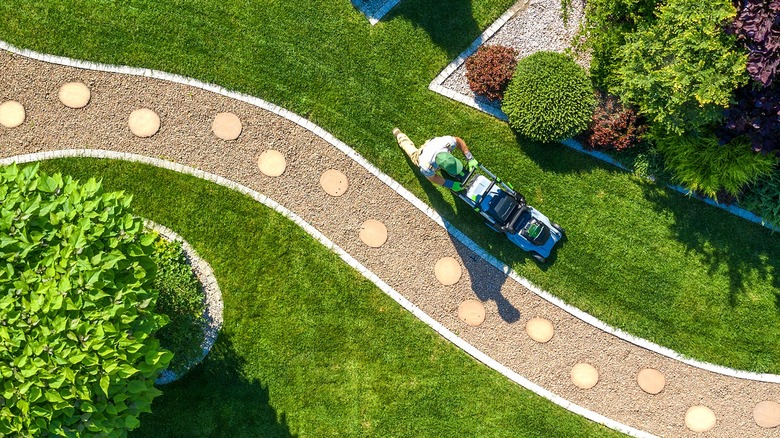
It might seem like sacrificing the edges bordering your lawn to annual and perennial weeds is a great way to keep them contained to that "no-man's land" between your grassy paradise and its wilder spots. Unfortunately, weeds don't respect neutral-zone pacts. In fact, the closer they get to the more fertile soil of the lawn area, the more quickly they will claim that territory for themselves. That's why keeping the edges trimmed will not only clear that immediate area of weeds, but it's also one of the most effective ways to banish weeds from your lawn without harming the grass. Just be sure not to trim the area too short.
Why are lawn edges so rife with unwanted plant problems? Mainly, it's because lawn mowers can't easily reach these areas to trim them. This allows the weeds that are there to continue growing. Also, on the outskirts of a lawn, the area is often more shallow and compacted, which many weeds don't mind at all. In addition, if your grass is next to a sidewalk, driveway, or other hardscape, these areas retain the kind of heat that grass dislikes but many weeds love, leading to low-turf, high-weed areas.
To trim these hard-to-reach areas, use a string trimmer, which is also known as a weed whacker or weed eater for a reason. It's especially important to take down flowering types of weeds before they set seed. One thing to avoid, however, is trimming away too much and exposing the soil. If you do, you'll create the very conditions that weeds can thrive in.
Use a string trimmer to maintain your lawn's edges
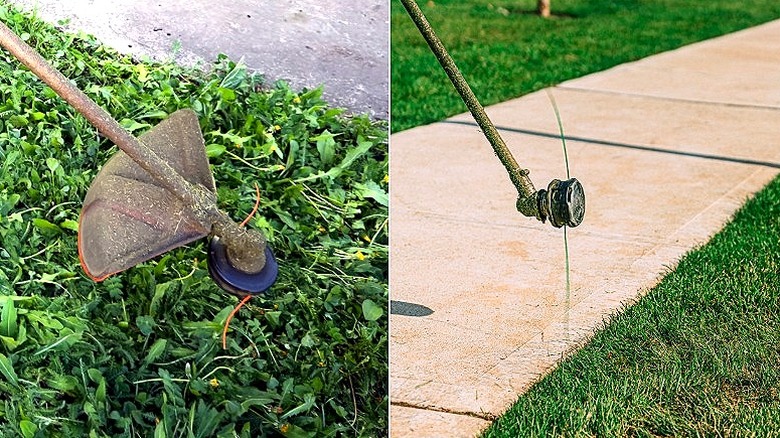
Using a reliable string trimmer to eliminate pesky weeds is the most effective way to trim a lawn's edges. However, angling the lightweight machine is key to cutting away the right amount. When you trim flat areas that your lawn mower can't reach, the string trimmer should be held parallel to the ground; then, swung from side to side in order to slice through the weedy stems. Make sure the height in these areas match the rest of your lawn, so that soil there remains well-covered, too.
When trimming a lawn's edges, though, you'll need to turn the string trimmer perpendicular. The machine should be at a 90-degree angle, so that the string rotates downward. The angle allows you to move along the edge and see what's being cut away. The angle here is key; if it's angled toward the grass, you could end up scalping the grass in that area, leaving the soil exposed — for weeds.
Also, because you're likely to have a mixture of perennial and annual weeds with different growth schedules, it's best to trim your lawn's borders several times a year. That way, you'll be neatening up the area while also stopping seed heads before they reach the fertile soil of your lawn.