

How To Clean Black Spots On An Enamel Stove
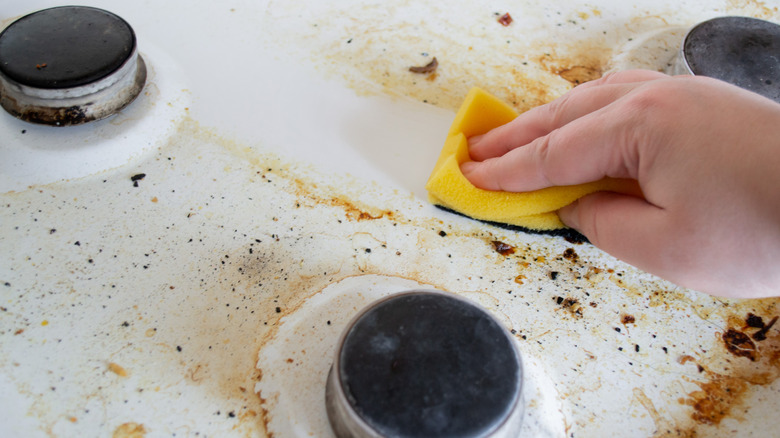
Gas cooktops and electric ranges come in a variety of styles. Many feature an enamel stovetop that doesn't just give your kitchen a classic look; it also makes it easy to clean up any unsightly stuck-on residue. Black spots on an enamel stove are most often caused by burnt food, grease, or carbonized spills. Luckily, all it takes to clean these spots is some elbow grease and a few household supplies. Enamel is tough and heat-resistant, but it can chip, dull, or scratch if you use harsh abrasives like steel wool or metal blades improperly.
If you notice burnt-on food leaving black spots on your enamel stove, reach for baking soda and dish soap first. This combination provides mild abrasive action without scratching porcelain enamel — and it's critical to avoid scratches, since they trap future grease and can stain permanently. Start by mixing equal parts baking soda and a liquid dish soap like Dawn until it forms a thick paste, which is just one of many ways to use baking soda for a cleaner kitchen.
Spread a thick layer directly over the black spots, then grab a dish towel and get it damp with hot water. You won't want it soaking — just warm and wrung out. Lay the towel over the paste you layered on the black spots, and leave for at least 30 minutes. The wetness softens the charred food, and the soap and baking soda cut the grease. After removing the towel, scrub in gentle circular motions with a non-scratch sponge or dish rag. Finally, wipe with a clean, damp cloth and dry with a microfiber towel so that you don't leave streaks.
Other ways to get your enamel clean
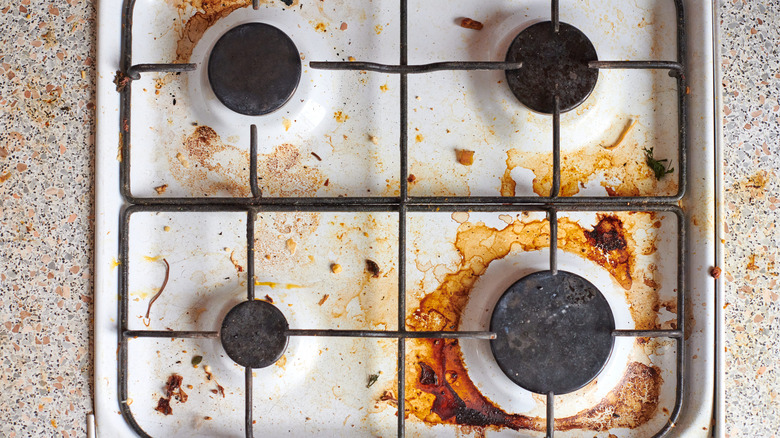
Your enamel stove is one thing you could be cleaning with Barkeeper's Friend if the baking soda and soap method doesn't work. Its active ingredient, oxalic acid, chemically breaks down stubborn baked-on minerals and char, but it's still gentle enough to not scratch the enamel. You'll want to wet your stovetop with water — enough to make it damp, but not dripping wet. Next, squirt (or sprinkle, if you're using the powdered version) some Bar Keepers Friend onto the black spots. It should be enough to cover the problem areas, but not saturate the surface. Unlike the baking soda and soap mixture, you can't leave this product on for more than one minute, since oxalic acid can dull the enamel if left too long. After the time is up, take a non-scratch sponge or nylon pad and scrub gently, then wipe thoroughly with a damp cloth to remove all of the cleanser residue.
If the black spots have a raised, crusty texture, softening them and lifting them mechanically is the safest option to avoid damaging or scratching the finish. You'll need a non-abrasive scraping tool, like a rigid plastic scraper, wooden spatula, or an old credit card. After using the baking soda and soap method to soften the buildup, use the scraper at a 30-degree angle to gently push against the edge of the spot to pop the charred layer off without gouging the enamel surface.
Reminders on how to safely clean your stove
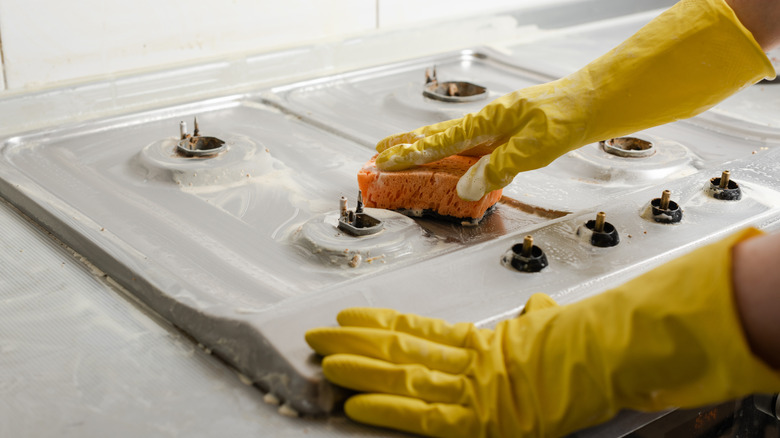
Enamel stovetops are easy to scratch or chip, so it's important to use gentle cleaning methods while trying to clean away any food residue. It's absolutely necessary to avoid any steel wool or scouring pads. Using these will ultimately dull the glass-like gloss of enamel and leave micro-scratches that trap future grease, making your stovetop much harder to clean in the long run. You'll also want to skip the metal razor blades to scrape away stubborn carbonized spots. Even though this option might seem fast and effective, unless held perfectly flat, they can easily catch on the surface of the finish and chip the enamel down to the bare metal underneath. Your stovetop should always be completely cool before attempting to clean it. If it's hot while you try to apply cleaners, the sudden temperature shift can cause thermal shock. This can crack or craze the porcelain enamel finish and bake the cleaner into the surface, causing permanent staining.
The trick to avoiding black spots on an enamel stovetop in the first place is one simple rule: Never allow grease or food spills to cook a second time. Heat bakes organic matter onto the surface of enamel's glossy coating, carbonizing it into stubborn black marks that are more difficult to remove. Considering what happens if you never clean your stove, staying on top of regular maintenance is essential. The most effective habit is wiping down the stovetop after every single meal, but be sure to let the stovetop cool completely. Then wipe away any fresh splatters or grease buildup with a soft microfiber cloth, warm water, and a drop of grease-cutting dish soap. To prevent water spots, dry thoroughly with a dish towel.