

Get Mulch Down Before Mid-October. Here's Why
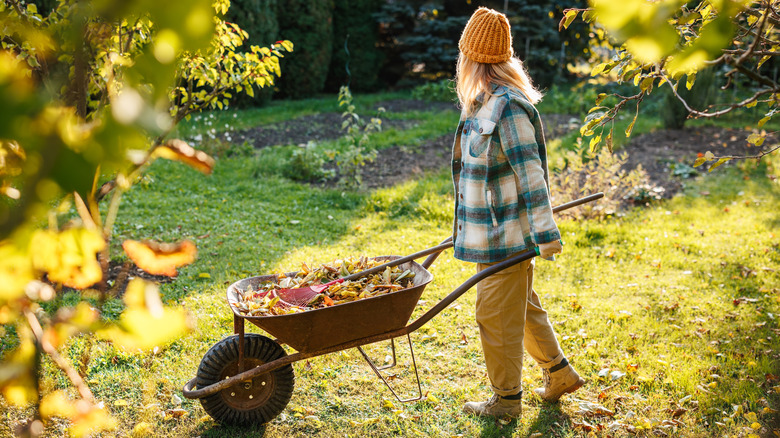
We often associate gardening and yard work with spring, probably thanks to the profusion of flowers and warm temperatures that make gardens so nice. However, much of the work that results in those beautiful flowers needs to be done in the previous fall. One of those tasks is mulching. Layering mulch in your yard has multiple benefits, including suppressing weeds and contributing nutrients. When done in the fall, mulch also insulates the soil and protects against erosion. If you live in a part of the country that gets its first frost as early as mid-October, it's important to apply mulch before then.
Any recently added plants will particularly benefit from fall mulching if you live in an area with intense freeze-thaw cycles. The insulating properties of mulch help shelter establishing root systems from extreme temperature swings. Not only does this lead to healthier plants in springtime, it can actually prevent plant roots from being pushed out of the ground by frost heaving.
If you don't live in a region that gets frozen-solid soil, or if your first frost is later in the year, follow your plants' lead. The right time for fall mulching is after plants have gone dormant, so the warmth of the mulch doesn't convince them to keep growing past their season. Get familiar with your local soil temperatures and first frost dates. Watch for signs that your plants are going dormant, then add mulch before the ground freezes.
Tips for fall mulching
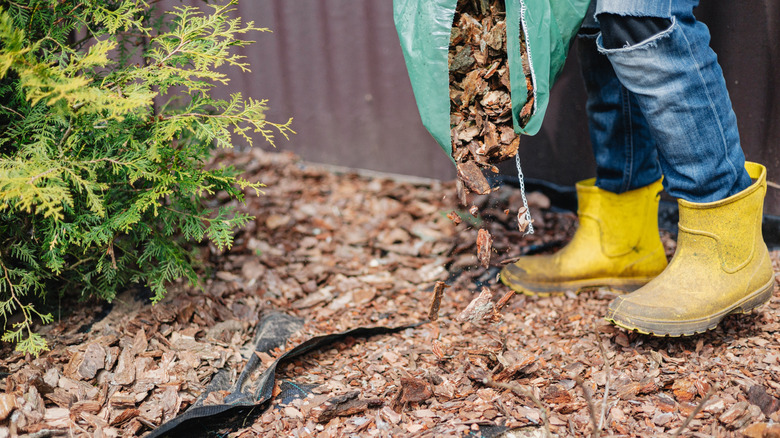
One way to contribute mulch to your garden is by skipping one lawn care task: bagging up leaves. Fallen leaves are a convenient source of important nutrients, and using them as mulch offers many other benefits, like providing habitat for butterflies and preventing erosion. Whether you're relocating leaves, spreading compost, or applying wood chips, wait for a dry day. Trapping extra moisture in mulch can contribute to disease and root rot. If you opt for bark mulch or wood chips, be careful to choose dried and aged mulch, not fresh mulch. Fresh wood mulch still contains high levels of nitrogen that can leach into your landscape, resulting in yellowed leaves.
Be careful not to apply mulch too thickly since its insulating properties can make it a cozy place for rodents, slugs, and other pests to spend the winter. A layer of mulch 2 to 4 inches thick will be sufficient. This will help ensure your plants' roots, including any fall bulbs you've planted for spring blooms, will be better protected from winter temperatures.
Depending on your gardening style, fall actually may not be the right time for mulching. If you have self-sowing plants that rely on a winter germination period to sprout, applying fall mulch will inhibit growth, resulting in fewer new plants. Plus, fall mulching may not be right for you if you leave your garden perennials all winter to provide wildlife habitat instead of pruning them. Navigating around dormant perennials to effectively spread mulch may not be worth the effort, or the risk of disturbing wildlife.