

Save Yourself From Shoveling: The European, Easy-To-Use Tool For Aerating Compost
We may receive a commission on purchases made from links.
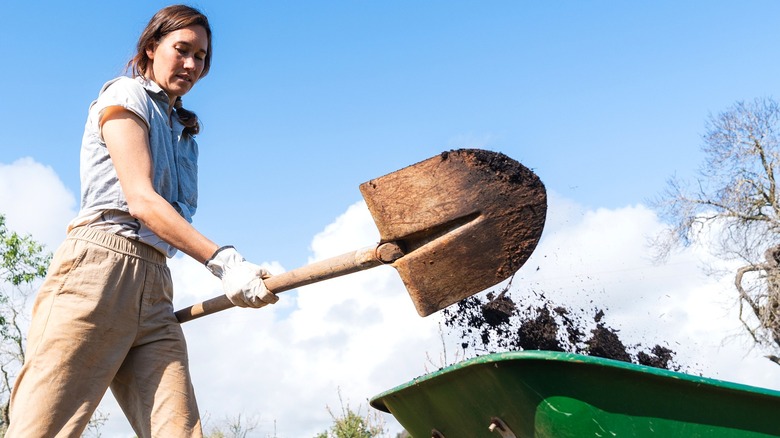
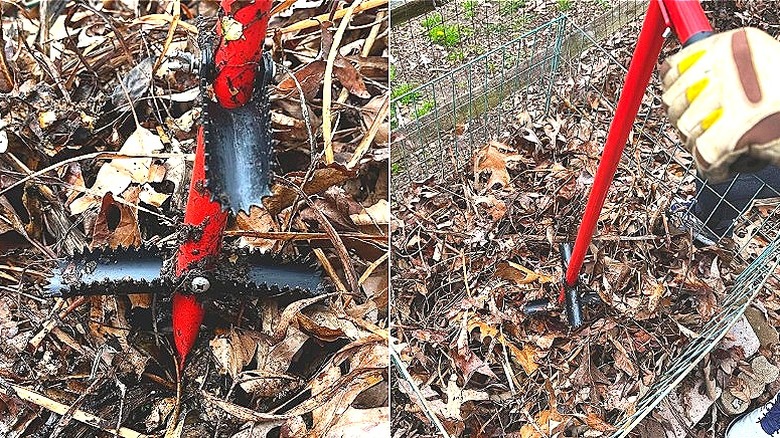
Backyard compost is an excellent way to reclaim nutrients from food scraps and yard waste that would otherwise end up in a landfill. However, it's not a "set it and forget it" process. Compost needs to be kept damp, and it must be aerated by regularly mixing or turning it. Depending on the size of your compost pile, this can be a strenuous task. Fortunately, you don't need to reach for a heavy shovel to complete it, as there are some easy-to-use tools available. Compost aerators, for example, like the T-shaped Bosmere compost aerator (Amazon, $40), feature folding wings that stay closed as you drive the tool into the compost, then open up inside the pile to grip the material and lift it to the top.
This style of compost aeration tool is more common in the UK, where slightly different models are available. This type of aerator is designed to blend composting material that's at different rates of decomposition, introducing more bacteria and oxygen to different levels of the pile. But these T-shaped aerators may not be the right pick for every compost pile. For one, most models aren't long enough to reach into piles deeper than 3 feet, and the required lifting motion can put strain on your wrists. Still, it's less labor-intensive than turning with a shovel, and they do a better job at mixing material, not just introducing air like the corkscrew aerator models do.
Why you need to aerate your compost
There are different methods for making your own DIY compost, each suitable to different yards and different gardening time frames. But for almost all of them, turning the pile is a must. The additional oxygen introduced by turning feeds the microorganisms responsible for breaking down your kitchen scraps into beneficial organic matter. Plus, it helps to minimize odors, which occur when the aerobic microorganisms use up the available oxygen and become inactive, which lets anaerobic microbes to take over. While these microbes also help decompose compost, as they do, they release gases.
For hot composting to be effective, you should aerate the pile fairly often, every three to four days. Along with introducing oxygen, turning compost helps regulate the pile's temperature to optimize the environment for composting microorganisms. According to the Old Farmer's Almanac, you'll know it's working if the compost pile's temperature is between 130 and 160 degrees Fahrenheit. Cold compost technically doesn't require any turning, but if you never aerate it, it can take more than a year to deliver usable compost. That's why it is recommended to aerate cold compost piles at least a few times a year.