

They Were In Every House In The '60s: The Funky Decor You'd Be Lucky To Find
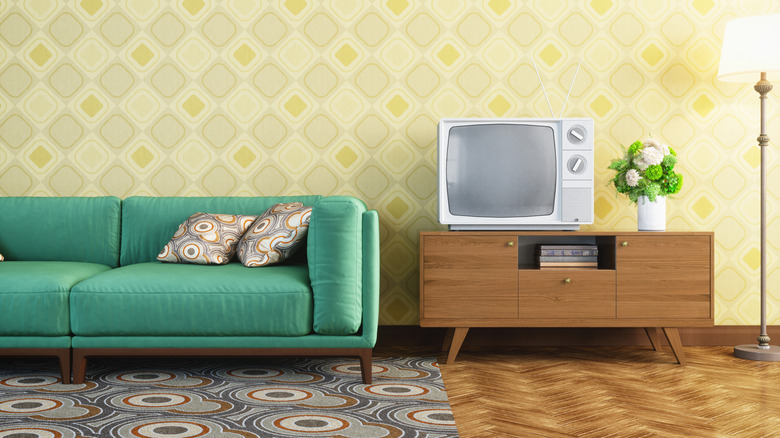
The home decor vibe of the 1960s was a dizzying montage of geometric shapes and patterns with wild color mixes and textures. From wood-paneled walls to orange carpeting, the mood was happy, bright, and, well, funky. Of course, we can't forget all the flowers, whether they appeared on gaudy floral-print curtains or your grandmother's favorite bedspread. Flower power wasn't just for prints in the '60s, though. One trend that defined '60s homes was Lucite flower bouquets.
Lucite is an acrylic resin that can be molded into different shapes and produced in various colors. These particular bouquets have a Lucite base, sometimes in the shape of a flower vase, with individual wires extending out of it. Each wire is bent to resemble a stem, with a Lucite flower attached at the end. The transparent nature of the Lucite is part of what makes it so 1960s-groovy. The light shines through the colorful base and flowers — often crafted in oranges, yellows, pinks, and reds — to create a whole far-out aesthetic.
Just how do you go about adding a touch of that swell energy to your home? Well, Lucite flower bouquets are popular '60s decor you can find at the thrift store or flea market. If you're willing to go on the hunt for a budget-friendly find, you can snag one for as little as $5 at secondhand shops. You can also check out antique stores, though you'll probably pay a bit more there. Online, sites like eBay and Etsy have options that run from around $20 to over $100.
Tips for identifying vintage '60s Lucite flower bouquets
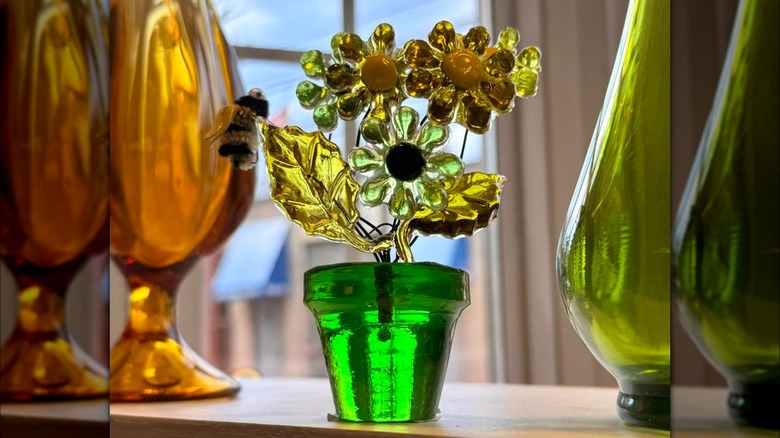
As you're shopping around for this fab Lucite bouquet that everyone had in the '60s, there are a few things to look out for so you don't get duped. If you're purchasing online, always read the product descriptions and check whether the item is specifically listed as vintage. This is important if you are looking on sites like Etsy, where many artists and crafters sell their own creations. Be on the lookout for items described as being handmade by the seller, which could indicate that they're reproductions rather than original vintage pieces.
If you're shopping in person, there are a few things to note about the Lucite material that will be easier to evaluate when you can pick it up. For starters, Lucite is typically a smooth material that's not very heavy, so it should be lighter than what you might expect from a similar glass object. Unlike some older plastics, Lucite typically doesn't have a noticeable chemical odor if you rub it or run it under hot water. And finally, look for transparency. If the bouquet is dusty, sitting on a shelf, or in the shadows of other items, it might seem opaque at first. If you hold it up to the light, you'll get a better look at its transparent or translucent character.
Of course, just because something looks and feels like Lucite doesn't automatically make it a genuine '60s find. While the sniff test can help determine material, it isn't a reliable way to determine whether it's truly vintage. Before handing over your cash, check the underside of the base for any labels. Some vintage arrangements still have their original stickers or stamps, which can make identifying them a whole lot easier.