

15 Trends That Defined '60s Homes
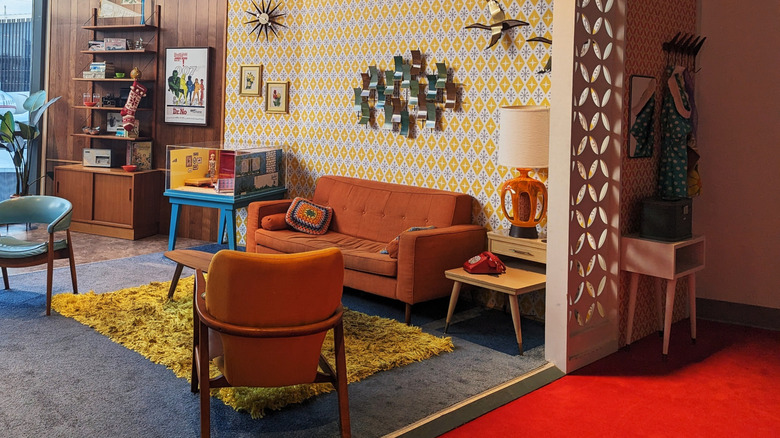
The swinging '60s were an exciting time for home designers. The zeitgeist was buzzing with reaction to a world that was becoming more connected by the day. A race to space was inspiring the minds of those who dared to dream beyond their Earthly confines. Hippie culture was encouraging sociable spaces and greater freedom of expression. And as post-war prosperity combined with a growing sense of disillusionment with more traditional modes of living, homeowners increasingly craved ways to experiment with their spaces.
In other words, the '60s were an exciting time to be alive, and interior design took a decidedly fun turn. In the guide below, we explore 15 of the most iconic trends that defined homes in the swinging '60s. There are some that are perhaps best left in the past, and some that have evolved and remain with us today. And if you're hoping to give your home a touch of vintage style, you'll find more than one '60s decor trend that's set to make a comeback in 2026. Whether you're designing a new space, curious about cultural history, or simply feeling nostalgic, settle in for a full guide to '60s home design.
Bravery with bold colors
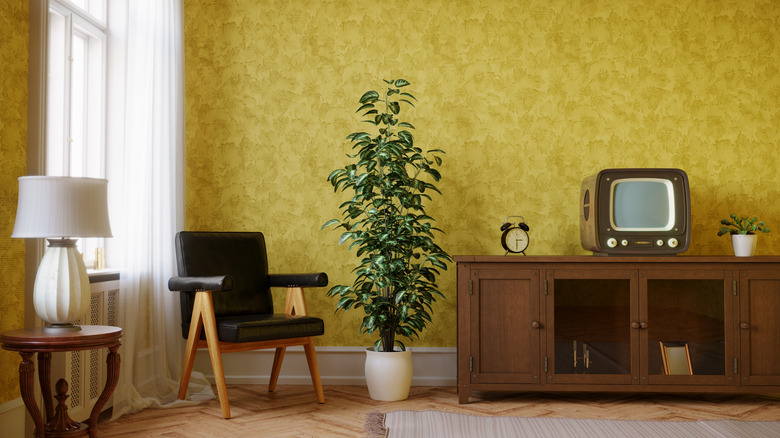
In the '60s, bold colors provided an outlet for the feeling of optimism that was prevalent in post-war North America. More than that, they were a response to the increasing feeling of unrest among younger generations about what art and culture should be. This sentiment is what gave rise to the Pop Art movement, which saw the bold expressions once reserved for Hollywood, advertising, and even product packaging start making their way into daily design.
As for which colors best exemplify the '60s home aesthetic, they were myriad. Hues of vibrant orange and mustard yellows were popular, as were magentas, greens, and popping shades of blue. Don't forget, the decade was a time of bold experimentation, a pursuit of greater freedom — and color blocking with vibrant shades was rank. In other words, the '60s was the perfect environment in which to get creative with color. It was a time when bolder was better, and primary-leaning colors symbolized the epitome of forward-thinking taste.
A craving for curved furniture
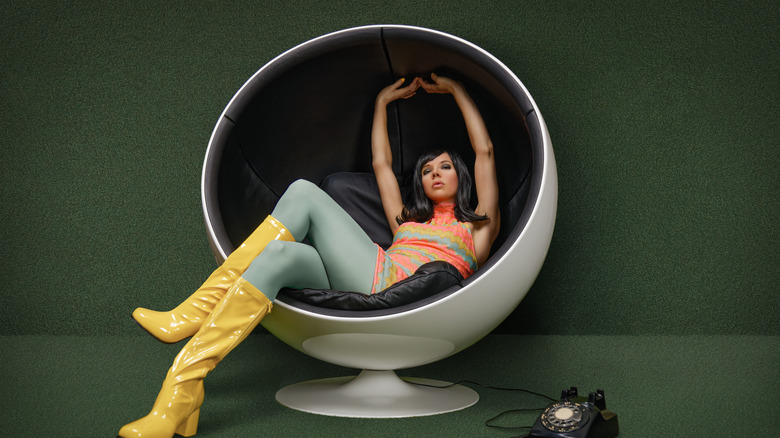
A seating trend that swung into being during the '60s was a movement towards curvy furniture forms. Like bold colors, quirky furniture design was about more than comfort. It was about self-expression, challenging the norms, and experimenting with what was possible. Curvy furnishings, like arcing, cushy sofas and molded-plastic chairs, became more than just pieces to sit on. They brought home a sense of curated artistry, while bucking the trend of stuffy, fussy, functional stiffness associated with traditional furnishings from previous decades.
Interestingly, a similar undercurrent is flowing through trends dominating the world of interior design right now. Postmodern silhouettes recently exploded onto the scene, and people are also getting more creative with color. This is happening in response to minimalist modes that have dominated home design in recent years. It was a similar story in the '60s. The widespread feeling of optimism and determination to challenge the status quo threw aside conventional norms around color and shape. But, whereas now, these ideas are often nods to the past, in the swinging '60s, curved furniture was almost unheard of, which made it an exciting solution in more experimental homes.
Designing with futuristic materials
If there are ten words that every American can quote, they surely belong to Neil Armstrong as he finally set foot on the moon. That incredible achievement was the result of a years-long race to space — a race that captured the imagination of anyone who dared to dream about what lies beyond our Earth's atmosphere. In other words, in the '60s, space was all the rage. And in homes across America, it showed.
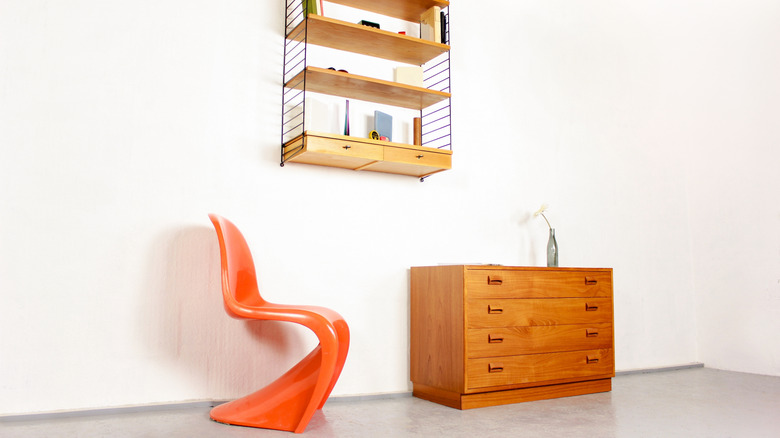
Technological innovations of the time meant that more materials than ever were available for manufacturers, from plastic and metals to fiberglass and plywood. Additionally, growing demand from experimental homeowners gave manufacturers a fun and futuristic way to channel those contemporary capabilities. Outlandish furniture designs skyrocketed, from cozy pod chairs to the iconic Panton Chair designed by Danish furniture designer Verner Panton, just a year before the '60s started. Lighting was also a keen focus for this movement, with UFO shapes, bubble forms, and generally futuristic designs harnessing the mood of the moment. Wallpapers with space-themed motifs rolled off the presses by the ton, and as we'll see later, even table lamps received the space-age treatment.
Layering with optimistic patterns and bold motifs
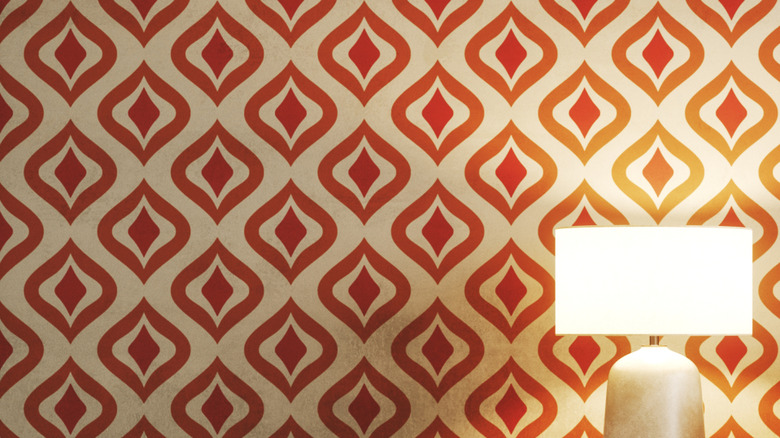
Interior design is exciting, and it's fair to say that most of us decorate our homes with a little optimism in mind. But in the '60s, optimism in the context of design was about more than merely refreshing a tired interior. Hippie subculture was starting to emerge in the '60s, directly challenging traditional social structures and forms of governance. And as that cultural movement gained momentum, designers began to believe that there must be a better, more optimistic way to decorate spaces versus the austere approaches that had dominated for decades, if not centuries. The solutions came in many forms, but one of the most prevalent was the use of pattern.
From oversized florals and swirling psychedelia to geometric prints, playing with patterns became a key way to inject homes with personality, warmth, and energy. And these patterns weren't treated with subtlety, either. They were often wallpapered across entire rooms, stitched into the furniture, and woven right into the carpet. It was a confident approach that reflected the cultural optimism of the era, embodying the '60s feeling that less isn't always more.
An increasing interest in Scandinavian furniture
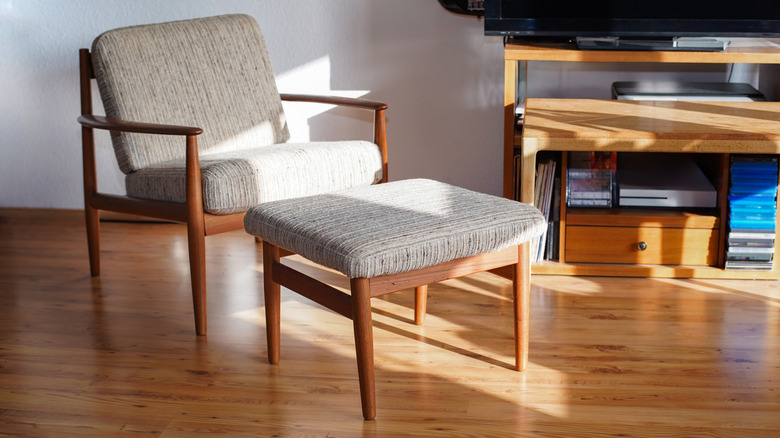
As we've seen, interior design in the '60s was influenced heavily by the political and societal movements of the decade. But they were far from the only influences. There was also growing exposure to new cultures from around the world. In particular, sleek Scandinavian furniture and modern Scandinavian design began gaining lots of traction. This new mode was characterized by simplicity, functionality, and a grounding in nature, something that resonated with the more progressive mood of the decade's burgeoning counterculture.
Of course, to modern readers, the simple beauty of "Scandi" design is nothing new. But in the 1950s, when it was starting to gain traction in North America, it was indescribably fresh. By the 1960s, American firms were copying the styles of Scandinavian furniture, producing it in domestic factories and also commissioning less costly versions from manufacturers overseas. These pieces featured the same pared-back, highly functional forms that made Scandinavian furniture so popular, but they were widely available, and importantly, they were affordable. Before long, Scandinavian design became a major export industry, with American homeowners during the '60s forming one of the movement's largest markets.
Cushy, shaggy carpets underfoot
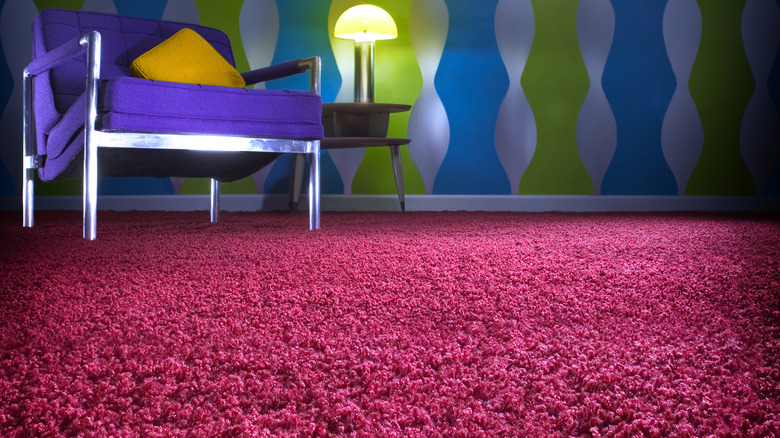
If there's one '60s design trend that's unlikely to make a wide comeback, it's wall-to-wall shag-pile carpet. But back then, it was everywhere. It coated the floors of living rooms, and offered a cushy start to the day in bedrooms. It was also used in kitchens, and believe it or not, it even made its share of appearances in people's bathrooms.
These carpets offered a dose of casual comfort in living spaces otherwise dominated by harsher materials like wood, metal, and molded plastic. Besides the groovy texture, shag carpeting in the '60s also, naturally, sported bold colors. The highly texturized, bright, fun, and slightly crazy look of shag carpet provided the perfect tonic to the more minimalist, mid-century design mood of the '50s.
A love for quirky lamps
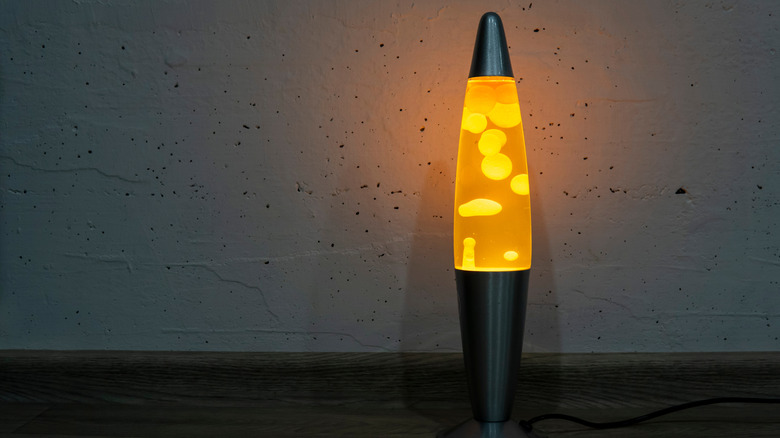
It's safe to say that the '60s brought some of the most unique, avant-garde light fixture designs the world had seen yet. Throughout the decade, lighting took on several statement forms, from tripod (often rocket-inspired) standing lights and galactic chandeliers to Giancarlo Mattioli's mushroom-shaped Nesso lamps. Futuristic, space-aged designs were some of the most ubiquitous. And while they were undoubtedly inspired by mankind's rush to reach the stars, they were also grounded in other cultural sentiments of the moment.
If you need proof of this idea, then one piece of '60s decor to look out for at the thrift store is a lava lamp. Often shaped like rocket ships, this icon of '60s design was a clear nod to space. But it also brought myriad, kaleidoscopic colors to desks and side tables, imbuing the strong '60s sentiment towards psychedelia. Lava lamps also effectively countered the clean, more austere lines of mid-century modern design that had been surging its way into homes. And don't forget, they are incredibly playful to look at. For homeowners in the '60s who wanted to express themselves and experiment with color and form, few pieces embodied the mood of the moment quite as well as the lava lamp.
A surge in open-plan spaces
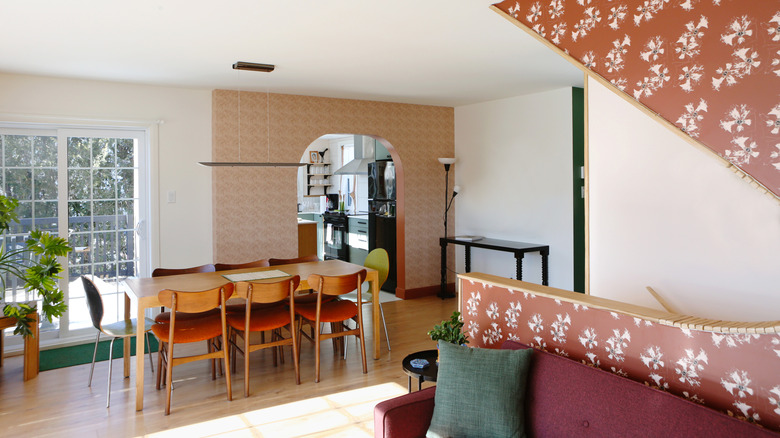
Zooming out from the decorative details, '60s home design also began to feature open-plan spaces more than ever before. It wasn't a new idea, in fact, it had been circulating long before the start of World War II. However, through the '50s and into the '60s, it very much became a mainstream concept. And as was the case with other '60s trends, there were several reasons behind the popularity of open floor plans.
First, it felt like a welcome departure from the separated household designs of previous eras, opening up the space and providing an easier way for families to connect. Plus, following the Second World War, America entered a period of great prosperity: Homeowners wanted their homes to reflect their more affluent lifestyles — and open-plan living areas gave the feeling of a larger, more spacious home. The way people lived in their homes had also become more casual. Rather than formally drinking tea in the parlor, people wanted to be able to see the TV from the dinner table. Finally, the '60s saw a significant rise in the hippie movement, which in turn saw a greater desire for communal living arrangements.
A crescendo of clashing materials
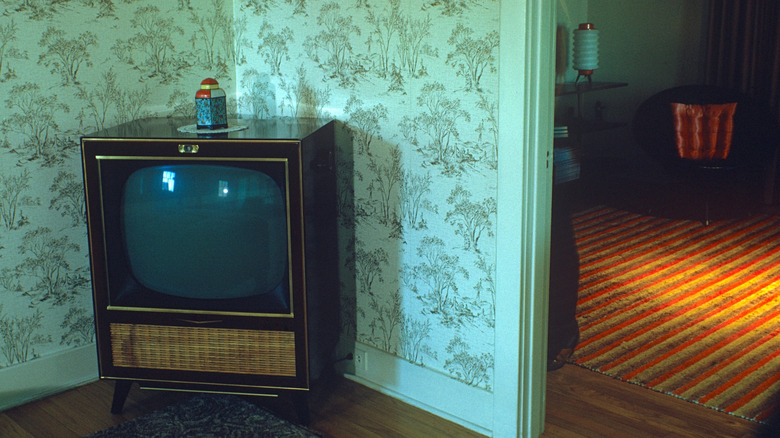
There was a smorgasbord of funky trends hitting homes across the country during the '60s. Futuristic designs were rolling off the factory lines in space-age colors and novel new materials. Wallpapers were pasted across households in myriad hues and vibrant patterns. Lamps were taking all who gazed into the glass on a journey of spiritual discovery, and shag-pile carpets were keeping toes cozy from the bedroom to the bathroom. And these elements were by no means treated with mutual exclusivity.
Today, interior designers pair patterns and colors so that they don't clash. But back in the '60s, clashing was often part of the deal. Desires for more communal lifestyles conflicted with traditional modes of living. People around the country continued to keep an eye to the sky in the hopes of winning the space race. In light of the contemporary determination to be brave, experiment, and go against the grain, clashing materials, colors, and patterns found themselves directly competing for space in homes across the country. Wooden chairs paired readily with psychedelic shaggy rugs; vibrantly patterned wallpaper shared the show with the bubbling glow of a lava lamp. In other words, the "rules" of design that are so familiar today were in deliciously short supply in the '60s, resulting in the kinds of interior clashes that make the decade such a delight to look back on.
A penchant for exotic plants
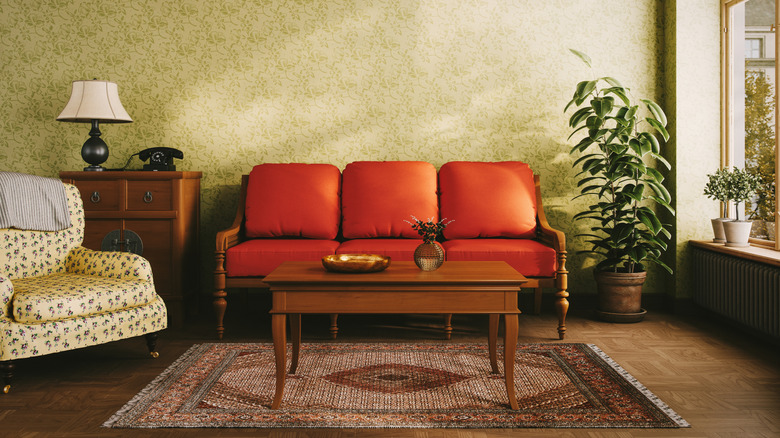
Adding to the canvas of color that defined home design during the '60s, greenery was all the rage. It was in part fuelled by a departure from traditional modes of living, and in part by a desire to imbue spaces with peace and connection to nature. It was also influenced by ongoing NASA studies into the benefits of plants. And while these were focused more on their ability to assist in cleaning up environmental damage in war-torn regions, they nevertheless resonated with the public's general fascination with space-based science.
Of course, nowadays, there are plenty of houseplants that are perfect for growing indoors, and which are readily available at your nearest garden store. But in the '60s, in line with the decade's growing consumer culture, the availability of more exotic species was still on the rise. Plants like begonias and African violets were both popular. But the one that's perhaps most synonymous with the '60s is the striking Monstera deliciosa — aka, the Swiss cheese plant.
The favoritism for vinyl flooring
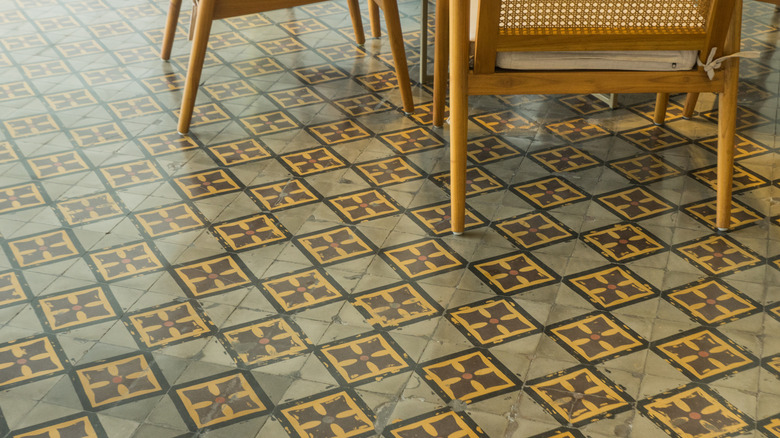
Shag-pile carpet wasn't the only flooring of choice for homeowners during the '60s. Sheet flooring was equally popular. Linoleum and vinyl flooring materials were widely available, both printed in a riot of colors and patterns, ranging from primary colors to marble looks, starburst designs, and imitation brick. "Pebble" prints were also hugely popular.
Out of the two, vinyl became the most popular. It was the cheaper of the two, since it was being produced in larger, more cost-effective quantities. Compared to linoleum, vinyl also offered creative homemakers bold and brazen patterns. And as technology continued to evolve, exciting new products started to hit the shelves. No-wax floors, for example, reduced the maintenance required to keep them looking fresh. Cushioned vinyl was also developed in the '60s, offering homeowners a more comfortable surface on which to navigate their spaces.
A general love for geometry
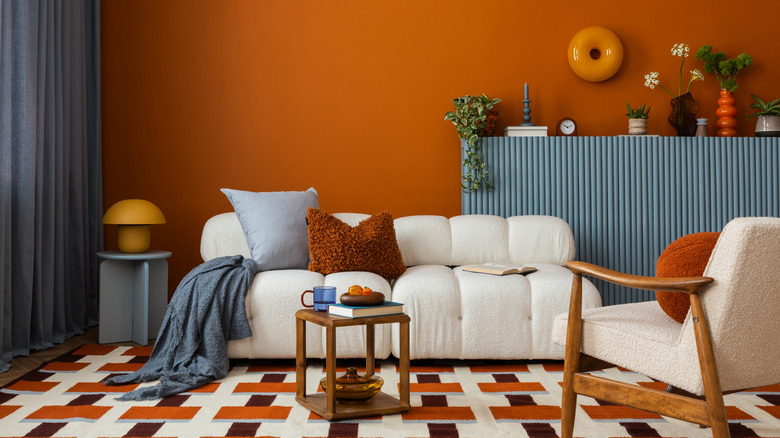
While we've already covered the prevalence of pattern in the '60s, geometric patterns are worthy of their own mention. Today, there are so many ways to give your home a bold geometric update that we take such designs for granted. But in the mid-to-late '60s, geometric patterns were a mold-breaking motif. They held their roots in Optical Art (Op Art), an international movement during the '60s that explored how the human eye interprets abstract combinations of color and pattern. Works from artists like Bridget Riley became especially popular, gradually transcending the worlds of art, fashion, and interior design.
Wallpaper, rug, and tile manufacturers began producing products that harnessed those astonishing and psychedelic patterns. And given the appetite for designs that gave homeowners the chance to both express themselves and challenge more traditional design approaches, they soared in popularity. They appeared in households not only across America, but around the developed world, and would continue to do so well into the '70s.
Modular shelving and wall units
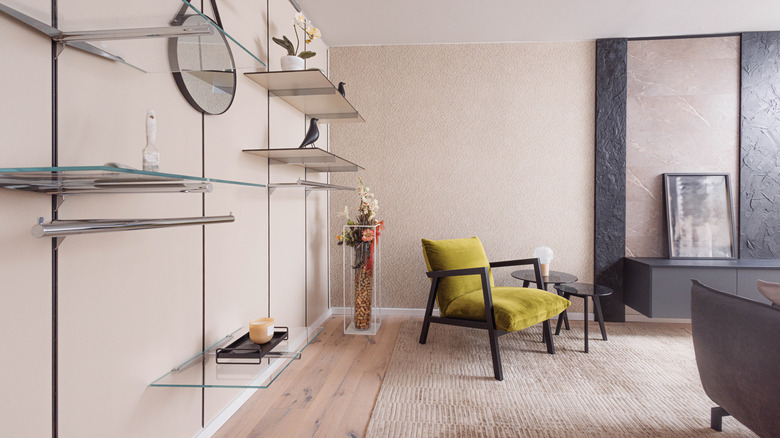
Cast your eye across photographs taken during the '60s, and it'll almost certainly be drawn to those shaggy carpets and space-age lava lamps. Take a closer look, however, and you may spot something else that these images have in common: Shelving systems and wall units (particularly floating ones) were soaring in popularity during the '60s. As for why, it's important to look at other areas of mass manufacturing that were reaching a peak during the '60s.
One example is the advent of mass-market paperback publishing, which, for the first time, was outstripping hardback sales. Millions of paperback copies began flooding the market in the '60s, making stories cheaper and more accessible than ever to homeowners around the country. There were also novel new technologies evolving in the mainstream, like bulky hi-fi systems. All of these items demanded the need for more storage, and how better to keep them from cluttering up the floor than with a simple shelf? Modular shelving and wall units represented the leading edge in design at the time — with famous furniture makers rolling out designs like the iconic 606 Universal Shelving System.
Wood panelling, everywhere
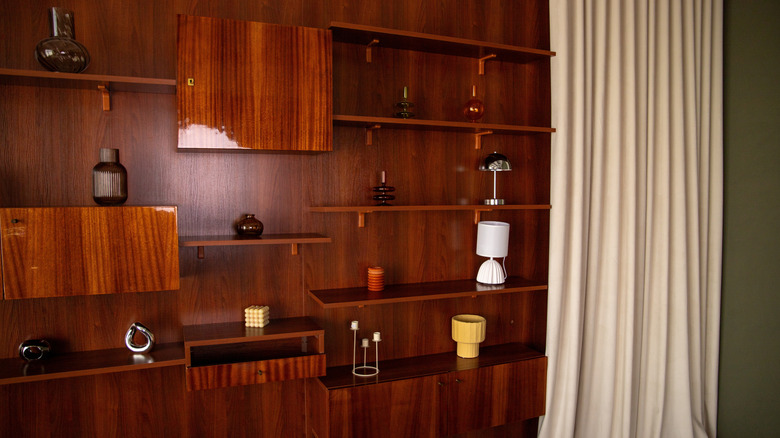
It's both enthralling and absolutely exhausting trying to absorb the myriad patterns, colors, and textures that defined '60s design. But there was one trend of the time that was decidedly more low-key than those mind-bending lava lamps and illusory geometric wallpapers. We're talking about wood. It was everywhere. Households used it for shelves, cabinets, and walls, not to mention those Scandi furniture pieces that leaned heavily on the gorgeous grain of real wood.
But perhaps the most pervasive use for wood was panelling. It was popular at the time for its ability to insulate and protect walls. And in spaces otherwise dominated by colorful, clashing colors and patterns, it worked as a sort of conductor — its clean lines and natural hues grounding the space and tying the experimental ensembles together.
A craving for conversational spaces
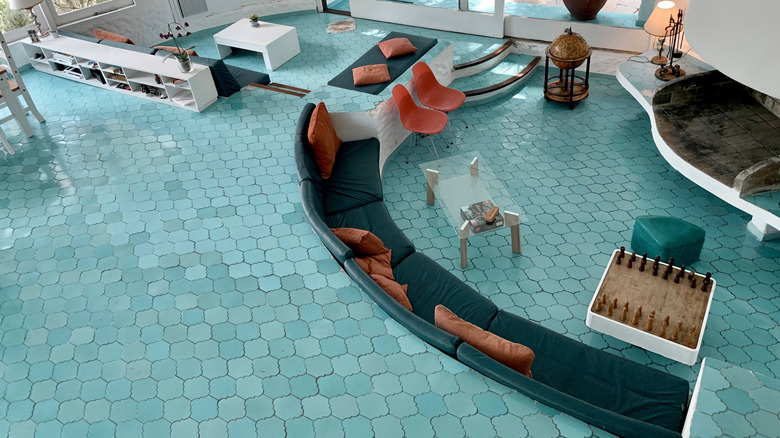
We touched earlier upon the drive in the '60s towards open-plan living spaces — in part a reaction to contemporary sentiments that valued more communal, casual modes of living. The '60s conversation pit trend is sort of an extension of that idea, but it totally failed to overtake layouts leading up to the present day the way that open-plan living has. Otherwise known as sunken living rooms, conversation pits were quite literally dug out of the floor of the home. The idea first appeared in the '20s, when architect Bruch Goff designed a property in Tulsa, Oklahoma, with a sunken seating area wrapping its way around a fireplace. But it was during the '60s and into the '70s that the idea really took hold.
Unfortunately, sunken living rooms represented a rather significant trip hazard, which is probably why they ultimately fell out of favor — and why they may look unfamiliar today. However, in the '60s, the idea was an architectural innovation, providing an ultra-modern arena for relaxing and enjoying deep conversations long into the night. They were often carpeted and fitted with cushy furnishings, and usually centered around a table for decorative items, drinks, and other communal consumables.