

Make An Old Concrete Retaining Wall Look New With An Affordable DIY

A concrete retaining wall provides structural support to sloping properties, guarding your home and other structures against erosion and landslides. If, however, you built it years ago and, worse, have done little to maintain it, it's likely showing signs of aging. Ongoing exposure to the elements — think rain, sunlight, and changing temperatures — can cause concrete surfaces to become dull and discolored and develop cracks. While using a durable retaining wall material that lasts longer and is neither concrete nor stone is an option, installing a replacement wall is going to be expensive and labor-intensive. A more affordable alternative is reviving your existing wall. You can give it a fresh look with a concrete stain.
Apart from being more affordable than a replacement retaining wall, staining concrete is also a more cost-effective option than painting. You can certainly give your old retaining wall a fresh new vibe with this easy fix — paint, that is — but stain will hold up better in the long term. The upfront price of a stain is much higher than that of paint, depending on the type of stain used. Painting a retaining wall should cost somewhere between $1.50 and $3 per square foot. On the other hand, finishing a retaining wall with an acid-based concrete stain can run as high as $25 per square foot for complex designs. However, this type of stain is often permanent. Paint, on the other hand, has a lifespan ranging from as little as 1 year to more than 25 years. At $2 per square foot, water-based stain is cheaper than acid-based stain, but it isn't as durable.
Staining can give your retaining wall a new, natural-looking finish
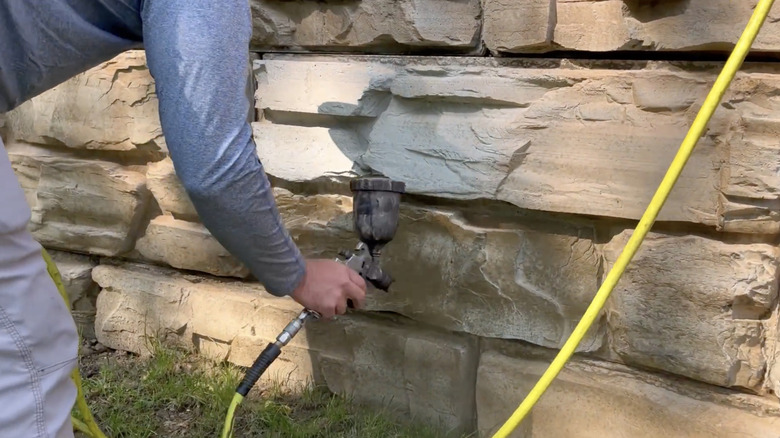
You don't see the latest retaining wall trends, and that's the point; natural-looking walls that highlight the local landscape are the height of fashion right now. Staining can give concrete an organic, earthy look. Stain is translucent, revealing the texture of the concrete while improving the color and refreshing the appearance. Paint, on the other hand, is opaque — it hides everything under a solid finish. With so many earthy shades, such as mahogany, terracotta, and olive, as well as classic neutrals, such as white, sand, and gray, available, concrete stains can help your retaining wall blend into your yard or garden naturally.
Of course, concrete stains aren't without their downsides. They don't hide the imperfections that concrete retaining walls inevitably develop after many years in the landscape. Before you carry out a cosmetic upgrade, you need to fix cracks and other minor structural damage. Anything that doesn't compromise the structural integrity of the wall should be a relatively easy DIY job.
After cleaning the concrete to remove dirt, grime, and moss, inspect the wall for chips and cracks and repair them using a cement-based patching compound. Once everything is clean and dry, apply the stain according to the manufacturer's instructions. Ideally, work in small sections instead of trying to coat the entire wall in one go. Concrete is porous; it may absorb the stain differently across its surface. To achieve a uniform look, apply two coats of stain to the concrete. If you want a weathered, stone-like finish, overlap the coats as you spray or brush the stain onto the concrete retaining wall. You could also layer on a secondary accent color.