

Towel Bar, Ring, Or Hook: Which Helps Towels Dry Best?
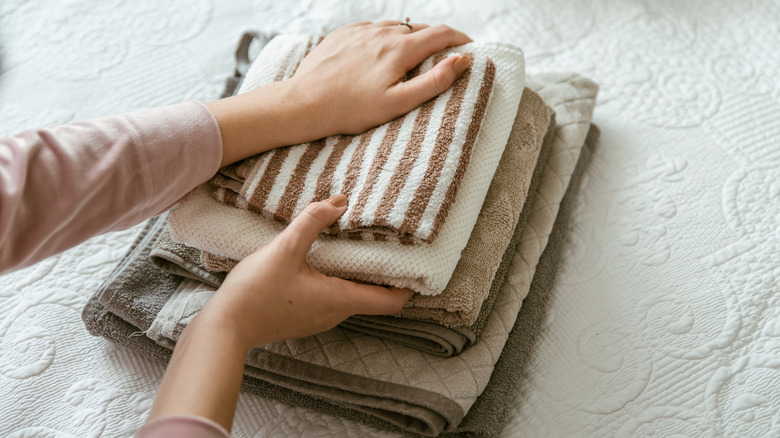
After taking a nice long shower, you've got a decision to make with your towel. While some choose to wash their towel after every use to keep bacteria at bay, others decide to hang it up to use again. While you might not have thought about it in the moment, the way you hang up your towel can impact how long it takes to dry, which matters because trapped moisture promotes bacteria and mildew growth. After all, no one wants to be grabbing for a smelly towel. Should you be using a towel bar, ring, or hook to hang your bath towels?
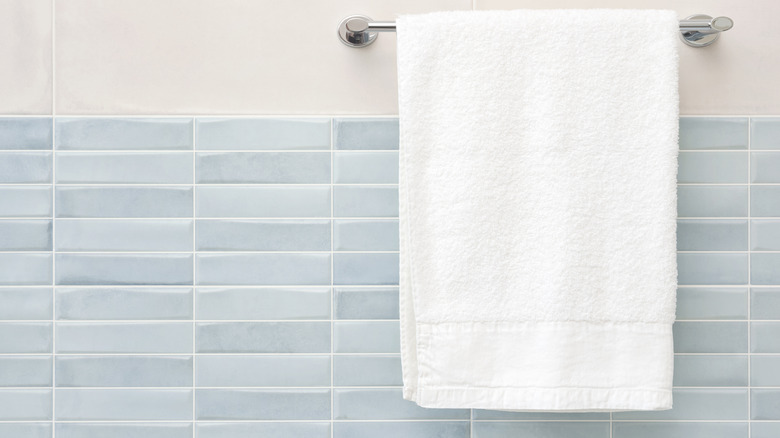
While there are advantages and disadvantages to all three, the one that helps towels dry the best is the towel bar. Drying efficiency comes down entirely to surface area exposure and airflow. A horizontal bar is best, with a towel laid flat across it, so that air flows evenly across the front and back of the fabric and there are no moisture traps that will cause musty mildew smells. The downside is it requires significant wall real estate, usually 24 to 30 inches for standard bath towels. If you try to fold a towel in half or thirds to fit a short bar, you reduce airflow and slow down drying times.
Proper drying is important if you want to keep your bathroom towels fresh for longer. The musty smell you notice from a towel that hangs damp for too long is caused by mildew and bacteria feeding on trapped oils and organic material. The smell isn't the only issue — the excess moisture also causes rapid bacterial growth, which can lead to skin irritation or breakouts when reused.
How towel rings and hooks stack up
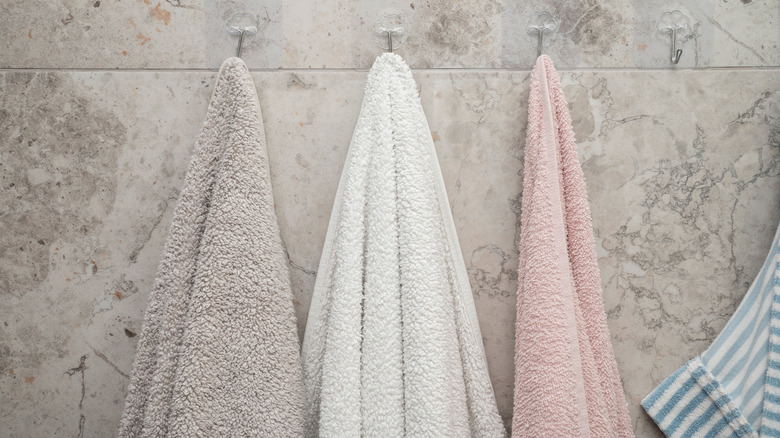
If space is an issue, you can still use a towel hook to dry your towels, but be warned — it takes longer than a bar. Towel hooks are a second-best option for drying — they take up considerably less space than a full towel rack, but they bunch the towel slightly at the top, restricting airflow. Hooks cause fabric to drape into conical folds. While the top pinched section stays damp longer than it would on a bar, the bottom portion hangs open and dries reasonably well. Towels hung by a sewn-in hanging loop or a corner hook attachment dry significantly faster than towels hung by the fabric core, making this option best if you need to save bathroom space with DIY towel storage solutions.
The towel ring is the worst choice for helping towels dry quickly. It is also more space-saving than a rack, but it forces fabric into a tight bunched gather at the top. The moisture gets trapped in the inner layers where air can't reach it, leaving towels damp for hours. This type of hardware is really best for small hand towels or guest towels near the vanity sink, where quick decorative placement is more important than heavy moisture evaporation.
How to speed up the drying process
To help speed up your towel's dry time, regardless of what hardware you put it on, it helps to know where to put bathroom hooks and bars for the best results when drying towels. Mounting your hardware directly in the path of airflow — such as across from an open doorway or near a window — prevents moisture from pooling around the fabric. You can also use your bathroom exhaust fan to lower the overall humidity. Turn it on right when you step into the shower and let it run for about 15 to 30 minutes afterward to pull excess moisture out of the space, allowing your towel to evaporate trapped water much faster.
Proper spacing on the hardware itself is just as critical. Make sure you're not overlapping multiple towels on one bar or hanging bath towels directly over robes or washcloths. Crowding the space limits airflow between layers, meaning your towels will stay damp and risk developing a musty smell. If you have a double towel bar in your bathroom, allow at least 4 inches of space between the front and back bars so air can circulate between the towels you hang on them.
Lastly, consider your bathroom's ambient conditions and fabric choice. If you don't have a window or a high-efficiency fan in your bathroom, try leaving the door open after bathing, or carrying wet towels to a well-ventilated laundry room or bedroom to hang up. Choosing lightweight or quick-drying fabrics like low-twist cotton or waffle-weave textiles can also cut drying times in half compared to ultra-dense, heavy-plush options.