

Do This, Not That: The Correct Way To Clean Lawn Mower Blades Before Winter
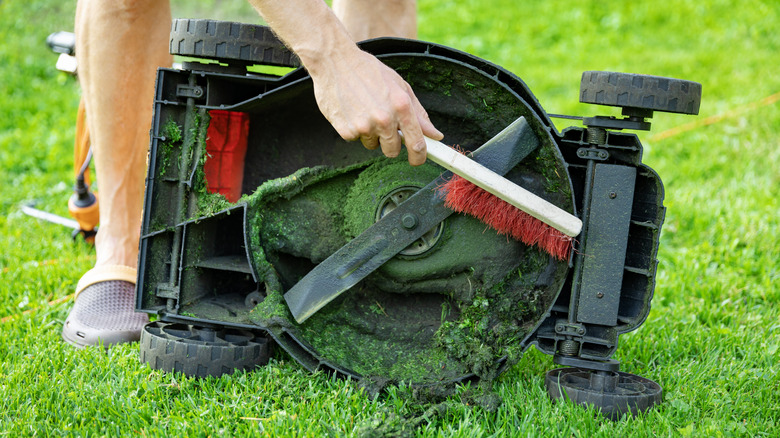
After the end of summer and fall comes the time to prepare your lawn mower for winter. Unfortunately, you cannot just put this machine into your shed or garage and call it a day — there are steps to take to protect it so it will be ready for you when you pull it out next spring. Fuel stabilizer is good for the engine to keep it running smoothly, but you also need to clean the lawn mower blades before storing it. Before grabbing your tools, be sure to prep the right way to avoid accidents — starting by disconnecting the spark plug so the engine can't turn over while you're handling sharp parts.
While you think it's safe to grab the garden hose and rinse them off, think again. While you can hose down parts of a lawn mower, you should not use water to clean the lawn mower blades before long-term storage. Moisture can get stuck in the tiny cracks and the places where parts are attached on raw steel. This makes pitting happen faster and weakens the structure, ultimately causing surface damage over many months in cold storage.
Instead, keeping things dry is very important. After you remove the grass and dead plant material, use a cleaner like penetrating oil or mineral spirits to remove any remaining sap and dirt. Then put a layer of protective oil on it — this provides a shield against moisture, ultimately keeping your blades sharp and completely free of rust until spring comes again. You don't need to clean your mower blades after every mow, unlike some other lawnmower maintenance tasks you should be doing after every mow. Instead, plan to make the blades shiny and new at least once per season, and before storing for winter.
How to safely clean your lawn mower blades

Before starting, put on heavy work gloves. Unplug the spark plug boot or remove the battery to stop the machine from starting by accident. Use a piece of scrap wood to hold the blade in place, then loosen and remove the bolts and remove the blade. After that, use a bristled wire brush or a plastic putty knife to clean caked-on grass and dried mud from both sides of the blade and around the hole where it attaches. When the blades are clean, spray them completely with a solvent such as WD-40, penetrating oil, mineral spirits, or brake cleaner to get rid of dirt. Let it sit for about one to two minutes so the mess breaks down.
After soaking, take steel wool and scrub remaining stubborn spots to remove stuck-on grime safely. Then you can wipe the entire blade completely dry using clean shop towels or rags. Once your blades are clean, take time to sharpen and balance them for the upcoming cutting season — making sure to avoid mistakes everyone makes when sharpening lawn mower blades, like grinding at the wrong angle or leaving the blade off-balance. After sharpening, wipe away any remaining metal filings and apply a thin coat of motor oil, fluid film, or heavy-duty rust inhibitor across the metal surface. Once your mower is reassembled and fully prepped, you can safely store it for the winter.