

The Double Duty You Never Knew Your Casserole Lids Could Perform
So, you'd like to bake yourself a quiche, but what if you haven't yet committed to a pie plate? Allow us to serve up a delicious truth. You don't need to make an emergency trip to a home goods store or pick up a disposable version. Though, if you do, there are plenty of amazing ways to repurpose unused pie tins around your home and garden. Rather, the perfect dish for the quiche, frittata, or dessert of your dreams may already be in your cupboard. With its circular shape and natural slope, a casserole lid is actually an ideal dupe for a standard pie plate. And as long as it's made from an oven-safe material — glass, ceramic, enameled cast iron — it can definitely get things cooking. Just double check that the dish is marked as oven safe. If it's not, there's another fun function for any old casserole lids.
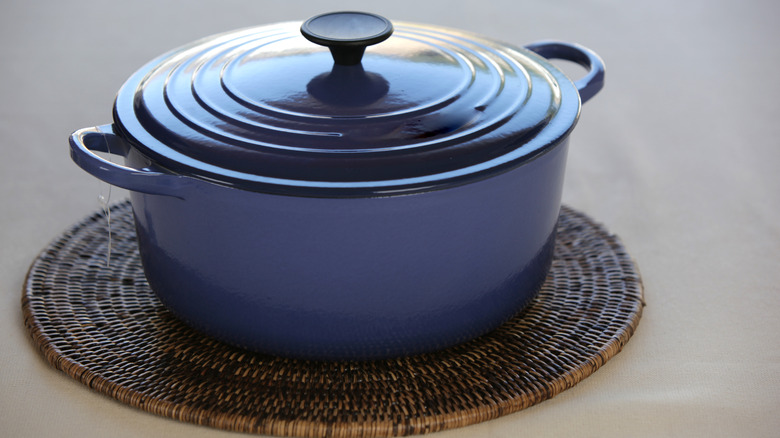
One key step in the recipe, though, has to happen before you can start cracking eggs and mixing filling ingredients. If your casserole lid has built-in glass handles — like this brightly colored Pyrex pattern collectors would be thrilled to find — they are good to go in the oven as is. But for Le Creuset lids and others that come equipped with a knob on top, you'll want to unscrew it before cooking to avoid any damage or balance issues.
What to know about baking with a casserole lid
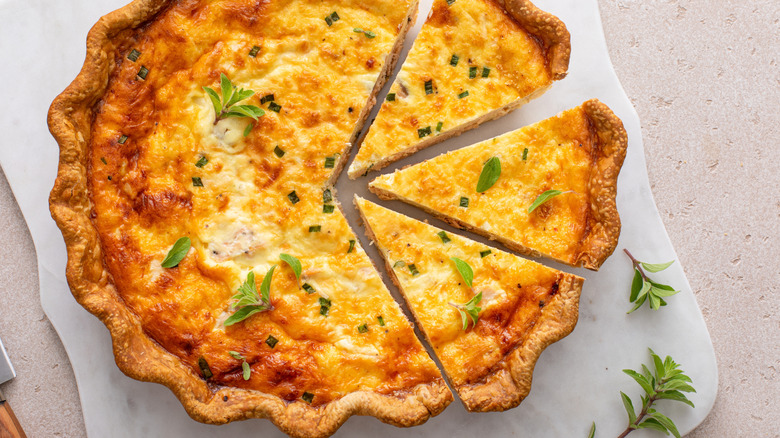
A casserole lid may be slightly smaller and not quite as deep as a standard 9-inch pie plate. While a store-bought crust should fit inside just fine, there is likely to be a slight overhang that you'll need to trim off. Or, score the perfect fit by first placing the lid on the crust to measure and cut around the border. You will also want to be careful not to overfill your dish. The smaller size may be more well-suited for a quiche, focaccia, tarte, or another recipe with less depth. But if you find yourself with leftover filling, it's best to set that aside or cook it separately.
Depending on the material of your casserole top, you may need to make other adjustments. While the upside of a glass topper is, uh, pretty clear, making it easy to check just how brown your crust is, they tend to retain heat more than metal. To ensure your dish turns out perfectly crisp, cook it at 25 degrees lower than the recommended temperature. You'll need to leave it in a few minutes extra, but that tweak prevents the crust from burning before the inside is fully cooked.
On the flip side, ceramic or stoneware dishes tend to be thicker and, therefore, can take longer to bake. It can take anywhere from 10 to 20 minutes more, and you'll need to keep a careful watch so it doesn't burn. Par-baking the crust, where you cook it partially before adding the filling, will also help avoid a soggy situation. When it comes time to dish your creation out, avoid using a metal knife that could scratch the surface. Instead, serve it up using a spatula, or move it to a cutting board for slicing.